

The dispute highlights a difficult policy trade-off: giving exporters greater input flexibility while protecting domestic spinning capacity before Bangladesh’s post-LDC transition.
Bangladesh’s primary textile sector has urged the government to retain the 30% minimum value-addition requirement for exporters importing raw materials under bank guarantees, warning that its removal could weaken domestic yarn and fabric production. The proposal, included in the FY2026-27 budget, is intended to ease business operations and extend duty-free raw-material access to additional export-oriented sectors.
A dispute over local sourcing
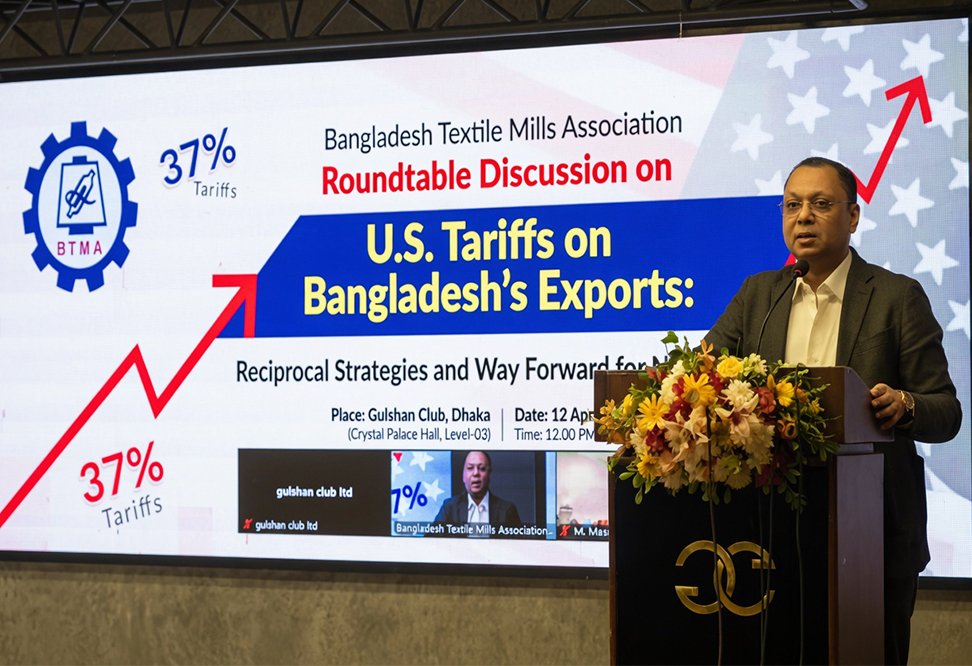
The Bangladesh Textile Mills Association argues that scrapping the threshold would make imported yarn more attractive to garment manufacturers, reducing purchases from local spinning mills. BTMA President Showkat Aziz Russell said the country’s primary textile sector has attracted around $23 billion in investment and should be strengthened rather than exposed to a further rise in import competition.
The concern is not theoretical. BTMA says 114 of 234 member spinning mills have closed since 2019, while remaining mills are operating at only 60-70% of capacity, citing gas shortages and growing competition from lower-priced Indian yarn. These are industry estimates, but they underscore the strain on Bangladesh’s backward-linkage base.
Indian yarn adds pressure
According to BTMA data reported by The Daily Star, Bangladesh imported $1.79 billion of cotton yarn from India in FY2024-25, equal to 556.12 million kilograms. That was up from $1.48 billion and 455.57 million kilograms a year earlier. The association attributes India’s pricing advantage partly to policy support for capital investment, interest costs, infrastructure and technology upgrading.
For garment exporters, however, imported inputs can provide needed flexibility on cost, quality, lead time and specialised materials—particularly where local supply is limited. The policy question is therefore not simply whether to protect mills, but how to ensure domestic producers become competitive enough to support exporters without raising their sourcing costs.
Post-LDC stakes rise
The issue gains urgency as Bangladesh approaches LDC graduation. More stringent rules of origin in some preference schemes can require “double transformation”, making domestic yarn or fabric capacity strategically important for retaining preferential market access.
BTMA has also called for the corporate tax rate for primary textile mills to be cut from 27.5% to 12% until 2030. The next policy test is whether Dhaka retains the value-addition safeguard, modifies it by product category, or pairs its removal with targeted measures to improve domestic mills’ energy access, financing and technology competitiveness.
