

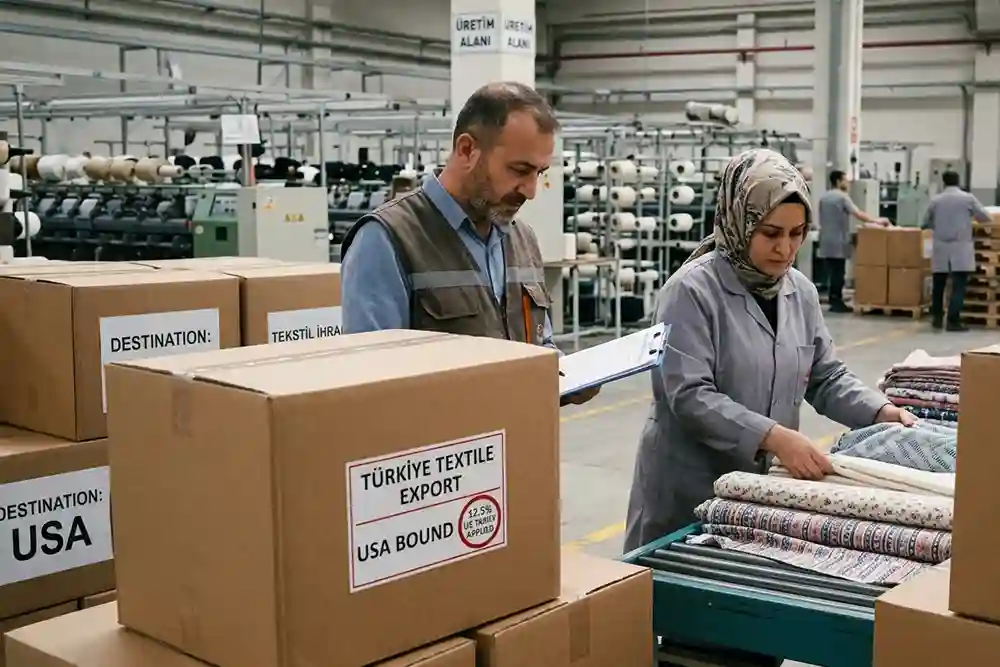
The new Section 301 duty could push total tariffs on some Turkish apparel towards 30%, while Bangladesh and other Asian competitors gain access to potentially duty-free quota mechanisms.
Türkiye’s textile and apparel exporters face a new competitive challenge in the United States after a 12.5% additional Section 301 tariff took effect on July 24, 2026. The measure followed a U.S. Trade Representative investigation that concluded Türkiye and dozens of other economies had failed to impose and effectively enforce prohibitions on imports involving forced labour.For Türkiye, the 12.5% charge is additional to normal US Most-Favoured-Nation duties unless a product is specifically exempted. Industry representatives estimate this could lift the total customs burden on many textile and apparel products to roughly 25–30%, materially weakening price competitiveness.
The timing requires clarification. A separate temporary 10% US import surcharge introduced in February expired on July 24—the same date the Section 301 measure began. Türkiye therefore did not simply receive another 12.5 percentage points on top of that temporary surcharge; the new tariff replaced it while remaining additional to ordinary product duties.
Rivals secure better treatment
Bangladesh, India, Pakistan, Cambodia, Indonesia and Malaysia face a lower 10% Section 301 rate. More importantly, Washington plans tariff-rate quotas for Bangladesh, Cambodia, Indonesia and Malaysia allowing specified textile and apparel volumes to enter free of the Section 301 duty when linked to purchases of US cotton or textile inputs. Türkiye is excluded from that mechanism.
This matters because the US has become an increasingly important diversification market for Turkish mills. Textile exports to the country rose 14% to $409 million in the first half of 2026, making the US Türkiye’s second-largest textile destination.
A market-access problem
Türkiye entered 2026 already under pressure from high domestic manufacturing costs and soft European demand. Its apparel exports totalled $7.90 billion in the first half, while textile exporters increasingly looked to America for growth.
The immediate priority is therefore diplomatic as much as commercial. Securing a lower tariff, an MFN-duty cap or access to a US-input-linked textile quota could materially alter Türkiye’s competitive position. Without relief, US buyers may find Bangladesh, Pakistan, India and eventually quota-eligible Asian suppliers increasingly attractive when sourcing price-sensitive programmes.
