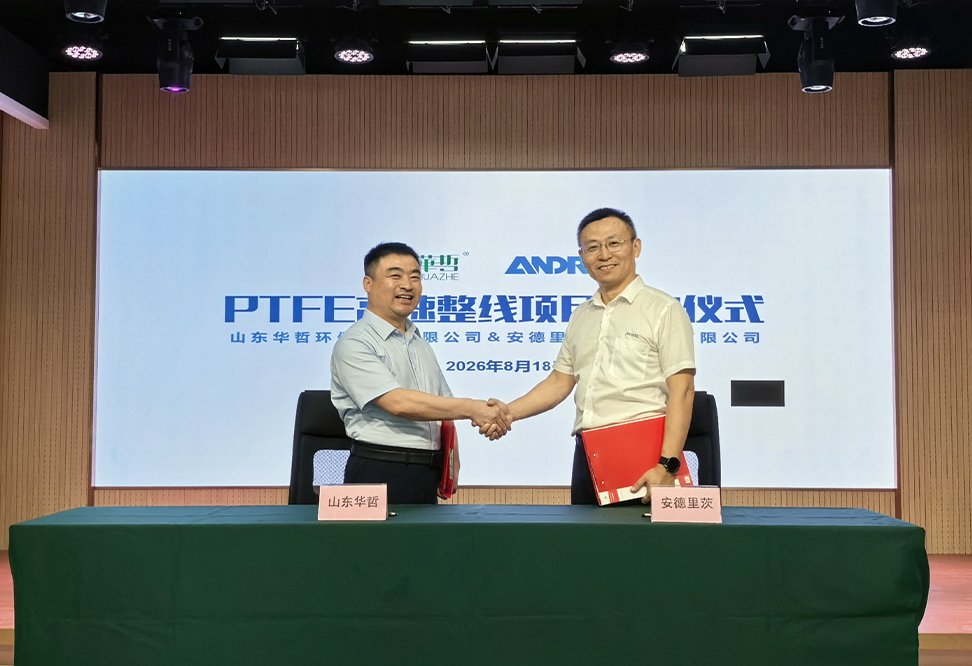
Shandong Huazhe’s latest investment moves deeper into demanding industrial filtration, while giving ANDRITZ the first commercial installation of its new A-Type needleloom.
Chinese filtration specialist Shandong Huazhe Environmental Protection Technology has ordered a complete high-speed needlepunch line from ANDRITZ for manufacturing advanced filter media from polytetrafluoroethylene, or PTFE, fibres.
The equipment will be installed at Shandong Huazhe’s headquarters in Jinan, Shandong Province, with delivery scheduled for the first quarter of 2027. The contract value has not been disclosed and was included in ANDRITZ’s third-quarter 2026 order intake.
New needleloom makes commercial debut
The project will mark the first commercial use of ANDRITZ’s A-Type needleloom, a new machine designed to combine high-speed production with flexibility and controlled fibre handling.
Its optional Random Needle Pattern distributes needles without a regular pattern, helping improve web uniformity and consequently filtration performance—an important requirement where variations in fabric structure can affect pressure drop, dust capture and service life.
It will also be the first complete PTFE filter-material production line supplied by ANDRITZ.
PTFE targets demanding filtration markets
Shandong Huazhe produces filter nonwovens, bags, cages and dust-collection equipment for sectors including power generation, steel, cement, smelting, waste incineration, chemicals and wastewater treatment. Its existing facility can manufacture nonwoven filter media between 85 and 1,200 gsm, with annual capacity of about 3.6 million square metres.
The latest order follows a 2023 contract for an ANDRITZ batt-forming line delivered in 2024.
Technical-textile takeaway
The investment illustrates where margins in nonwovens increasingly lie: application-specific materials engineered for demanding industrial environments rather than commodity roll goods.
For Pakistan, the opportunity is to expand beyond conventional textiles into industrial filtration, needlefelts and other engineered nonwovens serving cement, power, steel, chemical and environmental-control industries.
Building that capability requires more than machinery. Producers need expertise in high-performance fibres, web formation, needling density, permeability, filtration efficiency, pressure drop and application-specific testing. China’s continued investment shows that technical textiles are becoming an increasingly specialised—and strategically valuable—part of the textile manufacturing base.