

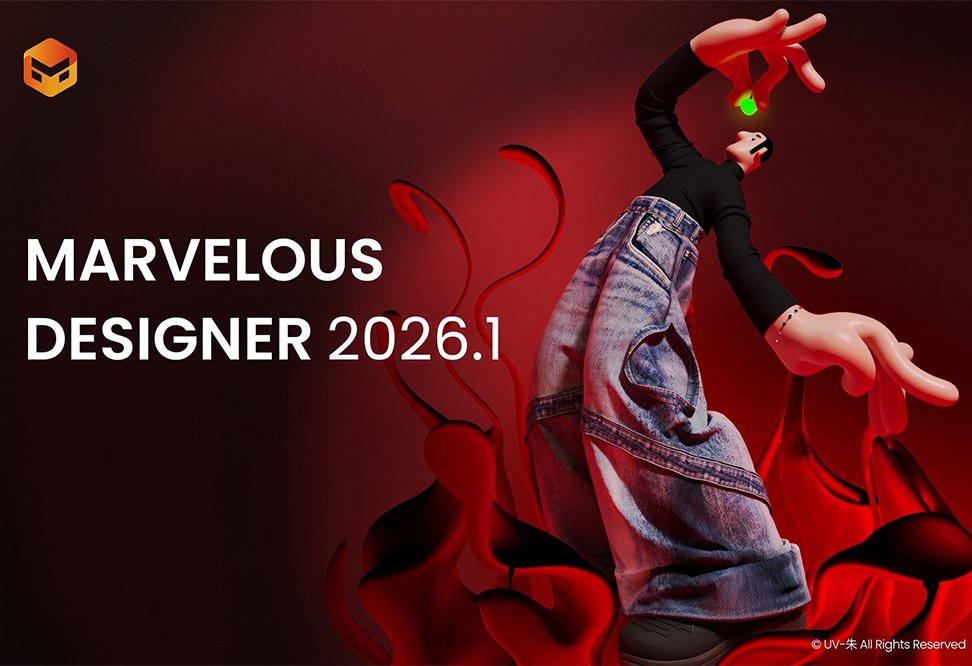
The latest CLO Virtual Fashion release strengthens realistic garment simulation, avatar animation and interoperability as 3D clothing workflows spread across fashion visualisation, gaming and digital product creation.
CLO Virtual Fashion has released Marvelous Designer 2026.1, adding new tools for creating folds, wrinkles and damaged garments while improving animation, GPU simulation and data exchange with other 3D applications.
Marvelous Designer constructs virtual garments from 2D pattern pieces that are stitched and simulated in 3D, allowing users to drape clothing over animated avatars before transferring assets into animation, visual-effects and game-development pipelines.
More control over fabric behaviour
A new Brush Pinching feature enables designers to paint folds and wrinkles directly onto a garment surface. Users can adjust brush size, focal area and deformation strength, including pushing material inward.
The accompanying Pinching Simulation Override temporarily changes simulation parameters while pinching, helping users control wrinkle formation without permanently modifying the garment’s underlying fabric settings.
Another experimental feature, Seamline Rip, allows selected sections of sewing lines to rupture during simulation and automatically generates frayed edges. The tool can recreate torn seams, worn clothing and damaged-fabric effects.
Better links with wider 3D workflows
Version 2026.1 also allows users to record blendshape-value changes on avatars, supporting facial animation and corrective morphs. Camera information can now be imported and exported through FBX and glTF/GLB, helping preserve scene views between software environments.
Mac users gain Metal-based GPU simulation, intended to improve performance on current Apple Silicon hardware. Users can also customise 2D and 3D toolbars and preserve original UV coordinates when importing OBJ garments.
Digital garments become richer assets
For fashion businesses, the relevance extends beyond entertainment graphics. More realistic fabric behaviour and stronger interoperability can improve virtual samples, campaign imagery, e-commerce content and reusable 3D garment assets.
The broader direction is clear: garment development is increasingly generating a digital asset alongside the physical product. The commercial test will be how effectively brands connect these 3D workflows with actual patterns, material data, PLM systems and manufacturing specifications, rather than using them primarily for visualisation.
