

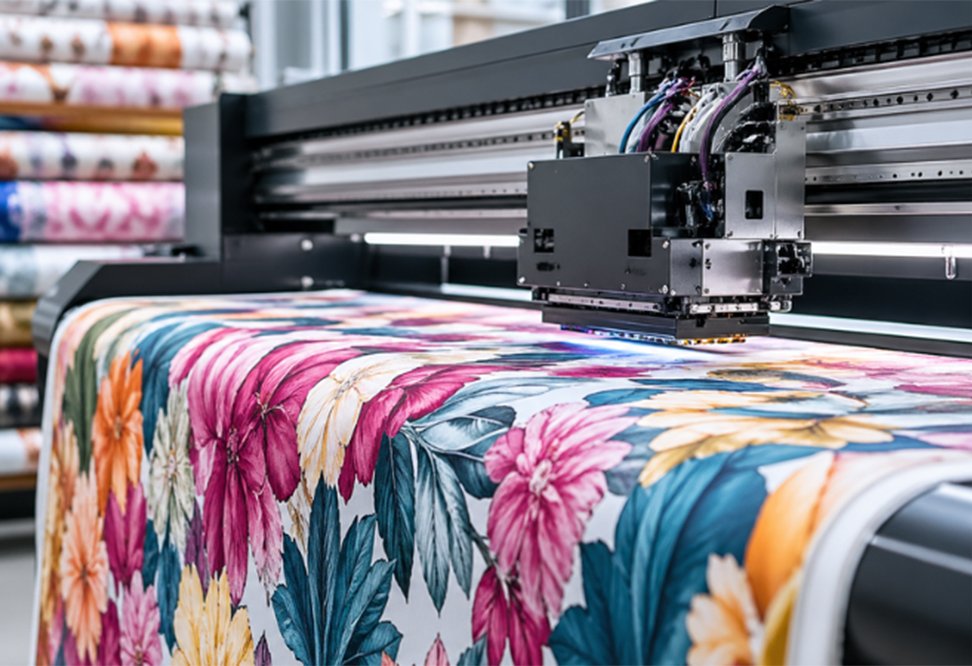
Digital printing is moving from a niche design tool to a mainstream production system for fashion, home textiles, soft signage and customised apparel.
The global digital textile printing market is projected to grow from $4.8 billion in 2025 to $12.6 billion by 2034, expanding at a CAGR of 11.3% from 2026 to 2034, according to the provided market outlook. The shift is being driven by shorter fashion cycles, lower minimum order quantities, sustainability pressure and rapid advances in printhead and ink technology.
Shorter runs change the economics
Digital printing is challenging rotary screen printing because it removes the need for screens, rollers and long set-up cycles. While conventional printing remains competitive for very large orders, digital systems can support economical production from very small runs, even down to one metre in some workflows. This is increasingly attractive for fashion brands, e-commerce sellers and print-on-demand platforms trying to reduce inventory risk, respond quickly to micro-trends and avoid overproduction.
The technology also supports high design complexity without adding cost for every additional colour, making it valuable for premium fashion, sportswear, customised home textiles and soft signage.
Asia leads, Europe regulates
Asia Pacific dominates the market with an estimated 42.7% share in 2025, supported by large textile manufacturing bases in China, India, Bangladesh, Pakistan and Vietnam. Europe follows with 26.3%, where demand is shaped by premium printing, luxury fashion, sustainability rules and investment in cleaner production. North America accounts for 19.8%, led by direct-to-garment, promotional products and on-demand fulfilment.
Ink and fabric choices define winners
Dye sublimation remains the largest process segment, with 38.4% market share, reflecting polyester’s dominance in sportswear and soft signage. Direct-to-garment printing is growing faster, supported by customised apparel and e-commerce fulfilment. By ink type, sublimation leads, reactive inks remain important for cotton and cellulosics, while pigment inks are expected to grow fastest because they simplify processing and reduce water-intensive post-treatment.
Polyester is the leading substrate, accounting for 41% of market revenues, followed by cotton at 29.2%. The next competitive frontier will be industrial speed, colour consistency, certified chemistry and integration with automated, data-driven production workflows.
