

The Philippines could emerge as a stronger EU apparel-sourcing base, but the widely cited €514 million opportunity is a modelled increase in exports—not the current size of its European clothing trade.
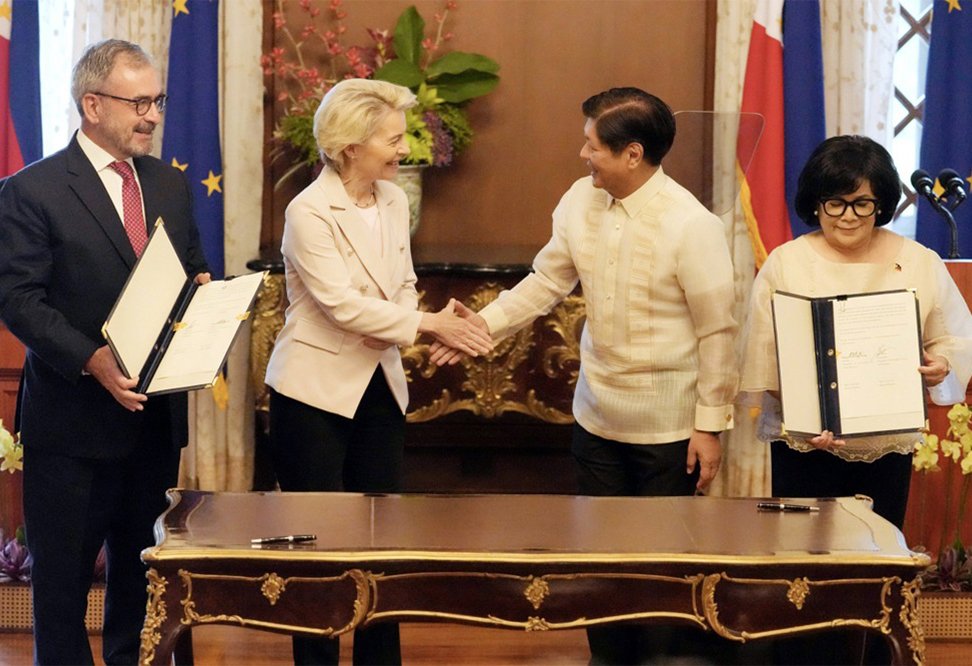
The EU and Philippines reached substantial agreement on a free trade agreement on September 22, 2026, putting the deal on course for final legal completion. The European Commission says the agreement will liberalise more than 94% of tariff lines covering over 97% of bilateral trade. It is not yet signed or in force.
For apparel sourcing, the potential impact is substantial.
€514 million is an FTA impact estimate
An EU-commissioned Sustainability Impact Assessment modelled Philippine wearing-apparel exports to the EU increasing by approximately €514–515 million under either conservative or ambitious FTA scenarios—equivalent to about a 76% increase in bilateral apparel exports in the study’s modelling framework. Textile exports were projected to gain another €204 million.
The figure should therefore not be interpreted as the current European apparel market available to Philippine suppliers. It is an economic-model estimate based on earlier trade structures and assumptions, and actual gains will depend on the final agreement and industry capacity.
Momentum is already visible
Fibre2Fashion’s TexPro data indicate that EU27 imports from the Philippines were already expanding in key categories during the first half of 2026: HS6110 sweaters rose 45.8%, HS6203 men’s woven apparel 16.7%, and HS6204 women’s woven apparel 10.0% year on year.
The Philippines already enjoys EU GSP+ preferences, under which tariffs are removed on roughly two-thirds of product categories. In 2023, 73% of eligible Philippine exports actually used those preferential rates.
Rules of origin become decisive
The FTA opportunity will therefore depend on more than headline tariff elimination. Rules of origin will determine how easily garment factories can use imported yarns and fabrics while retaining preference, a particularly important issue for a sourcing country without the upstream textile scale of China, India or Vietnam.
Capacity, compliance, lead times and investment will also determine whether buyers shift meaningful volumes.
For established EU suppliers—including Bangladesh, Pakistan, Vietnam and Cambodia—the agreement adds another competitive variable. The important signal to watch is the final apparel rules of origin: these will largely determine whether the Philippines becomes a niche EU supplier or a materially larger sourcing platform.
