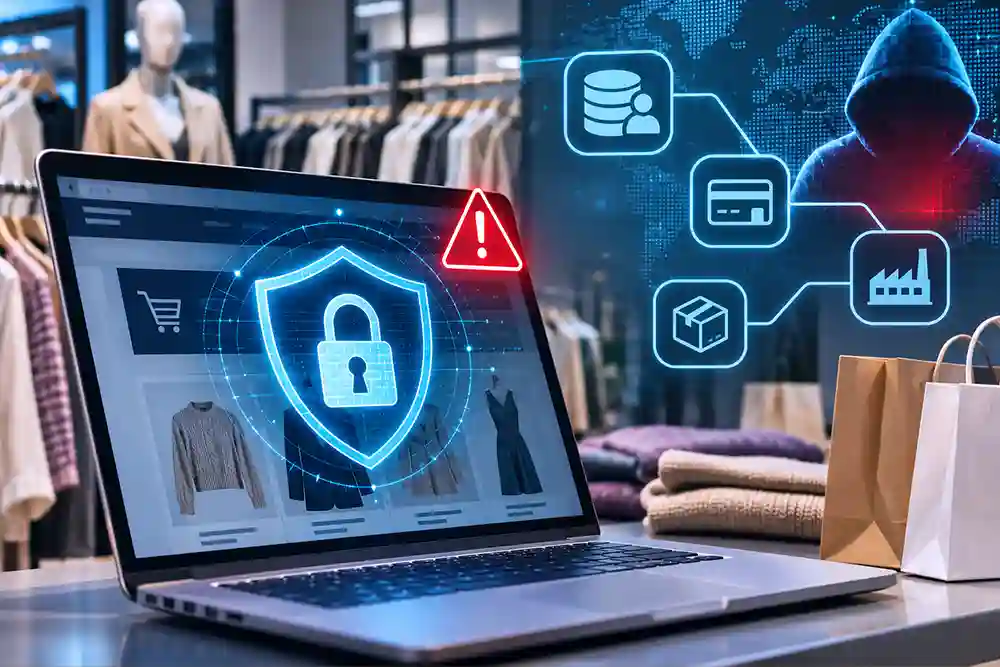
Moody’s identifies retail as particularly exposed to costly cyberattacks, highlighting growing vulnerabilities across fashion e-commerce, customer databases and interconnected apparel supply chains.
Retail ranks among the five US industries with the highest overall cybersecurity risk, according to Moody’s Ratings’ October 2026 Cyber Risk Heat Map, which assessed 21 sectors for threat exposure, defensive capabilities and potential financial losses.
The analysis also places retail among the five sectors facing the highest modelled cyber losses relative to gross profit, underscoring the financial consequences of major security breaches
Retail’s Digital Exposure Creates Vulnerabilities
Moody’s identifies media, telecommunications, education, retail and IT hardware as the five highest-risk industries.
For potential losses relative to gross profit, the five sectors are food and agriculture, manufacturing, energy, media and retail
Retailers face heightened exposure because of extensive e-commerce operations, customer databases, payment infrastructure and interconnected technology providers.
Moody’s characterises the sector as having large digital footprints but only moderate cybersecurity defences. The rankings concern comparative risk rather than observed attack frequency.
Fashion Brands Face Recent Cyber Incidents
The findings follow October cybersecurity incidents involving several fashion retailers.
On October 6, ASOS reported unauthorised access through third-party customer communication systems. Its investigation confirmed access to customer names and contact details, but not payment-card information or passwords. Its website and app remained operational.
TFG London, owner of Hobbs, Phase Eight and Whistles, temporarily suspended online orders following a separate cyberattack.
H&M also investigated hacking allegations but reported finding no indication that its data environment had been compromised.
Supply-Chain Security Becomes a Commercial Priority
For apparel brands, cyber incidents can disrupt inventory management, order processing, customer services and fulfilment operations.
Textile manufacturers are also exposed through connected procurement platforms, supplier portals, cloud-based production systems and digital traceability networks.
Companies increasingly need stronger access controls, multifactor authentication, supplier-security assessments, secure backups and tested incident-response procedures.
The next challenge is extending cybersecurity governance beyond individual retailers to their manufacturing and technology partners, ensuring that supply-chain digitalisation improves efficiency without creating unmanaged operational risks.