

New industry-level engagement in Paris is shifting India–EU textile cooperation toward market access, sustainability, circularity, innovation and higher-value manufacturing.
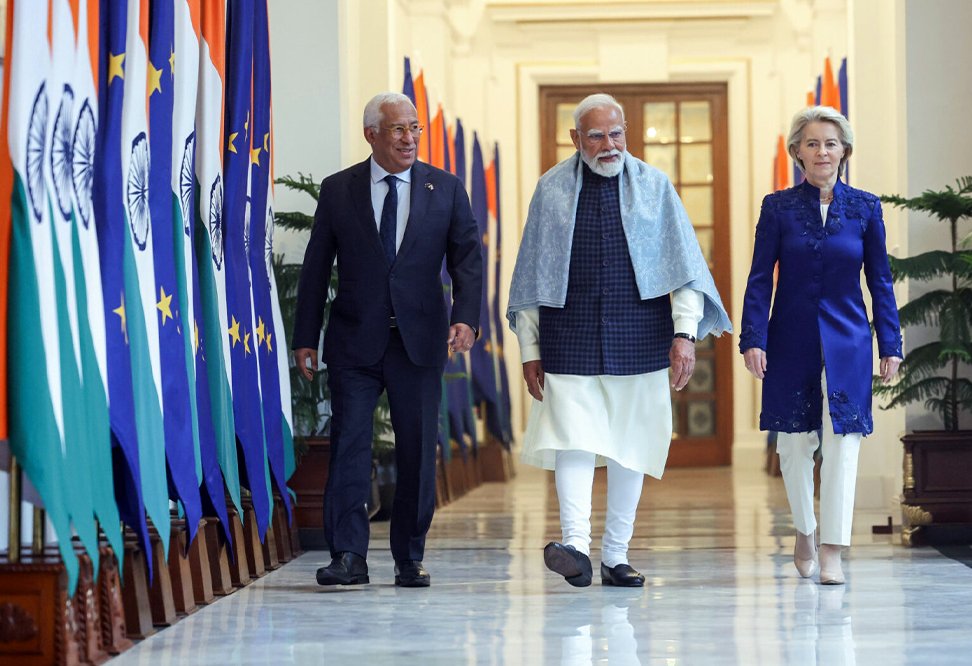
India is intensifying textile and apparel cooperation with France and the European Union, seeking to convert its newly concluded EU trade agreement into stronger sourcing relationships, technology partnerships and higher-value exports.
India’s Textiles Secretary Neelam Shami Rao held discussions in Paris on September 1 with representatives of the European and French textile, apparel and fashion industries, including EURATEX President Mario Jorge Machado, French parliamentarians Sylvie Valente Le Hir and Anne-Cécile Violland, and industry associations. Talks centred on sustainability, circularity, innovation, fashion and high-value textiles.
Paris engagement widens
Rao and Indian textile industry representatives also visited Première Vision and Texworld Paris, where 75 Indian exhibitors showcased textile and apparel capabilities.
The engagement builds on a July agreement between the Bharat Tex Trade Federation and Première Vision, designed to connect Indian manufacturers, MSMEs and exporters more closely with European buyers while promoting design, trend intelligence, sustainability and international sourcing.
Separately, EURATEX and the Confederation of Indian Textile Industry (CITI) launched an EU–India Textile and Apparel Dialogue in July. The platform is intended to support reciprocal market access, resilient supply chains, industrial competitiveness and implementation of the EU–India trade agreement.
FTA changes the competitive equation
India and the EU concluded negotiations on their Free Trade Agreement on January 27, 2026. India’s Textiles Ministry says the agreement is expected to provide Indian textile and apparel products with zero-duty access to an EU market whose global textile and apparel imports reached $263.5 billion in 2024. The EU is already India’s second-largest textile and apparel export destination after the United States.
EU–India trade in goods reached €118 billion in 2025, while EU foreign direct investment stock in India stood at €132.8 billion in 2024.
Competition moves beyond price
For Indian suppliers, tariff removal could improve competitiveness against established Asian sourcing hubs, but Europe’s regulatory direction means price alone will not determine future orders.
The larger opportunity lies in combining India’s manufacturing scale with traceability, circular materials, cleaner processing, design capability and higher-value textile products. The next test will be how quickly Indian mills convert diplomatic and institutional agreements into buyer programmes, technology partnerships and measurable export gains.
