

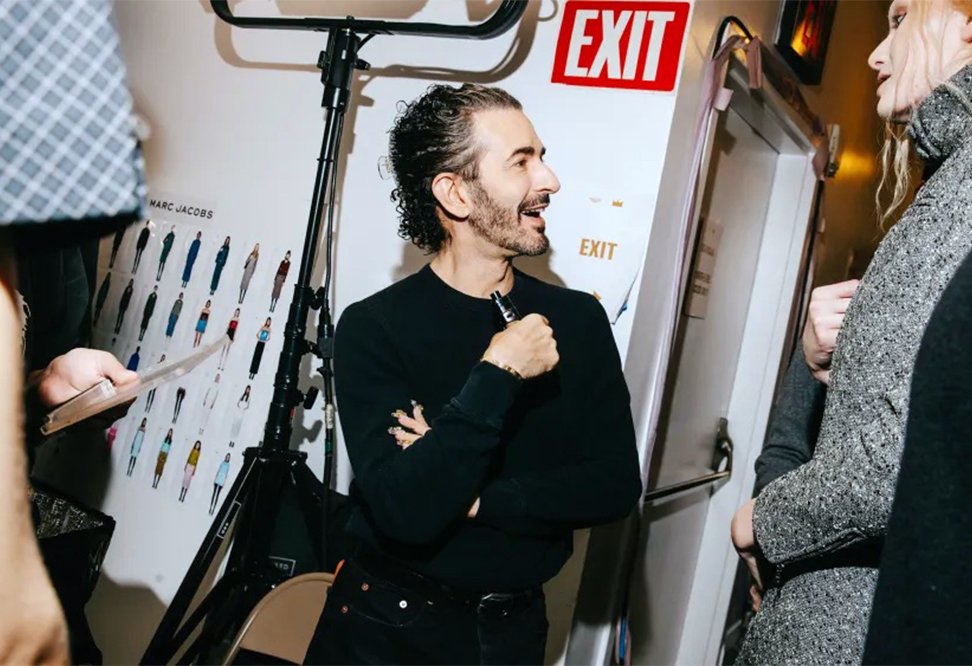
The deal transfers Marc Jacobs from a luxury conglomerate to a brand-management and operating partnership built around licensing, sourcing, wholesale expansion and international scale.
LVMH has completed the sale of Marc Jacobs to WHP Global and G-III Apparel Group in a transaction valued at roughly $925 million, ending nearly three decades of LVMH ownership and creating a new structure aimed at accelerating the brand’s commercial growth.
The transaction closed on September 1, 2026. WHP Global and G-III now each own 50% of a joint venture holding the Marc Jacobs intellectual property, while G-III separately owns and operates the underlying business, including wholesale, retail and e-commerce. Marc Jacobs remains Founder and Creative Director.
G-III takes operational control
The structure gives the partners distinct roles. WHP Global will lead global licensing, while G-III will oversee product development, sourcing, merchandising, distribution and the operating business.
G-III funded an investment of approximately $500 million using cash and borrowings under its revolving credit facility. Its long-term licence covers major categories including apparel, handbags, footwear, swimwear, small leather goods, luggage and cold-weather accessories across key markets.
The brand operates more than 100 stores, with a business concentrated particularly in the US and Europe.
A $1 billion ambition
G-III has already set a substantial growth target, saying it aims to build Marc Jacobs to $1 billion in long-term annual revenue. The company expects the transaction to be dilutive during its first 12 months but accretive thereafter.
The acquisition is particularly significant as G-III reduces its dependence on licensed Calvin Klein and Tommy Hilfiger products; it expects those licence exits to remove around $460 million of fiscal 2027 sales.
Ownership models are changing
For fashion suppliers, the transaction illustrates a broader shift in brand ownership. Intellectual property, licensing and operating functions are increasingly being separated, allowing specialist owners to expand categories and geographies without relying solely on vertically integrated luxury-group structures.
The key test will be whether G-III can use its sourcing, wholesale and distribution infrastructure to scale Marc Jacobs while protecting the creative positioning that gives the brand its pricing power. Success could make the transaction another reference case for the growing brand-management model in global fashion M&A.
