

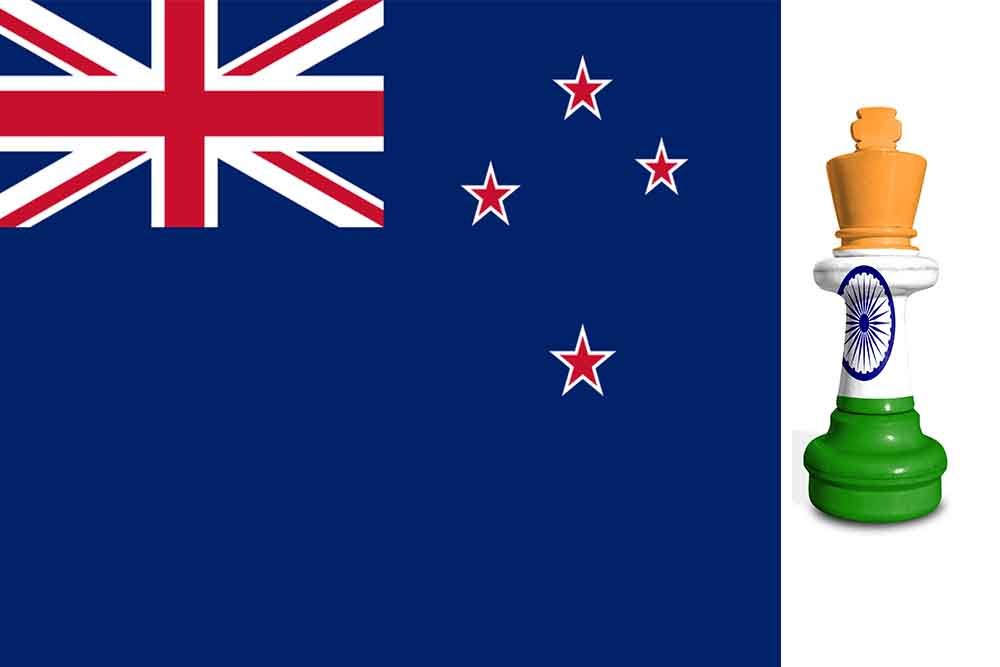
The proposed India–New Zealand Free Trade Agreement (FTA) is expected to provide a significant boost to Indian exports, with New Zealand offering zero-duty market access on 100% of its tariff lines covering all Indian goods from the date the agreement enters into force.
Labor-intensive sectors are set to be among the biggest beneficiaries. New Zealand will eliminate tariffs of up to 10% on textiles and clothing, granting Indian exporters zero-duty access across 1,057 tariff lines. India will be the third-largest exporter of textiles and apparel to New Zealand in 2024, after China and Bangladesh, with shipments valued at US$138.65 million. The leather and footwear sector is also expected to gain, with full tariff elimination across 181 tariff lines.
With zero-duty access, improved regulatory facilitation and liberalization of services, the FTA is expected to unlock the next phase of growth across multiple Indian export sectors while strengthening India’s presence in Oceania and the wider Indo-Pacific region.
The Confederation of Indian Textile Industry (CITI) welcomed the conclusion of the FTA negotiations. CITI chairman Ashwin Chandran said the agreement, coming shortly after the signing of the Comprehensive Economic Partnership Agreement between India and Oman, underlined India’s focus on diversifying trade and services markets. He said the deal would expand market access opportunities for the textile and apparel sector and require the industry to diversify its product offerings to deepen engagement with new FTA partners.
Chandran added that the India–New Zealand FTA would help Indian textile and apparel exporters pursuing diversification strategies to reduce reliance on a limited number of markets. He said the agreement would make Indian products more attractive and price-competitive for both existing and potential buyers in New Zealand.
India has continued to expand its network of trade agreements in recent months. In July, it signed the Comprehensive Economic and Trade Agreement with the United Kingdom, while negotiations with the European Union are at an advanced stage. Talks are also ongoing with the United States on a proposed bilateral trade agreement.

