


 Knowledge of water permeability testing is becoming increasingly more important with the growth in performance and technical textiles. In the latest article of James Heal, Sara Williams explores the topic of ‘hydrostatic head’, by addressing some of the most frequently asked questions we receive relating to this fascinating area of textile testing.
What is hydrostatic head testing?
Hydrostatic head testing is used to determine the water resistance of a material, by forcing water under pressure through the fabric, and recording the results. “The term ‘hydrostatic head’ is the measurement used to calculate how much water pressure a material can take before water penetration occurs,” explains Sara.
Why is hydrostatic head important for performance textiles?
As textiles become more advanced, needing to perform more and better functions – from protection to comfort – measuring the resistance of water through a textile or fabric can be critically important for many reasons.
“Any textile that is exposed to water, and specifically water combined with pressure – such as medical textiles, tenting and geo-textiles, structural/building textiles – needs to be tested to determine its hydrostatic head value,” affirms Sara. “Outdoor wear and their textiles based accessories or equipment need to be tested for many of their different functions, and from each test, it builds up a picture of how the garment or the product performs.”
In the hydrostatic head test, the product application will define the target hydrostatic pressure; the lower a hydrostatic pressure measurement the more easily water can penetrate under pressure. “As more and more brands are investing in new materials and making performance claims on water resistance waterproofing, the hydrostatic head test is one of the most common ways to test performance fabrics”, explains Sara.
As a group, performance textiles usually have many features, and most of them overlap with one another, for example the breathability of a raincoat is directly related to its resistance to penetration to water, otherwise known as hydrostatic head. This is not strictly the case for every performance textile, however, there’s an ever-increasing amount of functions that need to be met with today’s performance textiles.
Sara elaborates, “An example of where hydrostatic pressure might be important, is testing the groundsheet of a tent. This needs a high resistance to water penetration especially when placed on saturated ground. When pressure is applied to the ground sheet by people standing, sitting or sleeping on it; water could then be forced through. Failure in this area would mean anything in contact with the groundsheet will become wet.”
This is also the case with a performance garment claiming waterproof properties, adds Sara. “You would need a high hydrostatic head value to demonstrate its defence capabilities against wind, rain and other physical factors. Waterproof penetration testing is key to understanding the performance of a garment in adverse weather conditions. Hydrostatic head testing is key to understanding the performance of a garment in adverse weather conditions, which relates directly to the wearers’ comfort, and more importantly their safety.”
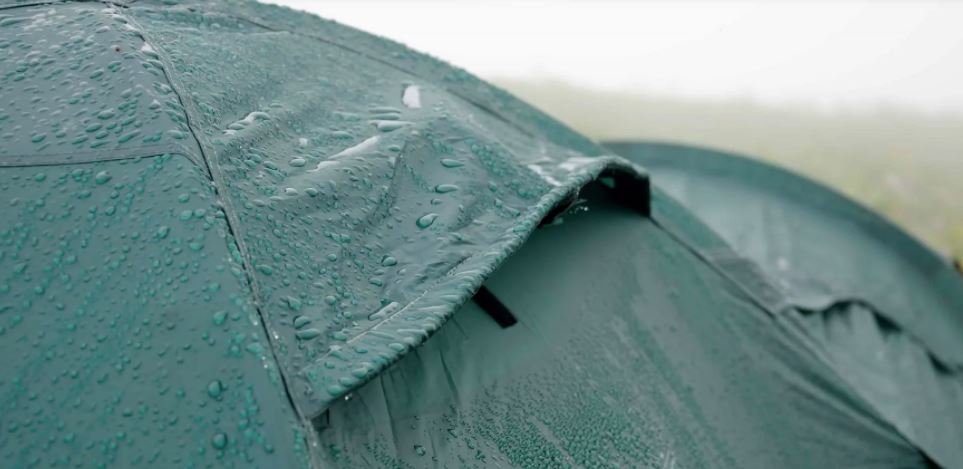
Safety as well as comfort – a vital function of today’s performance textiles
“Safety is a vital function in a lot of performance textiles on the market today, and safety looks different depending on the end use of the product,” begins Sara. “In active/outdoor apparel particularly, a good hydrostatic head value would keep the wearer from becoming wet in potentially quite harsh and cold climates, and therefore they would stay warmer, drier, and overall safer in their clothing.”
Furthermore, medical textiles need multiple functions, such as breathability, thermal regulation, and even antimicrobial properties.
“Hydrostatic head can be an indicator of the permeability to water and also air in textiles, or a measure of breathability for medical face coverings. It is a contributing factor to the comfort of a fabric.”
“Hydrostatic head, alongside air permeability, are both directly related to the comfort of medical textiles, and this is where the term breathability comes in,” adds Sara. “When we think of the common face mask which we are all familiar with now since the Covid-19 pandemic; we need a level of protection from the mask, however we need to be able to breathe as easily as possible through it too, as often people will be wearing these at work for many hours during the day. Testing medical textiles in all of these various areas is crucial for providing an indication as to its safety and comfort.
What is the difference between hydrostatic head vs. water resistance / repellence?
It is important to know that testing for the hydrostatic head value is very different to other types of testing such as water repellency. Hydrostatic head is testing specifically the time until penetration to water, when exposed to increasing water pressure. This brings more focus on the construction to the membrane of the fabric and it’s resistance to water pressure, and less to the outer layers or finishes a textile might have which aid its repellency to water. So although the two are linked, they are not the same.
What are the standards and test methods?
Woven
• EN ISO 811
• JIS L 1092
• AATCC 208* + AATCC 127
• G/B T 4744
Nonwoven
• NWSP 080.6R0
• EN ISO 9073-16

How is the hydrostatic head test performed?
During testing, the specimen is subjected to increasing water pressure from the underside, measured in kilopascals (kPa), under standard conditions, until a predetermined pressure, which is stated in the fabrics specification, is obtained, or until penetration.
The pressure of the water is monitored by a water-filled manometer which measures the pressure on the specimen in cm or millibar of water. “With the pressure increase, the specimen will distend. What we look for when testing textiles for their hydrostatic head value, is any droplets of water that may form on the surface of the tested specimen, or equally if total, or no penetration of water has occurred,” says Sara.
Interpreting test results for hydrostatic head – things to look out for
“Determining ‘when is a drop a drop’ is very subjective, as hydrostatic head testing is predominantly observed with the naked eye,” explains Sara.
So how do you determine what a drop is?
“Firstly, do not take into account any small, fine droplets which don’t grow in size. These do not give us an accurate representation of penetration, as some fabrics can ‘sweat’, and some fabrics have small imperfections. These can both produce these small drops so it is important that you do not count these. They are likely to occur in nearly all specimens,” says Sara.
“Also note whether the penetration occurs at the edge of the specimen. If they do, the standard states to ‘reject as unsatisfactory’ any individual test in which this occurs. Seeing these smaller drops nearer the edge of your specimen could mean that there are more frequent small imperfections in the fabric. Test further specimens until reproducible results are obtained, so this could mean you have five in the first go, however this is not a given, so expect to be performing more than just five in order to achieve an accurate set of data. “What we are looking for is subsequent drops which form through the same place in the fabric to form one larger well-formed droplet, or larger droplets that just form on their own.”
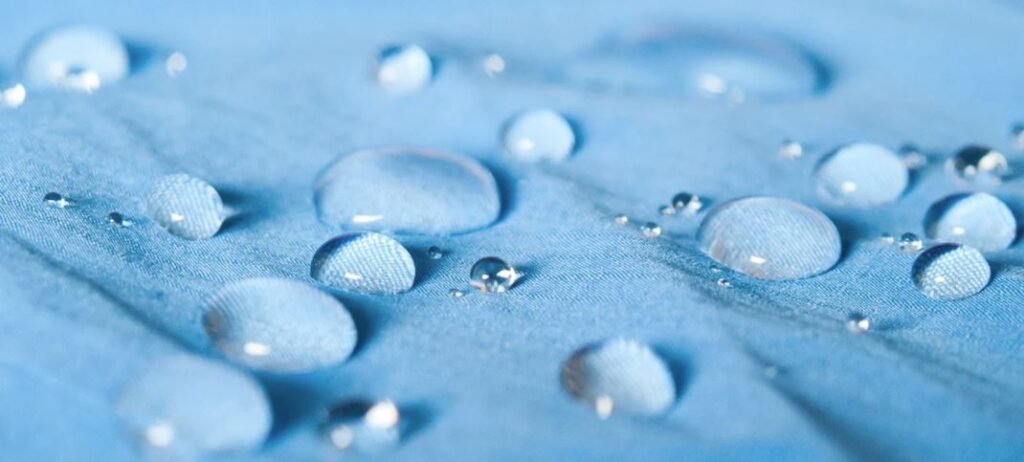
Discover HydroView
The new HydroView Hydrostatic Head Tester, is designed for testing materials which have an end use that requires water resistance, to measure the penetration of water. This includes materials produced for a range of applications across the medical, apparel, geotextiles and nonwovens sectors – from protective gloves, diving dry suits, winter sports apparel, to fishing waders, roofing, tenting and ground sheets and more.

