


Page 14 - February-March 2021
P. 14
14


             Hohenstein Institute developed


                          a molecular biological


                            procedure to identify


                   genetically modified cotton


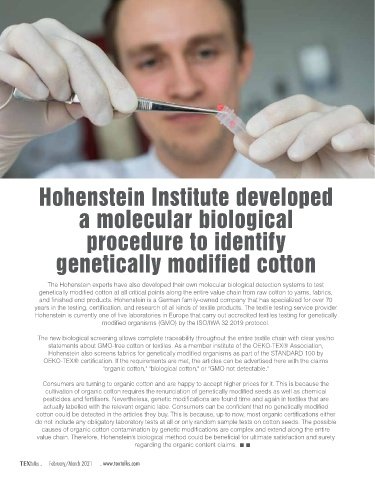
                The Hohenstein experts have also developed their own molecular biological detection systems to test
             genetically modified cotton at all critical points along the entire value chain from raw cotton to yarns, fabrics,
             and finished end products. Hohenstein is a German family-owned company that has specialized for over 70
            years in the testing, certification, and research of all kinds of textile products. The textile testing service provider
            Hohenstein is currently one of five laboratories in Europe that carry out accredited textiles testing for genetically
                                 modified organisms (GMO) by the ISO/IWA 32:2019 protocol.

             The new biological screening allows complete traceability throughout the entire textile chain with clear yes/no
                statements about GMO-free cotton or textiles. As a member institute of the OEKO-TEX® Association,
                Hohenstein also screens fabrics for genetically modified organisms as part of the STANDARD 100 by
               OEKO-TEX® certification. If the requirements are met, the articles can be advertised here with the claims
                                 "organic cotton," "biological cotton," or "GMO not detectable."

              Consumers are turning to organic cotton and are happy to accept higher prices for it. This is because the
               cultivation of organic cotton requires the renunciation of genetically modified seeds as well as chemical
               pesticides and fertilisers. Nevertheless, genetic modifications are found time and again in textiles that are
               actually labelled with the relevant organic labe. Consumers can be confident that no genetically modified
            cotton could be detected in the articles they buy. This is because, up to now, most organic certifications either
            do not include any obligatory laboratory tests at all or only random sample tests on cotton seeds. The possible
              causes of organic cotton contamination by genetic modifications are complex and extend along the entire
             value chain. Therefore, Hohenstein's biological method could be beneficial for ultimate satisfaction and surety
                                            regarding the organic content claims.

                February/March 2021

