


Page 64 - November-December-2017
P. 64
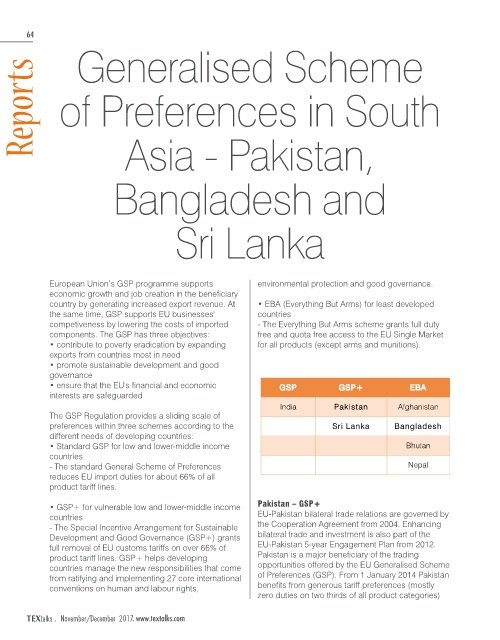
64 Generalised Scheme 65 In July 2013, in response to the collapse of the Rana exports in the same period by 13 percent and 17
Reports of Preferences in South Plaza factory complex which killed scores of workers, percent, respectively. This shows that Pakistan has
not yet fully exploited the benefits of the GSP plus
the EU took the initiative of launching a Sustainability
status. The desired benefit of the GSP plus status –
Compact for Bangladesh with the aim of improving
substantially higher exports – will be realized only
labour rights and factory safety in the ready-made
when the energy, tax and customs challenges are
garment industry. The initiative brings together the
addressed comprehensively. Improving Pakistan’s
EU, the Government of Bangladesh, the USA,
Asia - Pakistan,
Canada - i.e. the main markets for Bangladeshi
business environment will also be key to attracting
foreign clients including Chinese investors, given that
garment production - as well as the International
lower-cost developing countries and Pakistan offers
short and long-term commitments related to three
Bangladesh and labour Organisation (ILO). The Compact is based on the Chinese garment industry is relocating to
inter-linked pillars:
the additional advantage of easy access to
European markets. The main sector, which
• respect for labour rights;
• structural integrity of buildings and occupational
substantially benefited from GSP+, was the
ready-made garment industry, which is instrumental
safety and health;
Sri Lanka • responsible business conduct. in generating employment and reducing poverty in
Sri Lanka. The potential negative consequences on
employment and poverty showcase the kind of
The Compact has contributed to tangible
improvements in workplace safety, though respect of
The new Sri Lanka government, elected in January
workers' rights remains a pressing issue in dilemma the EU faces when deciding on sanctions.
Bangladesh. The EU's Fourth Technical Report on the 2015, made significant progress on human rights
European Union’s GSP programme supports environmental protection and good governance. Bangladesh Sustainability Compact was published in (praised by NGOs) and decided to reapply for GSP+
economic growth and job creation in the beneficiary October 2017. in June 2016. Bangladesh is the biggest beneficiary
country by generating increased export revenue. At • EBA (Everything But Arms) for least developed of the EBA scheme. Its ready-made garment sector
the same time, GSP supports EU businesses' countries Impact of the scheme is the main producer of goods exported to the EU.
competiveness by lowering the costs of imported - The Everything But Arms scheme grants full duty For some of the countries concerned, the share of As per the plan of the government, Bangladesh will
components. The GSP has three objectives: free and quota free access to the EU Single Market preferential exports to the EU is significant, graduate to a middle-income country from the least
• contribute to poverty eradication by expanding for all products (except arms and munitions). under the so-called GSP+ arrangement aiming to largest export destination, absorbing 36% of its compared to their total worldwide exports developed country by the end of 2021. After the
exports from countries most in need support sustainable development and good exports. (Bangladesh, Pakistan, Sri Lanka) and this partly graduation, the country may not enjoy the zero-duty
• promote sustainable development and good governance. In order to maintain GSP+ Pakistan has explains the leverage the EU has been able to garner benefit under the EU's everything but arms (EBA).
governance to keep ratification and effectively implement 27 core Textiles and clothing account for more than half of Sri from its trade preferences in order to promote human Maplecroft, an international agency that ranks
• ensure that the EU's financial and economic GSP GSP+ EBA international conventions on human and labour right, Lanka’s export value with machinery, rubber-based rights. The garment sector in the beneficiary countries according to their investment climate,
Inkjet printing
interests are safeguarded environmental protection and good governance. goods, jewellery and agricultural products making up countries has benefited most from the scheme. This places Pakistan and Bangladesh in the high-risk
India Pakistan Afghanistan for the rest. economic sector has great potential to create category. Pakistan fares much worse than
The GSP Regulation provides a sliding scale of The EU being Pakistan's most important trading employment, especially for women, lifting people out Bangladesh on most categories.
preferences within three schemes according to the Sri Lanka Bangladesh partner taking 21.2% of Pakistan's total exports. Bangladesh – EBA of poverty. Thus, GSP contributes both directly and
different needs of developing countries: EU-Pakistan trade increased by almost 4.7% annually As a Least Developed Country (LDC), Bangladesh indirectly (through its conditionality) to improving Currently, more than 80% of Pakistan’s exports to the
• Standard GSP for low and lower-middle income Bhutan between 2007 and 2011. Pakistani exports to the EU benefits from the most favourable regime available human rights. On the other hand, the benefits of the EU consist of textile and clothing. Almost 72% of
countries are dominated by textiles and clothing as well as under the EU's Generalized Scheme of Preferences system accrue mainly to a small number of exports to the EU went to five countries – the UK,
- The standard General Scheme of Preferences Nepal leather products. Textiles and clothing account for (GSP), namely the Everything But Arms (EBA) countries. Around 90 % of the total volume of Germany, Spain, the Netherlands and Italy.
reduces EU import duties for about 66% of all just under 75% of Pakistan's exports to the EU. arrangement. The EU is Bangladesh's main trading preferential exports to the EU under GSP originates Pakistan’s adverse business climate hinders
product tariff lines. Pakistan's imports from the EU mainly comprise partner, accounting for around 24% of Bangladesh's in less than 10 countries, located mainly in South investments in export manufacturing particularly by
and South-East Asia.
new EU-based clients. International buyers prefer
• GSP+ for vulnerable low and lower-middle income Pakistan – GSP+ mechanical and electrical machinery as well as total trade in 2015. In 2015, Bangladesh was the EU's suppliers from less risky countries, especially where
35th largest trading partner in goods. EU imports
chemical and pharmaceutical products.
countries EU-Pakistan bilateral trade relations are governed by from Bangladesh are dominated by clothing, Pakistan was the second country in South and physical engagement with firms is possible. Pakistan
- The Special Incentive Arrangement for Sustainable the Cooperation Agreement from 2004. Enhancing Sri Lanka – GSP+ accounting for over 90% of the EU's total imports Southeast Asia to receive the trade advantage, should take full advantage of GSP Plus and increase
Development and Good Governance (GSP+) grants bilateral trade and investment is also part of the Sri Lanka has been a major beneficiary of the trading from Bangladesh. EU exports to Bangladesh are giving it a 10 to 14 percent duty advantage over exports of its traditional and non-traditional products
full removal of EU customs tariffs on over 66% of EU-Pakistan 5-year Engagement Plan from 2012. opportunities offered by the Generalised Scheme of dominated by machinery and transport equipment major regional competitors including China, India, to the EU member states. On a separate note, the
product tariff lines. GSP+ helps developing Pakistan is a major beneficiary of the trading Preferences. Since a decision to temporarily withdraw Vietnam, Thailand, and Indonesia. Between 2013 UK leaving the EU can be a loss for Pakistan’s
countries manage the new responsibilities that come opportunities offered by the EU Generalised Scheme the Generalized System of Preferences Plus benefits (49%). From 2008 to 2015, EU28 imports from and 2015, Pakistan’s most important export industry dealings with Brussels, and Pakistan would be
from ratifying and implementing 27 core international of Preferences (GSP). From 1 January 2014 Pakistan in 2010, Sri Lanka has still enjoyed preferential Bangladesh have almost trebled from €5,464 million – garments – increased exports by 10 percent. But looking for a GSP+ like deal with post-Brexit Britain.
conventions on human and labour rights, benefits from generous tariff preferences (mostly access to the EU market for its key export items to to €15,145 million, which represents nearly half of Bangladesh and India increased their garments
zero duties on two thirds of all product categories)
the EU, such as clothing. The EU is Sri Lanka's Bangladesh's total exports.
November/December 2017 November/December 2017

