

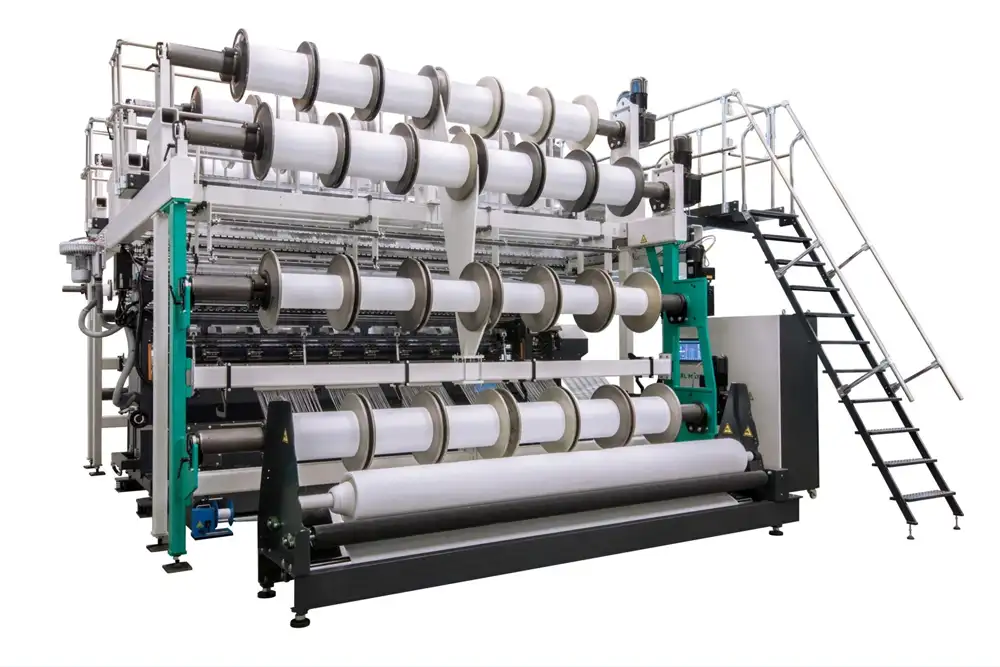
The double-needle-bar raschel machine targets footwear and mattress producers seeking more complex mesh, colour and three-dimensional effects from one knitting platform.
KARL MAYER has launched the RDJ 7/3, a double-needle-bar raschel machine equipped with three split jacquard bars for producing differentiated spacer fabrics. Announced on July 28, 2026, the machine is aimed mainly at athletic and casual footwear, where breathability, comfort and visual distinction must be delivered within tight development cycles.
Three bars widen the design envelope
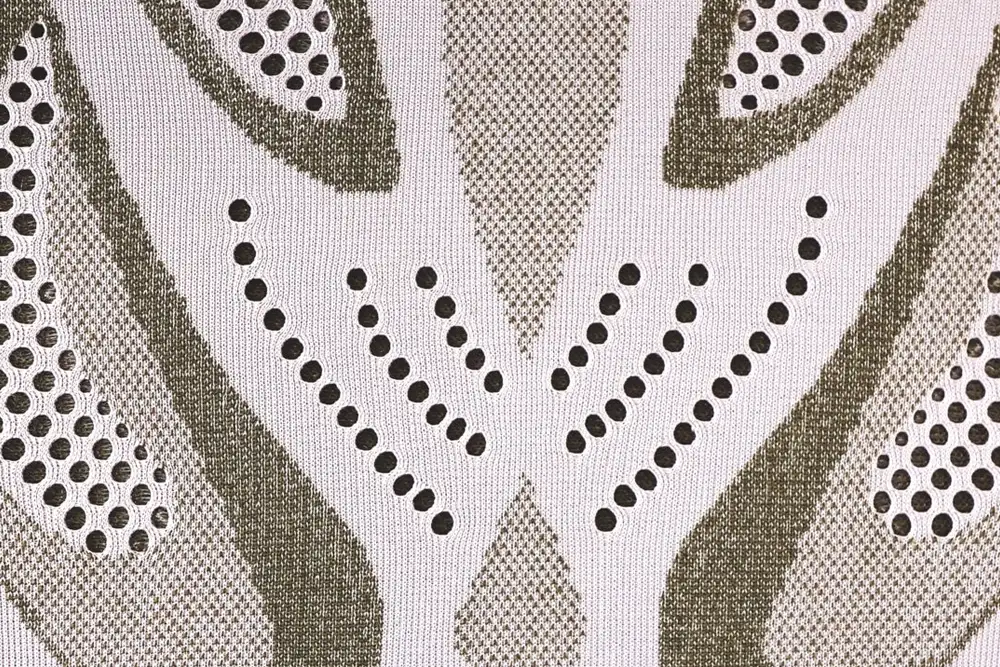
The jacquard bars can work with counter-lapping, enabling varied contours, integrated functional zones and mesh structures with larger, more nearly circular openings. Mesh can be produced on either or both fabric faces, allowing manufacturers to engineer different aesthetics and functions into the front and back of the same textile.
KARL MAYER says the machine can create two-colour jacquard effects and use up to six colours across different pattern areas. This broadens the scope for branded motifs, zoned colour placement and more complex shoe-upper constructions without relying entirely on post-knitting decoration.
Thickness becomes a pattern variable
The third jacquard bar can introduce an additional yarn into the pile zone and work on both needle bars. Depending on the yarn—such as an elastane-containing or higher-shrinkage construction—the system can locally reduce the distance between the fabric faces. This produces raised, recessed and embossed “4D” effects alongside controlled thickness variation.
Eight bars are available for pile formation, giving developers wider choice in yarn placement, structure and material combinations. KARL MAYER also identifies mattress covers as a target application.
The mill-economics test
The RDJ 7/3 has a 138-inch working width and E24 gauge, with an adjustable trick-plate distance of 2–5 millimetres. A wireless jacquard system is intended to simplify handling and improve machine access.
Its commercial value will depend on whether mills can translate the broader patterning range into faster development, fewer secondary processes and higher-value fabrics. KARL MAYER describes the machine as suitable for high-volume production, but has not disclosed independently verified productivity, energy-consumption or comparative cost data. Customer trials will therefore be the next important benchmark.
