


The company collects used pet bottles, crush, melt, add color, and produce fibre, which will be made into yarn as also garments.
Prime Minister Narendra Modi attended the Rajya Sabha Budget Session of Parliament, in New Delhi wearing a special blue jacket, made from recycled plastic bottles. The special jacket is being presented to him on February 9 at the India Energy Week in Bengaluru (PTI Photo).
Prime Minister Narendra Modi wearing a special blue jacket, made from recycled plastic bottles, in the Rajya Sabha during the Budget Session of Parliament, in New Delhi, Wednesday, February 8, 2023. The special jacket was presented to him on February 9 at the India Energy Week in Bengaluru. By donning the blue jacket produced from recycled bottles Modi gave a subtle message of sustainability. The jacket was produced by Karur-based Shree Renga Polymers.
Shree Renga Polymers became a pioneer in sustainable textiles in India. The Tamil Nadu-based company established 14 years back is producing fiber from recycled pet bottles. It turns fiber into yarn and besides making garments also sells the extra yarn in the market.
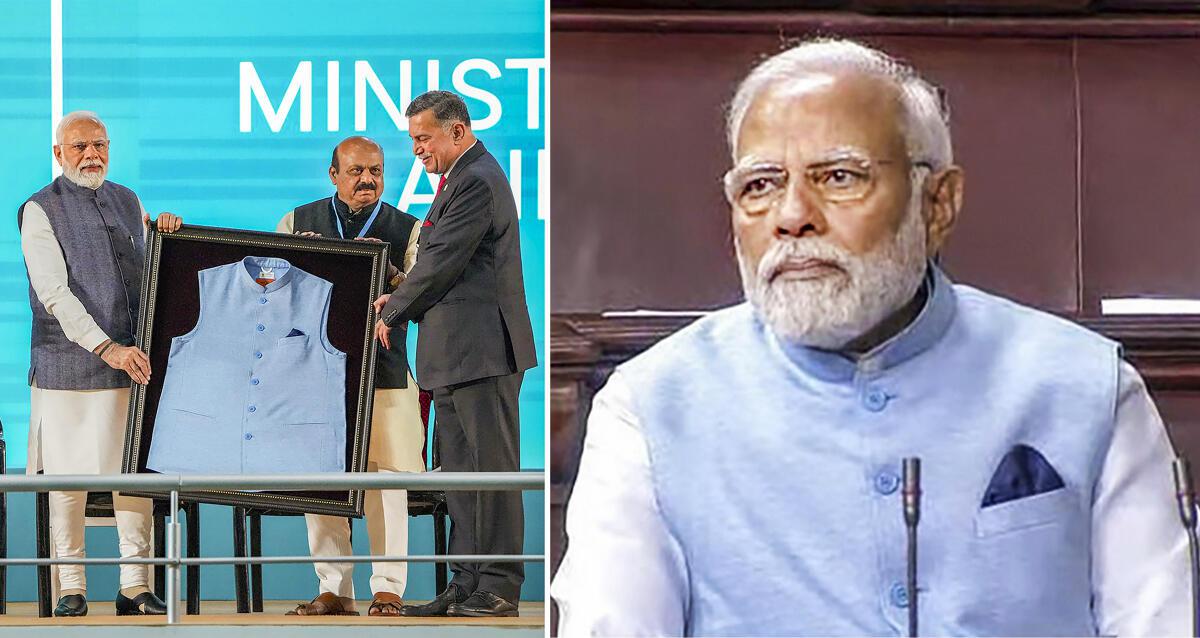
The 14-year-old company from Tamil Nadu has been producing fibres out of recycled pet bottles.
It also makes and sells yarn as well as its brand of garments made out of its fibres. The recycling of PET to produce fiber saves at least 90 percent more water and 50 percent more energy than consumed in traditional processes. Shree Renga Polymers collects about 1.5 million used pet bottles per day. It requires crushing 8 bottles to produce a T-Shirt and 20 bottles to make a trouser or a jacket may require about 20 bottles.
The ‘sustainability’ message is vital as the World is focused on climate change. Textiles come under pressure to use sustainable processes as currently, textiles leave a higher carbon footprint than global toad and sea transport.
It is estimated that globally, one-fifth of industrial water pollution is contributed by the textile industry and 35 kg of textile waste is generated per person every year in the US.
The EU is already set to achieve textile sustainability by 2030.
Indians need to adopt a sustainable process to retain their EU market.

