

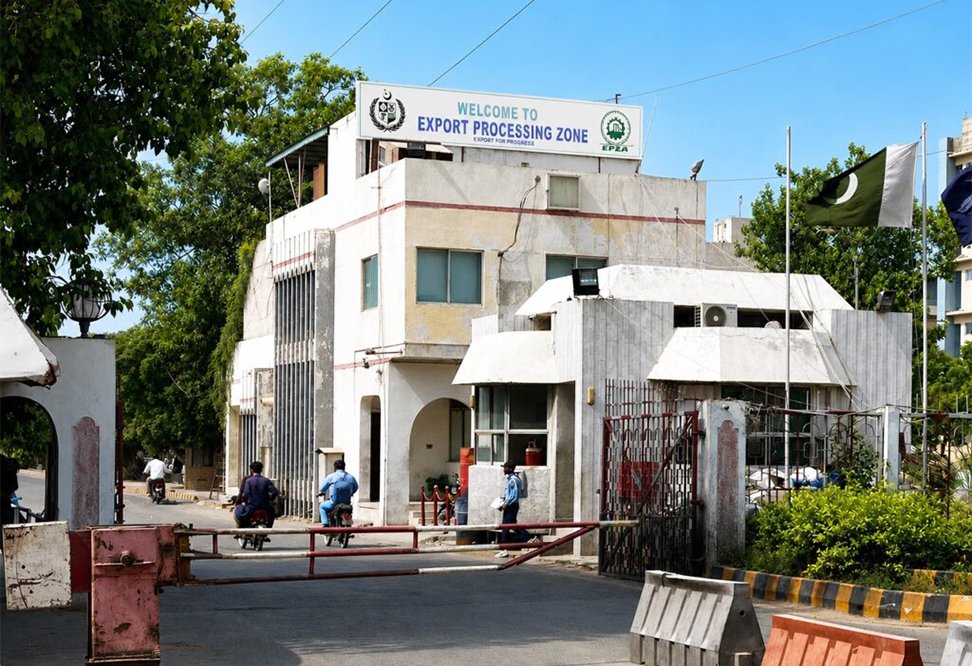
Removing limited domestic sales could leave recyclers without a viable outlet for lower-grade materials, putting exports, employment and circular-economy investment at risk.
Pakistan is considering amendments that would prohibit Export Processing Zone companies from selling part of their output into the domestic market, a change textile recyclers warn could undermine used-clothing sorting and recovery operations in Karachi.
A Ministry of Industries and Production communication dated June 17, 2026 reportedly links the proposed restriction to Pakistan’s commitments under its IMF-supported programme. Implementation is being considered after Cabinet approval, potentially by September 2026. The measure remains proposed rather than final.
The 80/20 model under pressure
EPZ businesses currently operate under an 80/20 arrangement. At least 80% of output must be exported, while up to 20% by value can enter Pakistan’s tariff area after payment of applicable customs duties, taxes and regulatory charges.
For used-textile operators, this domestic channel is commercially important because imported clothing produces multiple grades after sorting. Exportable garments can be shipped to overseas resale markets, while residual, damaged or lower-value items may be sold locally, converted into wiping cloths or directed towards recycling.
A complete domestic-sales ban would not merely reduce local market access. It could weaken the economics of processing an entire shipment because operators would still incur import, sorting, labour and storage costs for materials unsuitable for re-export.
An established EPZ activity
Pakistan’s 2024 rules explicitly recognise the processing or recycling of used textile clothing as an eligible EPZ activity. The Export Processing Zones Authority’s investor directory also lists dozens of Karachi-zone businesses involved in used clothing, textile sorting and recycling, demonstrating that the sector is not a marginal or newly introduced trade.
Industry representatives claim Pakistan’s EPZs collectively generate about $1 billion in annual exports and employ more than 50,000 people, although these figures have not been independently confirmed in the official material reviewed.
Circular ambitions face a policy test
Pakistan imported more than 800 million kilograms of textile waste—mainly used clothing—in 2023, while its domestic textile industry generated another 887 million kilograms of pre-consumer waste. Sorting, reuse and recycling therefore represent a substantial industrial and waste-management function.
The immediate policy challenge is to address revenue leakage or misuse without disabling legitimate recyclers. A workable solution could retain controlled domestic sales, supported by digital inventory records, customs verification, defined material grades and full duty payment. The next signal will be whether Cabinet adopts a blanket prohibition or creates a sector-specific transition for established recycling operations.
