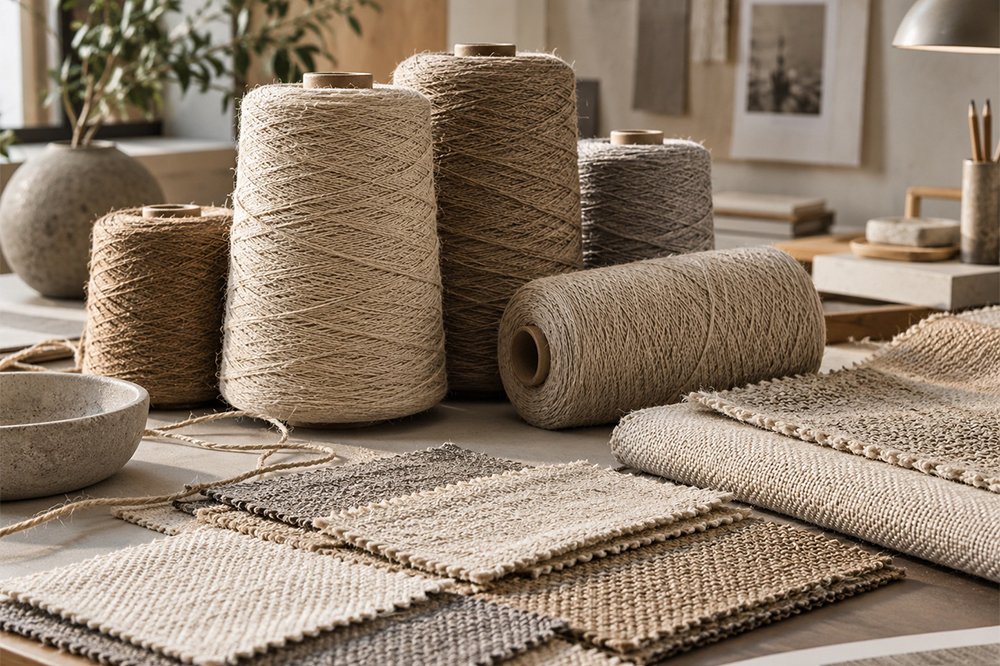
The North Carolina investment aims to turn domestically grown hemp into spin-ready fibre using existing cotton and synthetic-textile machinery, closing a key gap between American farms and mills.
Renaissance Fiber has secured $2.239 million in financing to complete and operate its first commercial-scale hemp-fibre processing facility in Mocksville, North Carolina, moving the company from R&D into industrial production.
The package comprises $2 million of SBA-backed financing, a $100,000 low-interest Fibers Fund loan and a $139,000 zero-interest recoverable loan from Invest Appalachia. The SBA component includes a $1.5 million term loan and $500,000 of revolving credit.
Making hemp compatible with existing mills
Renaissance Fiber uses a proprietary two-stage process that first degums raw hemp and then refines it into softened, spin-ready fibre.
The key proposition is compatibility: the processed material is designed to run on machinery already used for cotton and synthetic fibres, reducing the need for specialised hemp-processing infrastructure. The company also promotes farm-to-fibre traceability and already works with growers, spinners, weavers and product manufacturers.
Construction of the Mocksville facility is underway and expected to finish before the end of 2026, followed by commissioning and process optimisation.
US hemp capacity moves downstream
The investment arrives as US fibre-hemp production expands. USDA estimates 67.3 million pounds were produced from 21,693 harvested acres in 2025, versus 60.4 million pounds in 2024.
Yet growing fibre alone does not create a textile supply chain. The higher-value step is converting bast fibre into consistent, clean, spinnable feedstock.
Textile-industry takeaway
The emerging opportunity is therefore not merely hemp cultivation but hemp cottonisation, blending, yarn development and downstream fabric engineering.
For textile-producing countries such as Pakistan, the lesson is relevant to other bast fibres as well: agricultural availability creates limited value unless accompanied by industrial fibre preparation, quality specifications, traceability and spinning know-how.
The competitive advantage will belong to supply chains that can turn alternative natural fibres into repeatable, mill-ready inputs rather than niche raw materials.