

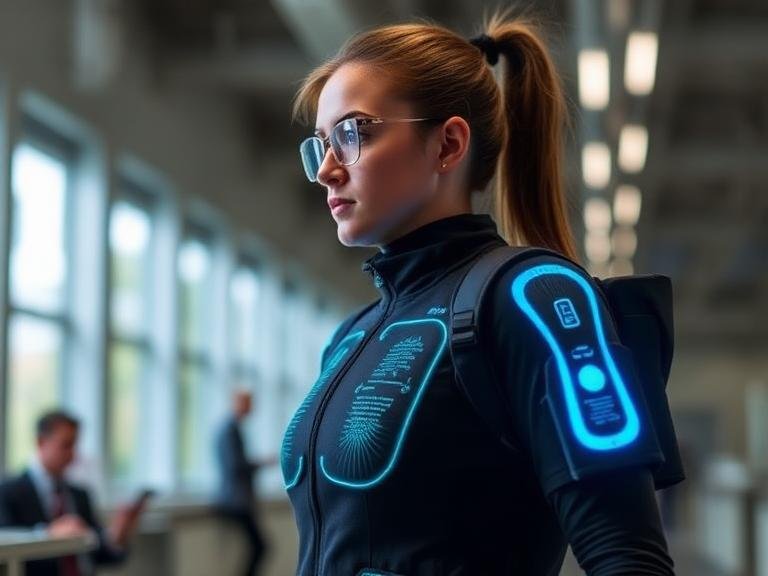
Smart clothing that actively supports movement and everyday mobility could reach the market sooner than expected, following the launch of a six-year, CAD $24 million international research programme funded by the Canadian government’s New Frontiers in Research Fund.
Led by the University of Alberta, the initiative brings together leading expertise in textiles, robotics, materials science and biomechanics, with Rice University playing a central role through Professors Daniel J. Preston and Vanessa Sanchez from the Department of Mechanical Engineering.
From wearables to wearable assistance
Unlike most existing smart garments, which focus mainly on monitoring, the programme aims to deliver active assistance embedded directly into everyday clothing. The goal is to create garments that look and feel normal, while quietly providing support for:
- Posture assistance
- Balance stabilisation
- Arm movement during daily tasks
- Sit-to-stand transitions and gait support
The target users include older adults, caregivers, and people with mobility limitations who often cannot tolerate bulky braces or expensive, rigid exoskeletons.
Textiles that do the work
Sanchez’s texlab contributes expertise in textile-native robotics, developing fibres and knitted or woven structures that can:
- Actuate (apply gentle forces)
- Sense motion and muscle activity
- Route power and data within the fabric itself
By integrating these functions at the fibre level, the team aims to produce garments that are lightweight, washable, scalable and affordable, while fitting diverse body types and movement patterns.
“Our goal is to create clothing that looks and feels like what people already love to wear,” Sanchez said. “If we can embed intelligence and comfort into everyday garments, we can change how people experience mobility assistance.”
Natural movement, not machines
Preston’s lab focuses on control systems, embedded logic and power management, ensuring the garments respond smoothly and reliably without feeling mechanical. A key design principle is keeping computation on the garment itself, improving privacy, reducing power consumption and enabling day-long wear.
“The challenge is to make the assistance feel as natural as fabric itself — responsive but unobtrusive and almost imperceptible,” Preston said.
Key technologies under development
The programme explores:
- Electrostatic fibre-based actuators for safe, low-voltage assistance
- Textile-embedded EMG and strain sensors to detect user intent
- On-garment control systems combining rapid response with machine-learning-based personalisation
- Safety-first fallback mechanisms for real-world use
Three escalating application pathways are planned: posture support, arm-assist sleeves, and lower-body garments for balance and mobility.
Co-design and real-world validation
A defining feature of the programme is its co-design framework, involving people with lived experience of mobility challenges throughout development. Clinicians, industrial partners and artists will contribute to iterative testing, with public art-and-technology showcases planned mid-project and at completion.
Building future talent
Rice University will support the initiative with doctoral researchers over the full six years, alongside undergraduate and master’s students. Researcher exchanges between partner institutions will strengthen global talent development at the intersection of materials, apparel engineering and human–machine interaction.
If successful, the project could redefine assistive wearables — shifting them from visible devices to intelligent fabrics that move with the body, not on it.

