

Microfibers are the major marine pollutant worldwide, estimating 13 million tonnes of coastal synthetic fabric waste enter the ocean each year. The world is looking for solutions to tackle this problem. The global unsaturated polyester resins market was valued at $11.0 billion in 2020 and is projected to reach .
1 billion by 2030, growing at a CAGR of 6.3% from 2021 to 2030. The market highlights the potential of polyester resins and the waste associated with them.
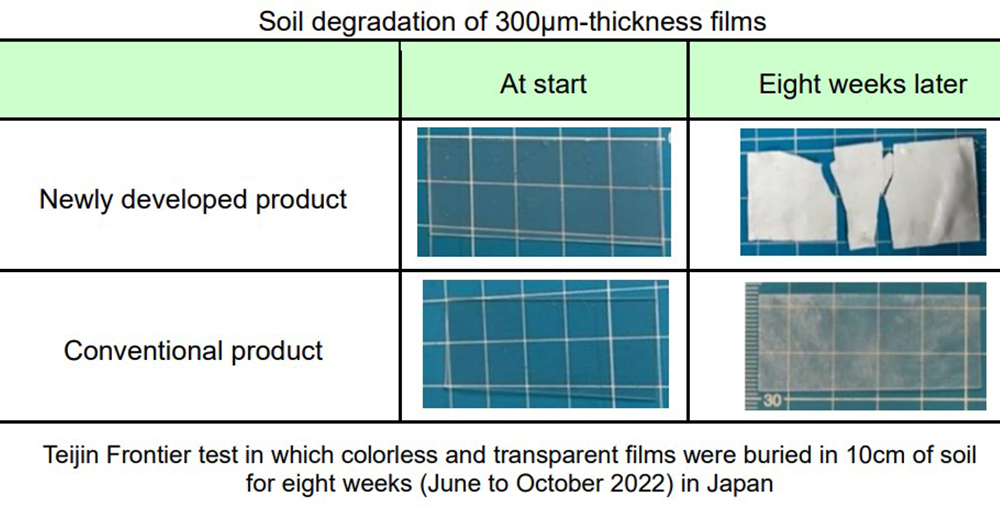
However, Teijin Frontier has developed a practical polylactic acid (PLA) resin that biodegrades faster in oceans, rivers, and soil than conventional PLA products.
Teijin Frontier has improved its biodegradation rate without impairing strength, moldability or other practical properties by adding a new biodegradation accelerator to the polymer. The new PLA resin is expected to help reduce microplastics thanks to its accelerated biodegradation rate and reduce CO2 emissions during product lifecycles since it is made from plant-derived raw materials.
Under its THINK ECO® environmental initiative, Teijin Frontier strives to improve its environmental value by developing greener materials and products for applications ranging from clothing to industrial materials. Conventionally, when PLA polymer is hydrolyzed to less than 10,000Mn (average molecular weight), it can be broken down into carbon dioxide and water by bacteria and fungi.
The biodegradation accelerator added by Teijin Frontier hastens hydrolysis to reduce molecular weight more quickly than in the case of PLA polymers without such additives, thereby enabling faster biodegradation in oceans, rivers, and soil.
However, during product processing and storage, molecular weight decreases only slightly, similar to conventional PLA polymers, so Teijin Frontier’s new PLA resin is highly practical because its crystallinity and moldability are not impaired.
Also, the decomposition period about six months to two years according to verification tests conducted by Teijin Frontier can be controlled by adjusting addition conditions and the amount of biodegradation accelerator.
Accordingly, decomposition can be adjusted to the life expectancy of specific items, such as agriculture and fishery products.

