

The Geneva showcase will focus on lower-resource nonwoven production, smarter line monitoring and service models that extend beyond spare parts.
Trützschler Nonwovens will present new machinery, digital functions and service solutions at INDEX 2026 in Geneva, where it will exhibit at booth 1641 from May 19–22. INDEX, organised by EDANA, is positioned as the world’s leading nonwovens exhibition and is held once every three years, making it a key platform for technology launches across hygiene, wipes, filtration, medical, geosynthetics, automotive and other nonwoven markets.
AquaJet marks 30 years with a compact launch
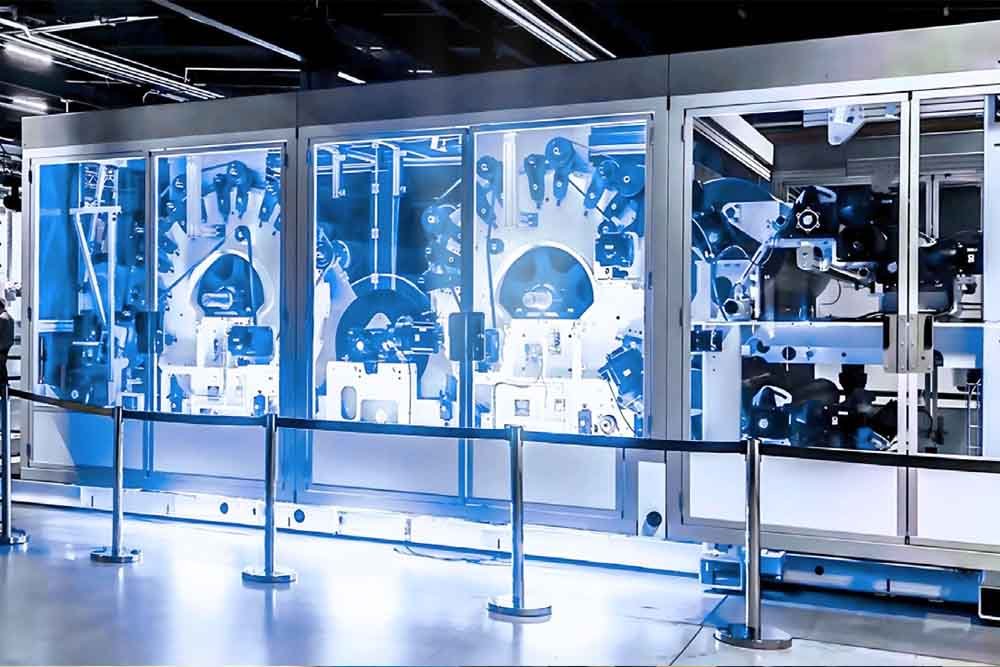
The headline product will be the new AquaJet TWB-AJ-X, a compact hydroentangling machine designed for dry and wet wipes. Trützschler is positioning the system around space efficiency and reduced energy use, targeting producers that need proven wipe qualities with a smaller and more efficient production footprint. The launch coincides with the 30th anniversary of AquaJet technology; since 1996, more than 200 AquaJet systems have been installed worldwide.
Hygiene and carding remain central
For the hygiene market, Trützschler will highlight through-air bonding technology capable of processing microfibres down to 0.4 dtex, enabling super-soft nonwovens for applications such as diaper backsheets. The company says this technology has already proven itself in demanding Asian markets.
Carding will also be a major focus. Trützschler has supplied more than 350 cards across through-air bonding, needle-punching and hydroentangling processes. At INDEX, it will present the compact NC-Xe card as an economical option for standard needle-punching and ATB applications.
T-ONE adds energy and anomaly intelligence
Trützschler’s T-ONE digital environment will gain two important functions: real-time energy management for electricity, gas and CO₂ footprint calculation, and camera-based anomaly detection for problems such as fibre migration and fibre build-up. These tools are intended to reduce downtime, equipment damage and manual inspection effort, especially in hard-to-monitor line sections.
The wider message is clear: nonwovens machinery competition is shifting from mechanical throughput alone to integrated productivity, energy transparency, quality control and lifecycle service.
