

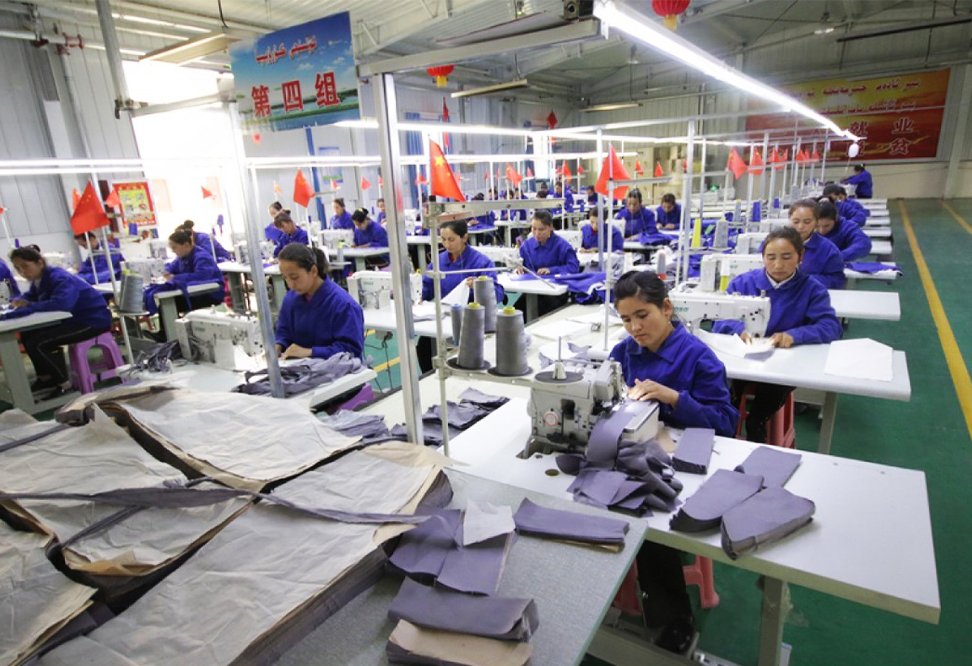
China is no longer the dominant volume source in many US fashion portfolios, yet its vertical supply chain, low minimums and manufacturing depth continue to make it difficult to replace.
US fashion companies reduced their direct apparel dependence on China again in 2026, but the pace of disengagement appears to be slowing as buyers settle into more diversified sourcing portfolios.
Only 12% of companies surveyed sourced more than 30% of their apparel from China, while most obtained less than 10% from the country. China’s share of US apparel imports also fell below Vietnam and Bangladesh for the first time in decades, according to the 2026 USFIA Fashion Industry Benchmarking Study.
De-risking reaches a new phase
The study covered executives from 30 leading US fashion companies surveyed between April and June. Respondents collectively sourced from 49 countries, up from 46 in 2025, while about 65% of large companies used ten or more sourcing markets.
However, brands are moving away from simply adding countries and vendors. Their focus is shifting towards supplier consolidation, stronger strategic relationships, improved traceability and better operational resilience.
Non-economic risks remain the main reason for reducing China exposure. These include geopolitical tensions, possible future US trade restrictions and forced-labour concerns—not dissatisfaction with China’s production capability or sourcing economics.
China retains operational advantages
Survey respondents continued to rate China strongly for cost competitiveness, flexible production, low minimum-order requirements and vertically integrated manufacturing. Its dense network of fibre, fabric, dyeing, finishing, trims and garment suppliers remains especially valuable for complex products and shorter development cycles.
The report suggests many companies may already have reached their desired China exposure rather than planning a complete exit. US apparel imports from China rose 18% in May 2026, compared with a 2.8% increase in total apparel imports, although one month does not establish a sustained recovery.
Diversification becomes more selective
Sourcing expanded from markets including Guatemala, Egypt and Jordan, while utilization of China, Vietnam and Bangladesh declined. Yet alternative locations still face constraints in product breadth, textile availability, capacity and policy stability.
The next sourcing phase will therefore be less about replacing China with a single country and more about assigning products to the most suitable supply ecosystem. China may continue losing direct US import share while retaining substantial influence as a source of fabrics, components, machinery, investment and technical capability across Asian manufacturing networks.
