Ten new factories could lift annual exports beyond $1.5 billion and employment above 100,000, strengthening Bangladesh’s push beyond commodity garment production.
Bangladesh’s Adamjee Export Processing Zone generated $1.179 billion in exports in FY2025/26, exceeding $1 billion for the second consecutive year and far surpassing the $750 million annual target envisaged when the zone was developed. Total investment has reached $847 million, while cumulative exports since establishment stand at $11.11 billion.
Ten factories add another growth leg
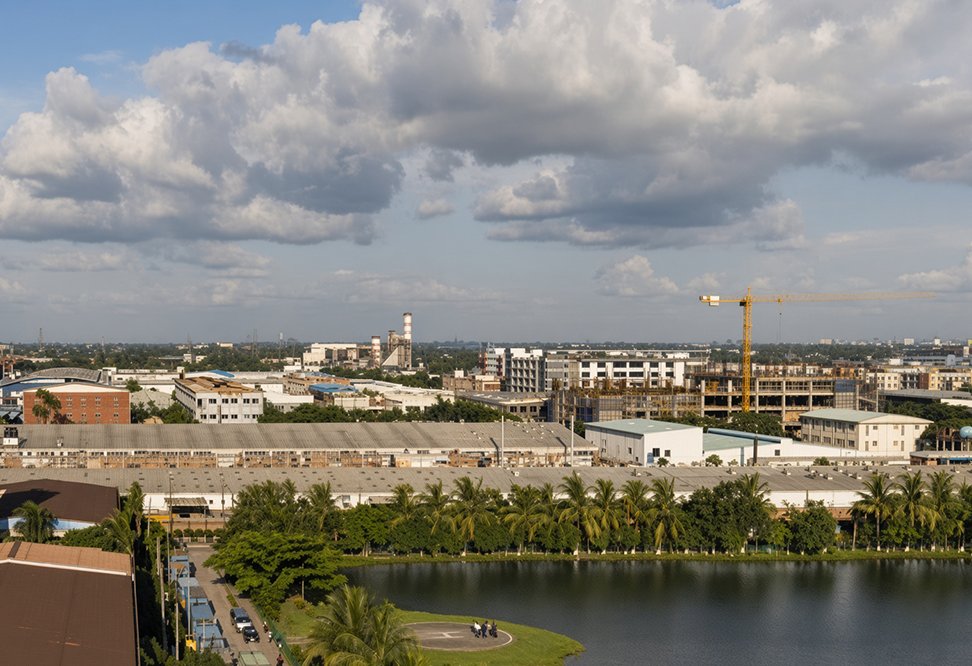
The 292-acre EPZ currently hosts 47 operating enterprises employing 76,027 people. Another ten factories are under construction and expected to begin production by 2027. BEPZA estimates these additions could push annual exports above $1.5 billion and direct employment beyond 100,000. All existing plots have been allocated, and the authority is exploring further expansion.
The zone opened in 2006 on land formerly occupied by Adamjee Jute Mills. In FY2005/06, it had only $4 million of investment and exports of $230,000, illustrating the scale of the two-decade industrial transformation.
Product mix moves upmarket
Adamjee is increasingly producing specialised goods alongside mainstream apparel. Universal Menswear exported $97.88 million of suits, blazers and trousers in FY2025/26, while Ukrainian-invested Super Protective Shoes exported about $12.8 million of safety, industrial and military footwear. Japanese-owned TS Tech Bangladesh shipped $14.75 million of automotive seat-trim covers.
German-invested UBF Bridal adds another higher-value niche, manufacturing wedding and evening wear distributed through Germany to around 37 countries. The company is also developing local embroidery and lace capacity, illustrating the opportunity to deepen domestic backward linkages.
Diversification is the bigger signal
Adamjee’s significance extends beyond export growth. Bangladesh’s next competitiveness phase increasingly depends on moving into technical footwear, tailored apparel, automotive textiles and specialised fashion products where skills, automation and product complexity carry greater value.
The next test will be whether the ten incoming factories strengthen this diversification—or simply add more conventional garment capacity.