


Creating the ideal laydowns for cotton spinners
Raw material can account for up to 70% of cotton yarn production costs – and it can impact yarn quality, performance and the mill’s reputation. So, it’s certainly worth exploring every possible chance to optimize how mills manage their raw material.
Here we present the ultimate solution for raw material management, with a clear five-step guide to improvements.
Until now, raw material data analysis has been a time-consuming human task – usually, with a high risk of mistakes and a low level of optimization. Increased sampling could make the visualization of cotton quality better, but would call for even more data analysis and interpretation.
FiberQ is Uster’s solution for comprehensive raw material management, introduced at ITMA 2023. In the name, `Fiber´ stands for raw material management, with `Q´ for the quality, the required quality. This is the complete solution for raw material utilization, helping spinners maximize their daily processes, quality consistency, profitability and further growth. The FiberQ approach can be explained in five steps.

Step 1: Set the expectations
The key question in this regard is how much mills could expect profitability to increase through data-based laydowns. The answer first requires an overview of the existing situation.
There are some general factors allowing a better raw material mix than others. The questions in the box here cover these aspects.
Questions – challenge today’s situation at your mill
1) Do you use machine-picked cotton with high parameter variations?
2) Do you see low cotton parameter variation and do you implement 20% sampling testing?
3) Do you see potential to reduce your waste?
4) Do you want to achieve maximum and long-term quality consistency?
5) Are you interested in making sustainable fact-driven decisions for raw material purchasing and utilization?
6) Would you trust an automated data-based laydown solution?
FiberQ customers show significantly higher profit because they can reduce waste from 0.5 to 2%. They report a general quality improvement of over 25% in some imperfection categories, as well as significantly greater consistency – and no more barré claims.
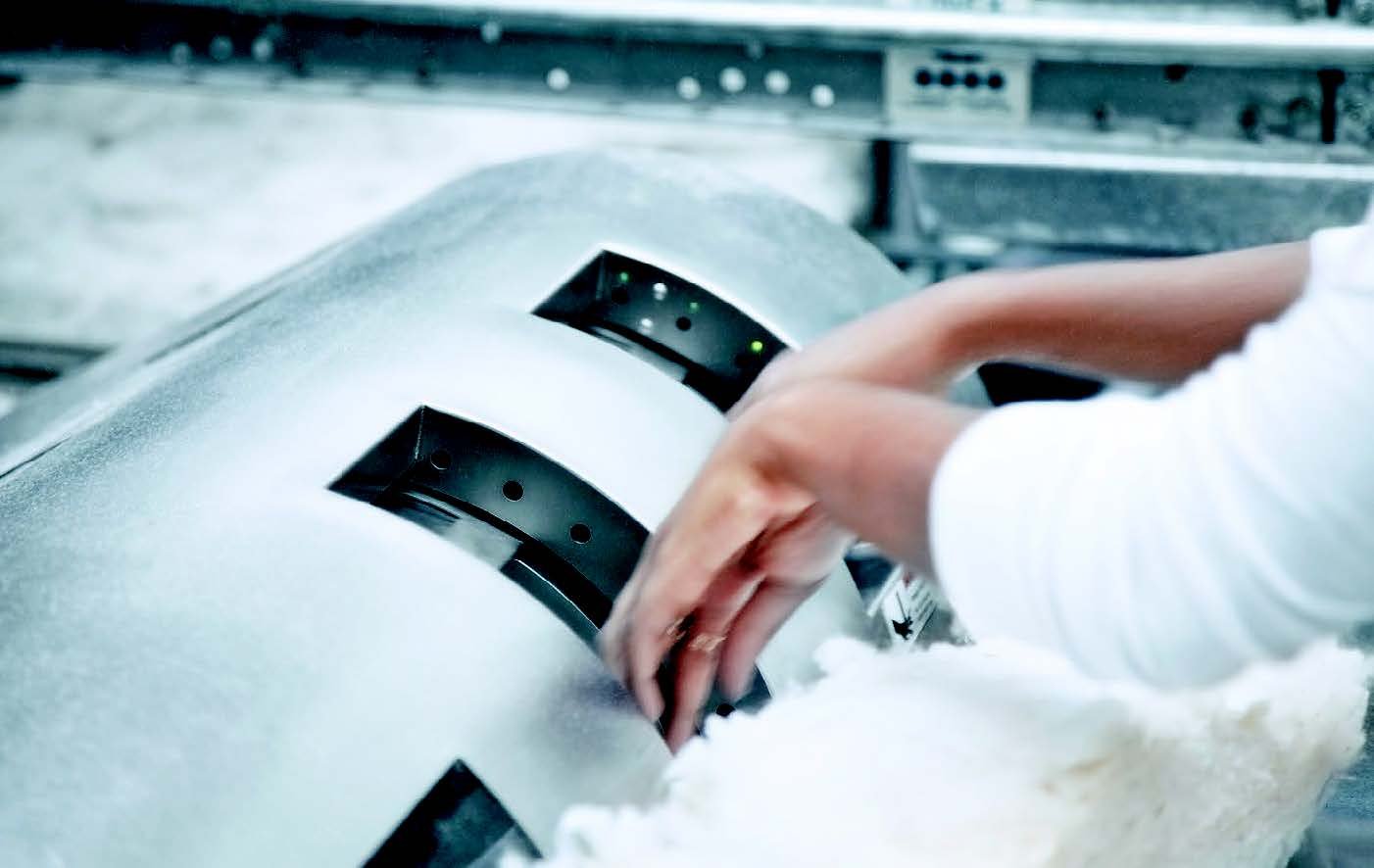
Step 2: Get the hard facts about cotton quality
Cotton is a natural fiber and its quality can vary significantly depending on various factors.
The starting point for raw material utilization is accurate fiber measurement. Using the world-reference Uster HVI equipment, mills can determine the exact quality level of their cotton. Uster HVI is now more accessible in specific regions like Pakistan, India, Türkiye and China through a flexible and affordable subscription model. This is an opportunity for more mills to benefit from Uster HVI.
With HVI, the testing process can be adapted to specific needs, enabling higher sample testing for objective, data-driven raw material sourcing and utilization.

Step 3: Access the value of reliable data
Accurate measurement then requires proper analysis. With FiberQ, the HVI data can be automatically uploaded – without manual input, avoiding the risk of mistakes. Uster software services combine critical quality and performance data from Uster equipment with integrated Uster textile know-how and smart user-centric workflows.
Bale, lot, or both
Uster FiberQ works with powerful software, analyzing fiber data from available inventories and creating consistent and reliable laydowns for optimum quality and performance every day.
But how many raw material samples does it take? Generally speaking, the more samples, the better the basis for selecting the best bale laydown. Of course, accurate measurement also requires more data analysis and interpretation. FiberQ software achieves maximum quality consistency by processing high volumes of data while considering all key fiber quality parameters.
To suit the diverse needs of spinning mills, two different FiberQ value modules are offered: Uster FiberQ Lot and Uster FiberQ Bale. The Uster FiberQ Lot management value module is suitable for mills which take representative samples of incoming cotton, rather than 100% testing of all bales, particularly when cotton parameter variation is low within each lot.
Uster FiberQ Bale management value module caters for mills conducting 100% testing of bales – or which have test results for every bale provided by cotton classing organizations. It is ideal for machine-picked cotton with higher parameter variations within lots, and for when spinning mills expect the maximum material utilization with the optimum quality level.
When processing cotton of different origins and quality consistency levels, some spinning mills have both – FiberQ Lot and FiberQ Bale – in place.
Step 4: Define the laydowns
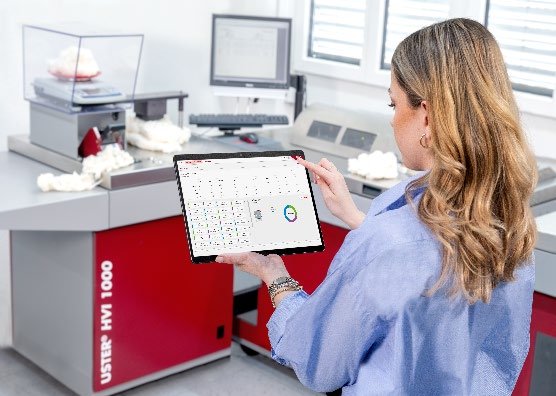
Uster FiberQ software simplifies the process of laydown creation. Optimum sourcing and utilization of raw material requires consideration of inventory, quality, and cotton parameters. The integrated Application Intelligence takes care of the complexity, unlocking maximum potential. Furthermore, it automates laydown recipe creation based on mill situations and end-use requirements, preventing quality issues and reducing costs. The system allows mills to combine multiple varieties and lower inventories, thus increasing flexibility and improving mixing and inventory costs.
Non-experts can create high-quality laydowns. The system shows the inventory and quality criteria to enable the creation of the daily laydowns.

Step 5: Meet the experts
The full benefits of FiberQ are based on three elements: cutting-edge instruments to define fiber quality, integrated software with data analytics, and textile expertise from Uster’s acknowledged specialists.
Any system, however intelligent, always needs the ‘human factor’ to provide the best outcome.
For spinning mills, regular collaboration with Uster textile experts allows them to maximize optimization potential. Textile expertise is the third element of Uster FiberQ.
Every innovative solution means some changes, so Uster is including an adoption services package with FiberQ which will ensure the fast, easy and successful transition from current raw material management methods to Uster FiberQ. The package supports the successful implementation, along with the required training and establishment of processes. Uster experts will guarantee optimal installations and prepare the mill organization in the best way to get the most out of FiberQ.
An external perspective is always valuable, and the Uster specialists will be happy to bring new insights and unlock unused potential for the mill!
Raw material management: the hard facts
Customer feedback explains why spinners are renewing their FiberQ subscriptions

Is it really true that cotton measurement can drive value creation for spinners? The practical experiences of mills using the Uster FiberQ solution prove it. The details are explained in this interview with Stratos Fragkotsinos, Head of Product Management for Mill Management Solutions at Uster Technologies.
TEXtalks: FiberQ was introduced at ITMA 2023. Can you tell us when this Uster raw material management solution will be available in Pakistan?
Stratos Fragkotsinos: Uster is rolling out FiberQ in a controlled way, so we can ensure that enough well-trained staff are ready to support customers before the first installations in each market. We are happy to announce that FiberQ is now ready and available in Pakistan.
TEXtalks: Where has FiberQ already been installed?
Stratos Fragkotsinos: The first FiberQ installations were completed in India in 2023 and more followed this year. Mills in China also operate FiberQ. So far, a total of 700,000 spindles are processing yarn mixes based on FiberQ. That number will soon reach one million. More than 13,000 laydowns have been created by FiberQ to date – and more are being added every day.
For us, the most significant aspect now is the renewal of the first yearly subscription by a number of spinners.
TEXtalks: What would be a typical profile of a FiberQ customer?
Stratos Fragkotsinos: A typical spinning mill belongs to what we in Uster call , inspirational segment , either mills already embrace the Uster Think Quality approach or want to go in this direction. Most of all, each mill will have the same mindset: the ambition and inspiration to prepare their yarn production for data-driven future success. Practically, they want to use all available tools to overcome the industry’s challenges and sustain their business.
TEXtalks: What feedback do you receive from FiberQ customers?
Stratos Fragkotsinos: We hear that they are happy and satisfied about their experiences and their decision to sign up for Uster FiberQ. They report that they fully trust the laydowns created, the cotton mixes and the analytics of FiberQ. And they praise the value of the advisory services of the Uster textile experts.
TEXtalks: What changes for a mill with FiberQ?
Stratos Fragkotsinos: From talking to mill and quality managers, we know they appreciate the reduced effort and easy workflow, based on automation. They feel more relaxed, as they depend less on qualified staff. So FiberQ has a direct positive impact on their daily routines.
Mill owners and top management appreciate how the automation brings great standardization within their wider organizations. Quality and production efficiency are optimized – and this is reflected in profit figures. The collaboration with Uster is also valued equally alongside these benefits.
TEXtalks: Please explain how this flexibility is beneficial.
Stratos Fragkotsinos: Some mill owners report that FiberQ has allowed them to switch from testing part of their cotton inventory to 100% of incoming raw material. This new approach, and the fact that FiberQ can process the entire data stream to provide valuable analytics for the ideal laydowns, has had a significant impact on their yarn production. For other mills, flexibility means they can now regulate the intensity of their testing regimes, based on the cotton they purchase. They can decide for lot-based management, to control this. The FiberQ Lot module automatically calculates and proposes laydowns based on a minimum of 20% sample testing. The availability of data per bale, or 100% testing, require the FiberQ Bale module. Some mills opt for maximum flexibility by having both modules in place.
TEXtalks: What would you say are the advantages customers appreciate most of all?
Stratos Fragkotsinos: It’s what we could call ‘super security’ – in other words reliability and consistency in combination. The consistency in quality and production efficiency is guaranteed and proven with FiberQ. Naturally, people will want to hear how Uster can ensure satisfying optimization through raw material management. Firstly, trusted instruments and systems, with sophisticated software solutions and built-in textile know-how, are taken as self-evident. Then we focus on fast, smooth and successful implementation in the mills. Uster experts are responsible for installation, setup and training. They support the process of change and the data management. Complete and comprehensive support is offered as ‘adoption services’ package.
TEXtalks: Can you also share some of the hard facts with our readers?
Stratos Fragkotsinos: Well, the potential savings are impressive: reaching to USD 410,000 () per year. That figure comes from a mill running 165,000 spindles for 360 days a year, based on a cotton price of 2 USD per kilo. Waste was reduced approximately by 1% with FiberQ – and the mill noted a significant improvement in quality and quality consistency. Mills using middle staple cottons saw even greater waste reduction, up to 2%. Spinners also report they need to maintain lower cotton inventories – up to 40% less than previously.
Quality factors are also notable, with the overall level of imperfections (IPI) better by as much as 15% and the CV element improved by up to 25%.
TEXtalks: You obviously speak with numerous spinners in your professional capacity of developing mill management solutions. So, what would be your personal advice to improve raw material management?
Stratos Fragkotsinos: First I would recommend mills to evaluate their potential gains from optimization of raw material management. They should try to estimate the difference between their current situation and the best possible outcome through improvements. From that point they can see exactly the potential benefits across all aspects. And that process will take them down a straight road directly to the solution with Uster FiberQ.

