

Vietnam’s $35.7 billion nine-month performance remains positive, but slower garment growth, US tariff disadvantages and rising input costs are pushing the industry toward higher-value orders and deeper supply-chain integration.
Vietnam’s textile and apparel exports reached $35.72 billion in January–September 2026, up 3.3% year on year, keeping the industry on course for another record-scale year despite difficult trading conditions. Garments remained dominant at $28.24 billion, but increased only 2.2%, significantly slower than several upstream categories.
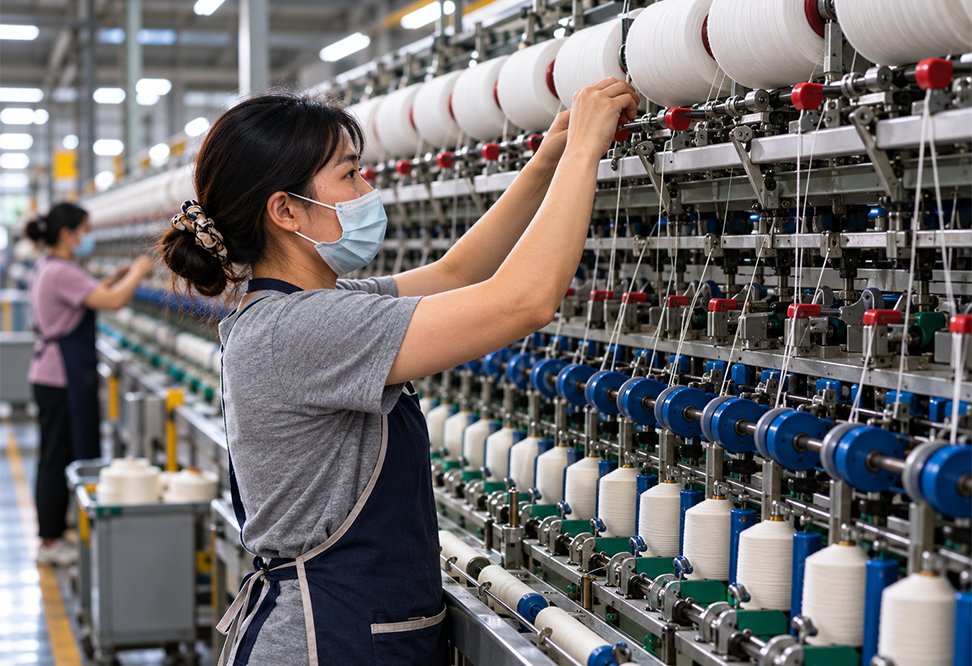
Exports of fibres and yarns jumped 13.08% to $3.61 billion, while nonwoven fabric shipments increased 7.77% to $610 million. The divergence suggests Vietnam is gradually strengthening its position beyond cut-and-sew manufacturing into textile materials and intermediate products.
Export target edges lower
VITAS recently put its 2026 export target at $47–47.5 billion, versus the roughly $48 billion ambition cited earlier in the year. Eight-month exports were around $32 billion, up 3%, while preliminary turnover through September 15 reached $33.66 billion.
The industry nevertheless remains dependent on imported inputs. VITAS previously estimated Vietnam’s localisation rate at only 51–52%, with fabric imports reaching about $17 billion in 2025.
US tariff gap pressures margins
Vietnam faces an additional competitive disadvantage in its largest market. The United States imposed a 12.5% Section 301 additional tariff on Vietnam, while Bangladesh, India, Indonesia, Pakistan and several other competitors face 10%.
Combined with higher raw-material, spare-parts, logistics and freight costs, the 2.5-percentage-point difference is encouraging manufacturers to prioritise higher-margin orders, productivity and production efficiency rather than volume alone.
Pakistan competitiveness takeaway
Pakistan currently enjoys the lower 10% US tariff rate, creating a potentially useful 2.5-point advantage over Vietnam. But Vietnam’s rapid growth in fibres, yarns, fabrics and supporting materials shows that it is simultaneously strengthening its upstream base.
Pakistan should therefore use its tariff advantage aggressively in sportswear, knitwear, denim and value-added apparel, while accelerating MMF capability, product development, lead-time reduction and digital traceability. The tariff gap may help win orders now; sustaining them will depend on manufacturing capability once trade conditions change.
