

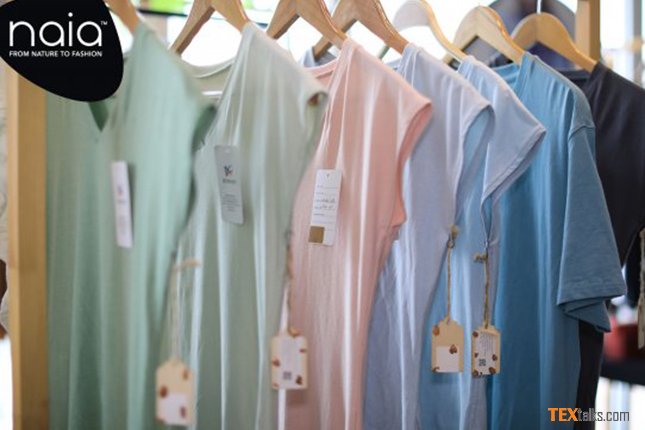
Carbon Renewal Technology (CRT) is a patented process of Eastman, a molecular recycling technology that breaks down waste plastics into the basic molecular building blocks for new products. The CRT is used to produce NaiaTM Renew fibers which are inherently soft, sustainable and traceable staple fibers.
Naia Renew staple fiber is produced with a low carbon footprint in a closed-loop process where solvents are safely recycled back into the system for reuse.
The fiber is made from wood pulp sourced from certified forests and recycled plastics feedstock to help the environment.
The Naia Renew fibers are aimed at the casual and loungewear markets, it is made of 60% wood pulp and 40% recycled waste plastics and can be produced at scale.
The fiber is quick-drying and reduces garment pilling while blending well with other eco-friendly materials such as lyocell, modal and recycled polyester.
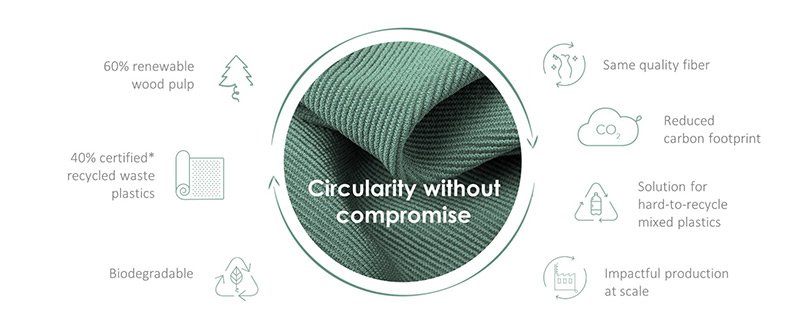 CRT is an integrated molecular recycling technology that breaks down waste plastics, such as post-consumer carpet fiber and plastic packaging materials, into the basic molecular building blocks to manufacture new products, including fibers – a truly circular solution creating value from waste.
Eastman’s LCA for Naia™ Renew cellulosic yarn has been externally reviewed and verified as compliant with the ISO 14044 standard. Naia™ Renew recycled content is achieved by allocation of recycled plastics using an ISCC-certified mass balance process.
The closed-loop approach used to create Naia™ Renew prioritizes the safe and environmentally sound use of chemicals, ensuring that the products you make are as sustainable as they are stylish. The manufacture of Naia™ Renew also enables a measurably reduced carbon footprint over the fiber’s life cycle, and it is certified biodegradable and compostable, creating the possibility for fabrics to return to nature at the end of their usefulness safely.
