

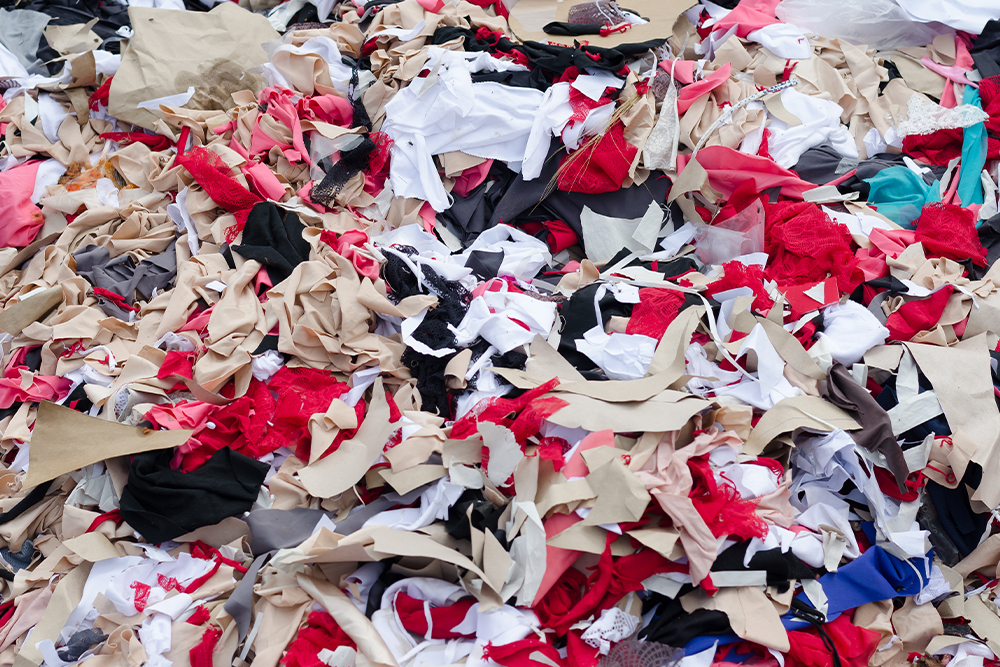
Researchers have developed an innovative process to turn textile waste into stronger recycled paper. Until now, much of textile waste, particularly in Austria where 220,000 tons are generated annually, has been incinerated, causing the loss of valuable raw materials.
Around 80% of this textile waste is burned, which leads to the irretrievable loss of useful resources. A team from the Institute of Bioproducts and Paper Technology, led by Thomas Harter, has found a sustainable solution by adapting paper production methods to recover cellulose fibers from used cotton-based textiles.
These recovered fibers are then used to create cardboard and other packaging materials. The resulting paper, which incorporates textile fibers, is considerably stronger than traditional recycled paper.
While converting textile fibers into paper might be seen as a downgrade, Harter highlights a major environmental advantage: the paper recycling process is highly closed, with packaging paper recycling rates exceeding 90%. By incorporating textile fibers into this cycle, these valuable resources remain usable for a longer time, reducing waste.
This process could help mitigate the need for paper imports used in packaging production and provide an important raw material source. The breakthrough not only tackles textile waste but also offers a more sustainable solution to paper manufacturing, paving the way for a more circular economy.
