

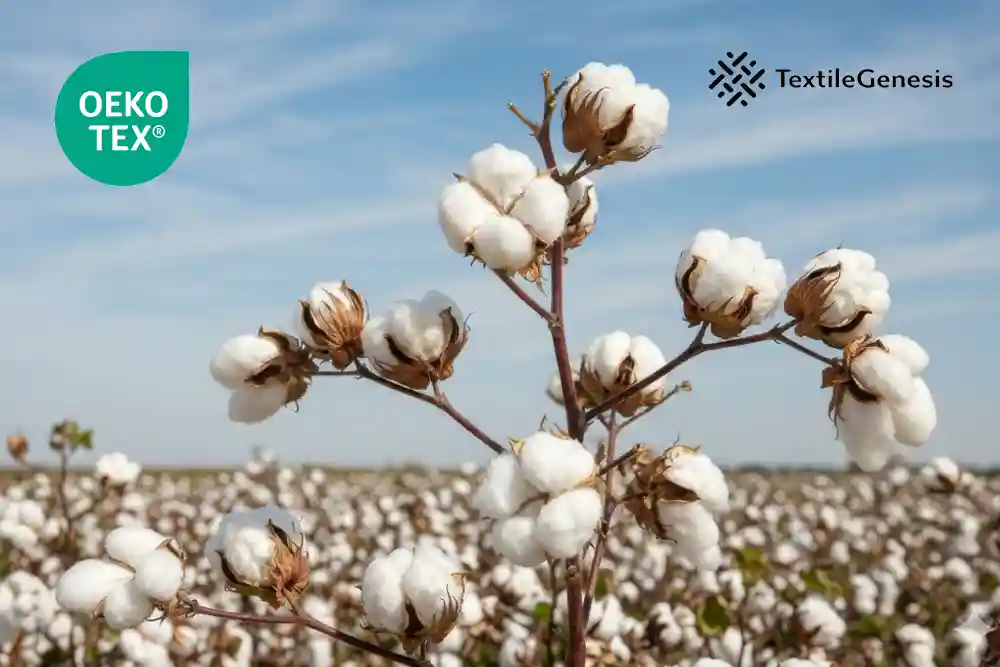
Organic cotton continues to gain strategic importance in the global textile and apparel industry as brands, regulators, and consumers increasingly demand credible sustainability claims and verifiable supply chains. This momentum is reflected in the 381% year-over-year growth of the OEKO‑TEX ORGANIC COTTON certification, recorded by 31 December 2025.
As certified volumes expand, the risk of fraud and administrative complexity grows in parallel. To address this structural challenge, OEKO-TEX has partnered with TextileGenesis, a Lectra company, to digitise Transaction Certificates (TCs) for organic cotton—replacing fragmented, paper-based systems with a secure, end-to-end digital chain of custody.
From paper to platform: a digital chain of custody
At the core of the collaboration is TextileGenesis’ token-based Fibercoin technology, which links every physical shipment of certified organic cotton to a unique digital token within a closed-loop system. This synchronises material flows and certification data on a single platform, enabling tamper-resistant traceability from fibre to finished product while significantly reducing manual workload for ginners, spinners, mills, and brands.
The system is reinforced by OEKO-TEX’s closed testing regime, including in-house GMO testing conducted exclusively across its 17 international testing institutes. Both raw fibre and raw yarn are tested, ensuring verification at the earliest stages of the supply chain and continuity of compliance downstream.
Strategic shift toward digital certification
For OEKO-TEX, the initiative represents a concrete step in its broader digital transformation roadmap. By embedding certification into a real-time data infrastructure, the organisation strengthens integrity while improving scalability and operational efficiency—particularly critical as organic cotton adoption accelerates globally.
TextileGenesis’ platform eliminates PDF-based transaction certificates and replaces them with real-time, auditable digital records, aligning certification with the growing regulatory and brand demand for transparency, interoperability, and fraud prevention.
Pilot success in India and Bangladesh
A pilot project launched in early 2025 traced selective organic cotton supply chains across India and Bangladesh, involving ginners, spinning mills, fabric mills, and testing institutes. Between March and August 2025:
- 11 supply-chain actors participated
- 24 certificates were issued and approved
- 19 certified transactions were digitally captured and validated
Supplier feedback highlighted strong acceptance, citing ease of use, reduced manual effort, improved compliance, and higher confidence in certified transactions—a key signal for future scale-up.
Laying the foundation for future-ready certification
Following the pilot’s success, OEKO-TEX and TextileGenesis plan to scale digital Transaction Certificates across additional organic cotton supply chains, with a clear longer-term ambition: extending the model to other OEKO-TEX certifications and product groups.
Strategic takeaway:
This collaboration marks a pivotal shift in textile certification—from static documentation to dynamic, data-driven assurance. As sustainability claims come under increasing scrutiny, digitised, interoperable certification systems are becoming essential infrastructure, not optional add-ons. OEKO-TEX and TextileGenesis are positioning organic cotton certification at the forefront of this transition, setting a template for the next generation of trust in global textile supply chains.
