

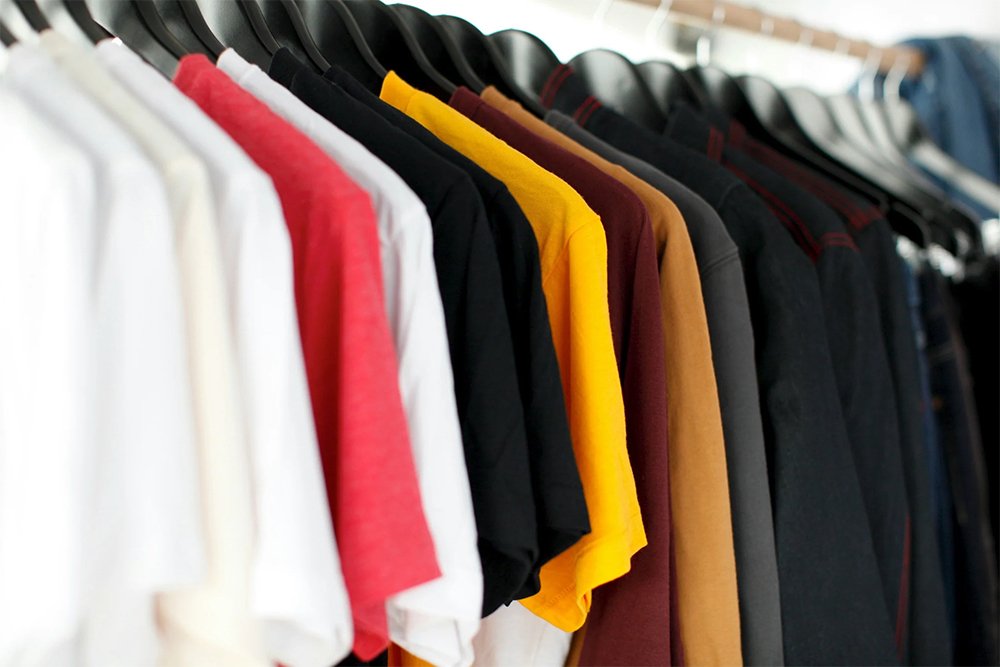
The apparel manufacturing environment in 2026 has become significantly more complex than it was even five years ago. Clothing manufacturers are busier than ever, but the pressure they face is multidimensional: volatile raw materials, persistent supply chain disruptions, accelerating fashion cycles, sustainability mandates, and increasing labor constraints.
These forces are not isolated. They interact and compound each other, fundamentally reshaping which manufacturers remain competitive in the global garment industry.
- Raw Material Price Volatility
One of the most destabilizing issues for garment manufacturers is raw material price volatility, particularly in cotton.
Cotton prices have fluctuated dramatically in recent years, sometimes swinging more than 40% within a single year. For manufacturers, this creates severe uncertainty in margin planning.
Practical consequences
- Prices quoted months before production often become inaccurate.
- Manufacturers must renegotiate with brands or absorb unexpected costs.
- Substituting lower-cost fabrics becomes tempting but may affect quality.
In an industry where margins are already thin, unpredictable input costs make financial planning extremely difficult.
- Persistent Supply Chain Disruptions
The pandemic exposed vulnerabilities in global apparel supply chains, but those disruptions never fully disappeared. Then came the US-Israel war on Iran.
Today’s supply chain environment is characterized by:
- Unpredictable lead times
- Port congestion and logistics delays
- Geopolitical trade disruptions
- Dependence on single-country sourcing
Many brands that relied heavily on one manufacturing region are now diversifying sourcing strategies, adopting “China+1” or “multi-country sourcing” models.
- Sustainability Pressure Has Become Mandatory
Sustainability is no longer optional.
A decade ago, environmental practices were mostly marketing advantages. Today they are contractual requirements from major brands and retailers.
Manufacturers increasingly face demands for:
- Certifications and environmental audits
- Carbon footprint reporting
- Waste reduction programs
- Water and chemical management documentation
Regulatory pressure is also rising, particularly from European sustainability directives that will increasingly mandate environmental transparency across the textile value chain.
Factories unable to demonstrate sustainability performance risk losing contracts.
- Fast Fashion Has Compressed Production Cycles
The rise of ultra-fast fashion has fundamentally changed manufacturing timelines.
Where apparel production once followed a four-season calendar, some brands now operate on 12–52 product drops per year.
This creates operational pressure for manufacturers:
- Sample approvals required in days instead of weeks
- Frequent style changes
- More SKUs per season
- Shorter production windows
Factories must operate with greater flexibility and rapid response capability than traditional production systems were designed for.
- Quality Control Under Speed Pressure
High production speed often conflicts with quality management.
Common quality breakdowns occur due to:
- Lack of inline inspection during production
- Gradual measurement drift from approved samples
- Failures in trims and accessories such as zippers and buttons
Quality issues become more frequent when production runs are rushed to meet tight delivery deadlines.
- Rising Labor Costs and Skills Shortage
Labor costs have increased in traditional manufacturing hubs such as China, Vietnam, Bangladesh and Turkey as wages rise with economic development.
However, the more serious problem is skill shortages.
Certain garment categories require highly skilled operators, including:
- Tailored garments
- Technical outerwear
- Complex knitwear
- Performance apparel
These skills require years of training and cannot easily be replaced by automation.
High worker turnover further increases costs due to:
- training expenses
- productivity losses
- quality fluctuations during onboarding.
- Technology Adoption Barriers
Industry publications frequently promote automation and digitization as solutions, but implementation is often difficult for many manufacturers.
Major barriers include:
High investment costs
Digital sampling software, ERP systems, and automation equipment require significant capital.
Training requirements
Workers and management must learn new workflows.
Data quality issues
Digital systems are only effective if production data is accurate and consistently recorded.
For mid-sized factories, the cost-benefit calculation can be challenging.
- Minimum Order Quantities vs. Emerging Brands
Minimum order quantity (MOQ) requirements create friction between manufacturers and emerging fashion brands.
For manufacturers
- Small orders disrupt production efficiency.
- Equipment and labor are optimized for larger runs.
For small brands
- Many factories refuse orders below certain volumes.
- Growth-stage brands struggle to access manufacturing partners.
This structural mismatch limits collaboration between new brands and established factories.
How Forward-Thinking Manufacturers Are Adapting
The most competitive manufacturers are responding through structural change rather than waiting for market conditions to improve.
Key strategies include:
Flexible production systems
Factories are redesigning production lines so they can switch between products quickly.
Multi-supplier sourcing networks
Developing backup suppliers to reduce dependence on single sourcing locations.
Workforce investment
Leading factories increasingly treat skilled labor as a strategic asset rather than a cost center, investing in training and retention.
Future Industry Trends
Several long-term trends are shaping the future of apparel manufacturing.
Artificial intelligence in production planning
AI-based demand forecasting helps manufacturers:
- optimize fabric purchasing
- reduce inventory risk
- detect quality problems early.
Circular fashion systems
Design strategies are shifting toward:
- recyclability
- material recovery
- garment take-back programs.
On-demand manufacturing
Producing garments only when ordered reduces overproduction and inventory waste.
Regionalized production
Shorter supply chains reduce logistics risk and enable faster delivery to consumers.
Conclusion
Apparel manufacturers in 2026 face one of the most complex operating environments in the industry’s history.
The challenges—raw material volatility, supply chain disruptions, sustainability mandates, compressed fashion cycles, labor constraints and technology barriers—are interconnected and mutually reinforcing.
The manufacturers that will succeed are those that combine:
- operational flexibility
- transparent sustainability practices
- technology-enabled production systems
- strong workforce development
The global apparel industry is entering a phase where resilience, adaptability and transparency will determine long-term competitiveness.
