

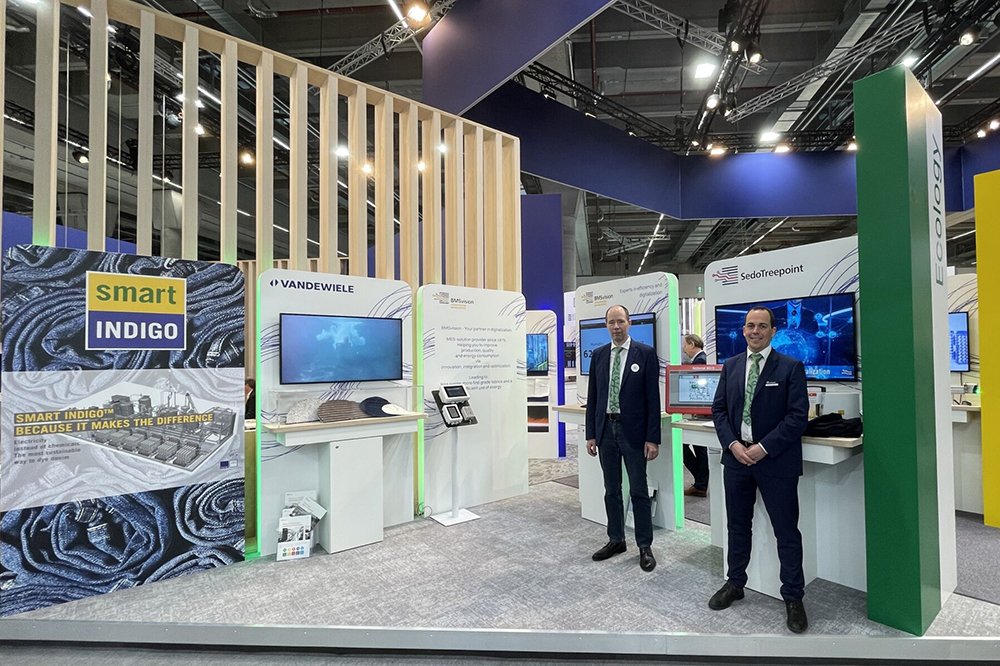
The company’s message for Frankfurt is that automation, MES and integrated data environments are becoming essential infrastructure for managing complex technical textile production.
Sedo Treepoint will use Techtextil 2026 to promote digital integration as a practical answer to the rising complexity of technical textile manufacturing. The company says it will present automation systems, MES platforms and control technologies aimed at improving process transparency, reproducibility and resource efficiency for manufacturers operating under tighter technical and sustainability constraints.
The positioning reflects a broader shift in technical textiles. Producers are increasingly dealing with smaller runs, specialized product specifications, stricter quality requirements, higher energy costs and more demanding sustainability targets. In that environment, isolated machine-level control is no longer enough. Sedo Treepoint argues that manufacturers need digitally connected systems that link equipment, process control and production data into one operating environment capable of supporting stable processes and more reliable decision-making.
From troubleshooting to process control
The company is framing its offer less as generic Industry 4.0 messaging and more as a production-management toolset for technically demanding operations. According to Sedo Treepoint, its systems are intended to help manufacturers move from reactive troubleshooting toward end-to-end process control, with connected monitoring and data-supported optimization across complex production setups. That matters in technical textiles, where frequent product changes and narrow process windows can quickly turn quality variation into cost.
A familiar play in a tougher market
Sedo Treepoint is part of the Vandewiele group, which describes the company as a supplier of integrated automation, data acquisition, color management and control systems for textile dyeing and finishing. At Techtextil, the commercial question will be whether that expertise can be extended convincingly into technical textiles, where the digital value proposition increasingly rests on traceable quality, lower resource use and production flexibility rather than on automation alone.
For technical textile producers, the relevance is straightforward: digital systems are no longer just about efficiency gains. They are becoming part of the operating model needed to manage complexity at industrial scale.
