

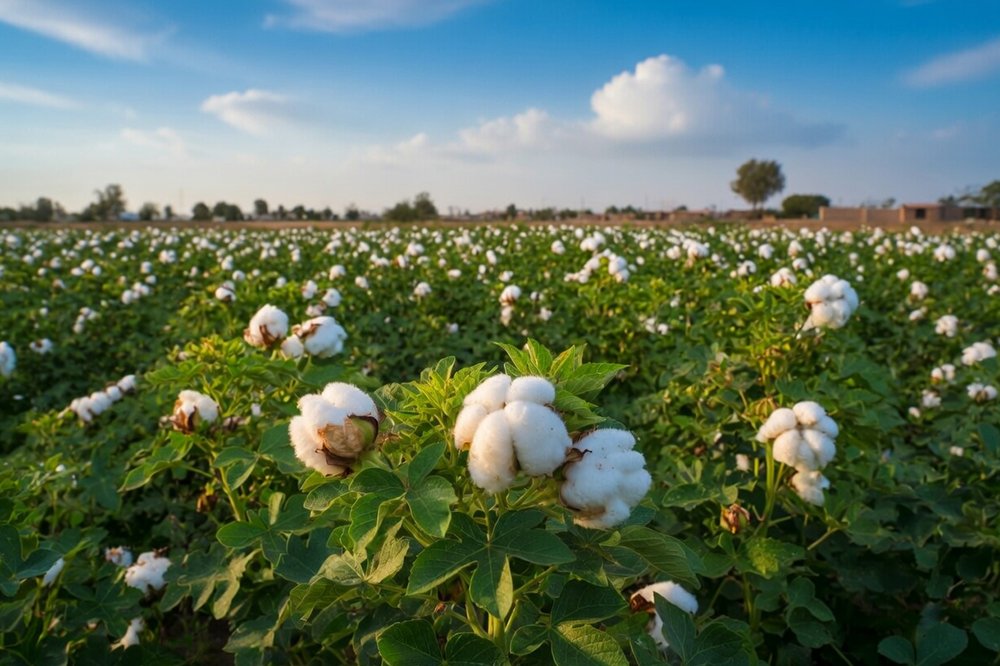
Islamabad has finally allowed hybrid cottonseed imports, yet the decision is structured so cautiously — and has come so late — that it is unlikely to change outcomes for the current sowing season.
Pakistan has approved the import of hybrid cottonseed, but only under a tightly controlled trial regime that requires two years of successful cultivation in different cotton-growing zones before any commercial import can be cleared. According to the newly issued framework, imported seed must be tested under official supervision and evaluated for fibre length, fibre strength, overall quality, and tolerance to cotton leaf curl virus, heat, water stress and other diseases before certification can be granted.
The decision is important because the sector has long argued that weak seed performance is part of Pakistan’s cotton decline. But the policy’s timing has sharply reduced its immediate value. Industry stakeholders say the SOPs were issued after much of the 2026 cotton sowing window had already passed or was close to closing, leaving little chance for farmers to benefit in the current crop cycle.
The deeper issue is that seed is only part of the problem. Pakistan’s cotton output has fallen far below past peaks, with official and semi-official reporting recently placing 2025–26 production at about 5.607 million bales, versus roughly 15 million bales in 2014–15. At the same time, the government has set a new 2026–27 cotton target of 9.64 million bales from 2.16 million hectares, showing the scale of the recovery it wants to achieve.
Critics argue that structural distortions remain more damaging than the seed gap alone. Industry voices cited in reporting say the expansion of sugarcane cultivation and sugar mills into traditional cotton zones has altered local production conditions and helped intensify virus pressure, particularly in southern Punjab.
The practical implication is clear: Pakistan now has a policy opening on hybrid seed, but not yet a fast route to cotton revival. Unless seed reform is paired with timely approvals, zoning enforcement, stronger agronomy and better grower economics, the country risks gaining another procedural framework without restoring the crop at scale.
