


Executive Summary
Techtextil and Texprocess 2026 signal a decisive shift in the global textile industry, from incremental innovation to system-level transformation. Across materials, machinery, chemistry, and digital infrastructure, the exhibitions reveal a convergence of sustainability, automation, and intelligence. Bio-based fibers, inherent functional textiles, AI-enabled development, and digitally integrated manufacturing are no longer experimental, they are market-ready.
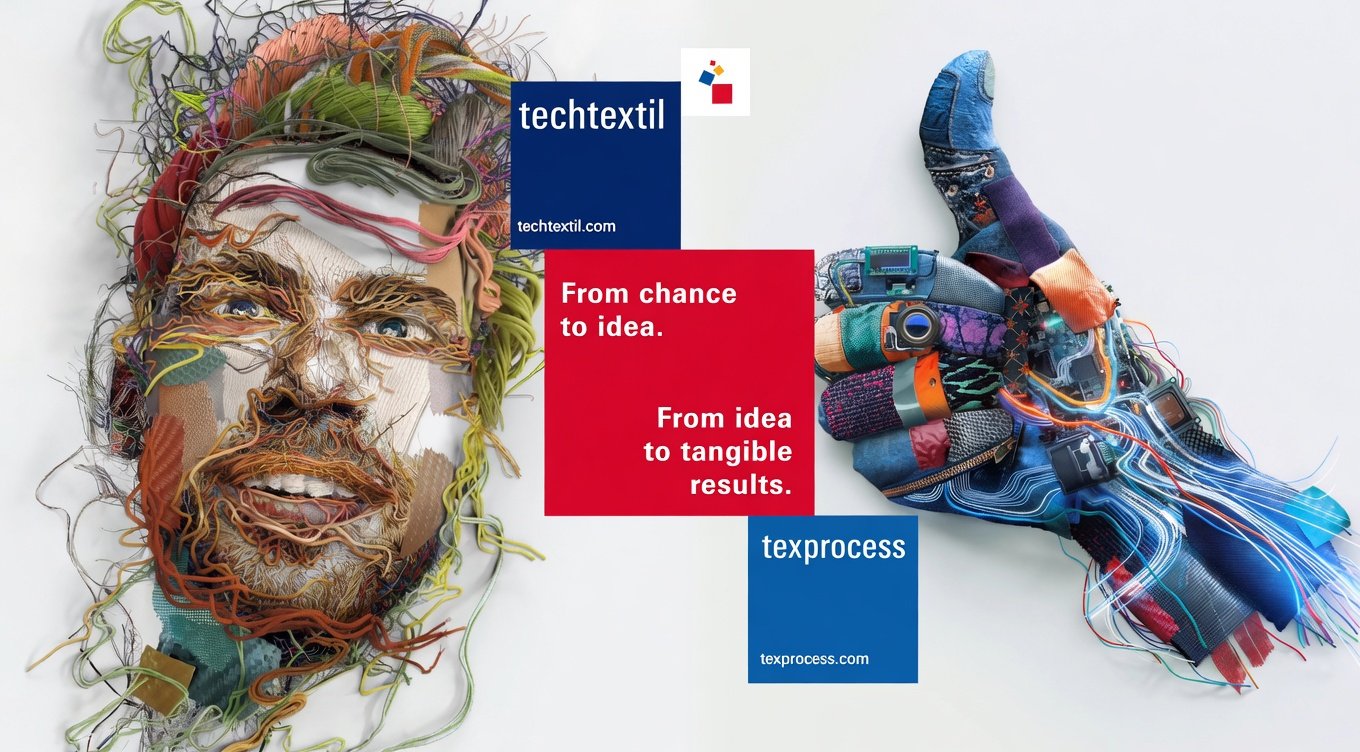
The strategic implication is clear: competitive advantage is moving from isolated product innovation to interconnected ecosystems—where materials, processes, and data infrastructures operate as one. From DyStar’s sustainable chemistry to Trützschler’s advanced nonwovens systems and Stäubli’s 3D weaving technologies, the industry is building the foundation for circular, traceable, and high-performance textiles.
For decision-makers, the message is unambiguous: the future textile enterprise will be digital-first, sustainability-native, and structurally integrated.
The End of Fragmented Innovation
The textile industry has long evolved in silos, fiber innovation disconnected from processing, sustainability strategies detached from manufacturing realities, and digital tools operating as overlays rather than core infrastructure.
Techtextil and Texprocess 2026 mark the end of that fragmentation.
What emerges instead is a fully integrated innovation stack, where chemistry, machinery, materials science, and AI co-evolve. The result is not just better textiles, but a fundamentally different industrial logic.
What Is Changing: The Convergence of Materials, Machines, and Intelligence
- Sustainable Chemistry Moves from Compliance to Competitive Advantage
Textile chemistry is shifting from cost-driven inputs to strategic enablers of circularity and compliance.

At Techtextil 2026, DyStar demonstrates how dyeing and finishing are being re-engineered for low-impact processing, reduced water consumption, and improved traceability.
This is not incremental efficiency; it is structural redesign:
- Formulations optimized for shorter processing cycles
- Reduced reliance on hazardous auxiliaries
- Compatibility with digital product passports (DPPs) and traceability systems
Chemistry is becoming a data-generating node in the supply chain, not just a processing input.
- AI-Native Textile Development Becomes Real
AI is moving upstream into textile design, development, and process optimization.
Start-ups and research collaborations showcased at Techtextil and Texprocess reveal a new paradigm:
- AI-assisted material design
- Digital twins of textile processes
- Predictive quality and defect detection
This aligns with contributions from ITM Dresden University of Technology, where AI-supported development tools integrate across the entire textile value chain—from fiber to product. The textile R&D cycle is compressing dramatically—from months to days.
- Functional Textiles Become Product Strategy
Performance textiles are no longer niche—they are central to product differentiation and market positioning.
Techtextil 2026 places functional apparel at the core of strategy:
- Embedded functionalities: sensing, actuation, thermal regulation
- Application-driven design: medical, construction, mobility, defense
- Integration of smart capabilities into everyday textiles
Companies like Carrington Textiles and Pincroft introduce inherent flame-retardant (FR) blends, eliminating the need for chemical finishes while enhancing durability.
Implication: Functionality is shifting from an add-on to a core value proposition.
- Machinery Evolution: From Automation to Autonomy
Textile machinery is evolving into intelligent, adaptive systems capable of autonomous optimization.
Leading machinery players showcase next-generation systems:
- Trützschler : future-ready nonwovens and fiber processing
- Stäubli: integrated solutions from preparation to 3D weaving
- Shima Seiki: digitalized knitting systems enabling on-demand production
Key features include:
- Real-time process monitoring
- Energy optimization algorithms
- Integration with enterprise data systems
Implication: Factories are transitioning from automated lines to cyber-physical systems.
- Circularity Becomes Engineering, Not Messaging
Circularity is now embedded at the material and process design stage—not retrofitted at end-of-life.
Techtextil 2026 emphasizes:
- Bio-based high-performance materials
- Recyclable fiber blends
- Process compatibility with recycling systems
The focus shifts from “sustainable alternatives” to engineering circular systems:
- Designing fibers for disassembly and recovery
- Aligning materials with recycling infrastructure capabilities
- Reducing multi-material complexity
Implication: Circularity is becoming a design constraint, not a marketing claim.
- Defense and High-Performance Textiles Go Mainstream
High-performance and defense textiles are expanding into broader industrial and commercial applications.
Techtextil 2026 showcases:
- Lightweight ballistic materials
- Multi-material composites (carbon, aramid, ceramics)
- Protective systems with integrated functionality
These innovations are increasingly crossing over into:
- Mobility (automotive, aerospace)
- Infrastructure
- Industrial safety
Implication: The boundary between technical textiles and mainstream products is dissolving.
- Texprocess 2026: The Rise of the Digital Factory Backbone
Texprocess 2026 positions manufacturing as a digitally orchestrated, data-driven ecosystem.
Key developments include:
- End-to-end digital workflows (design → cutting → sewing → finishing)
- Integration of CAD/CAM with production systems
- Smart logistics and real-time tracking
The result is a fully connected production environment:
- Reduced lead times
- Improved flexibility
- Enhanced traceability
Implication: Manufacturing is becoming a software-defined capability.
Why These Developments Matter Strategically
The innovations at Techtextil and Texprocess 2026 are not isolated—they form a coherent transformation architecture.
Three strategic shifts stand out:
- From Linear Chains to Interconnected Systems
Materials, processes, and data are now interdependent. Competitive advantage lies in system orchestration, not individual excellence.
- From Cost Efficiency to Value Engineering
Sustainability, performance, and traceability are no longer costs—they are value drivers influencing pricing, compliance, and brand equity.
- From Physical Products to Data-Rich Assets
Textiles are evolving into data carriers, enabling:
- Digital product passports
- Lifecycle tracking
- Regulatory compliance
Strategic Imperatives for Industry Leaders
- Build Integrated Innovation Stacks
Align R&D across:
- Materials
- Processes
- Digital systems
Avoid siloed innovation.
- Invest in Digital Infrastructure, Not Just Tools
Focus on:
- Interoperable data systems
- Traceability frameworks
- AI-enabled decision-making
- Redesign Products for Circularity
Move upstream:
- Simplify material compositions
- Enable recyclability by design
- Align with future regulations
- Reposition Manufacturing as a Strategic Asset
Adopt:
- Smart factory systems
- Flexible production models
- Data-driven operations
- Leverage Cross-Sector Innovation
Explore applications beyond apparel:
- Mobility
- Healthcare
- Construction
- Defense
Conclusion: The Textile Industry’s Operating System Is Being Rewritten
Techtextil and Texprocess 2026 do not just showcase innovation, they reveal a new industrial blueprint.
The textile industry is transitioning from:
- Fragmented → Integrated
- Linear → Circular
- Analog → Digital
- Product-centric → System-centric
The winners of this transformation will not be those who innovate in isolation—but those who architect ecosystems.
The question for leaders is no longer whether to transform.
It is how quickly they can rewire their organizations to operate in this new paradigm.
