

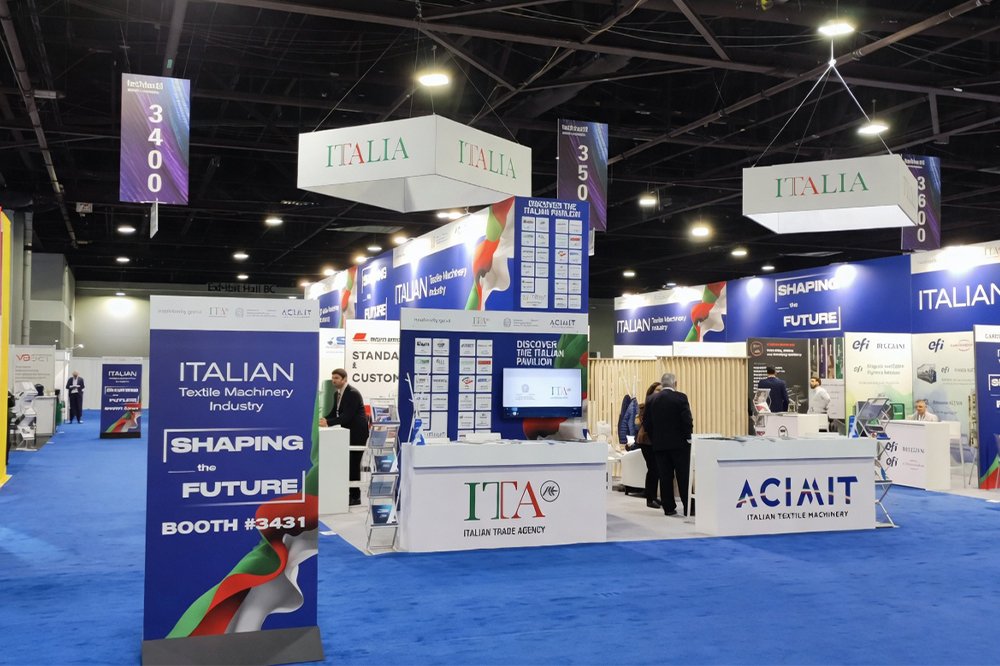
Italy’s machinery makers are using Frankfurt to reinforce a familiar competitive message: in technical textiles, customization, finishing expertise and export depth still matter, even as the wider machinery market softens.
Italy’s textile machinery industry is preparing a sizeable presence at Techtextil 2026 in Frankfurt, where ACIMIT says Italian manufacturers will showcase technologies for technical and innovative textiles from April 21–24. The association describes the sector as strongly export-oriented, with 86% of sales generated abroad and a commercial footprint in more than 130 countries.
Germany remains a key market. ACIMIT says Italian machinery sales to Germany reached €81 million in the first eleven months of 2025, with accessories accounting for 36% of demand and finishing machinery 33%. That mix is commercially significant because finishing and accessories are closely tied to the performance and process-control requirements of technical textiles, where buyers increasingly want precision, flexibility and application-specific solutions rather than standard machinery alone.
The industry’s message at Techtextil is built around specialization. ACIMIT argues that Italy’s competitive strength comes from a network of highly specialized small and mid-sized companies able to work closely with customers and translate processing needs into customized machinery. That positioning fits the technical-textile market, where production lines often need to be adapted to narrower product specifications, new materials and higher performance standards.
There is, however, a more difficult backdrop behind the Frankfurt push. ACIMIT’s latest orders index shows Italian textile machinery orders fell 36% year on year in the fourth quarter of 2025, with domestic orders down 50% and foreign orders down 34%, pointing to a still challenging global market.
That makes Techtextil more than a routine trade fair appearance. For Italian manufacturers, it is a chance to defend market position in one of the most resilient parts of the textile machinery business: high-value technical textiles, where engineering quality, finishing know-how and customization remain difficult to replace.
