

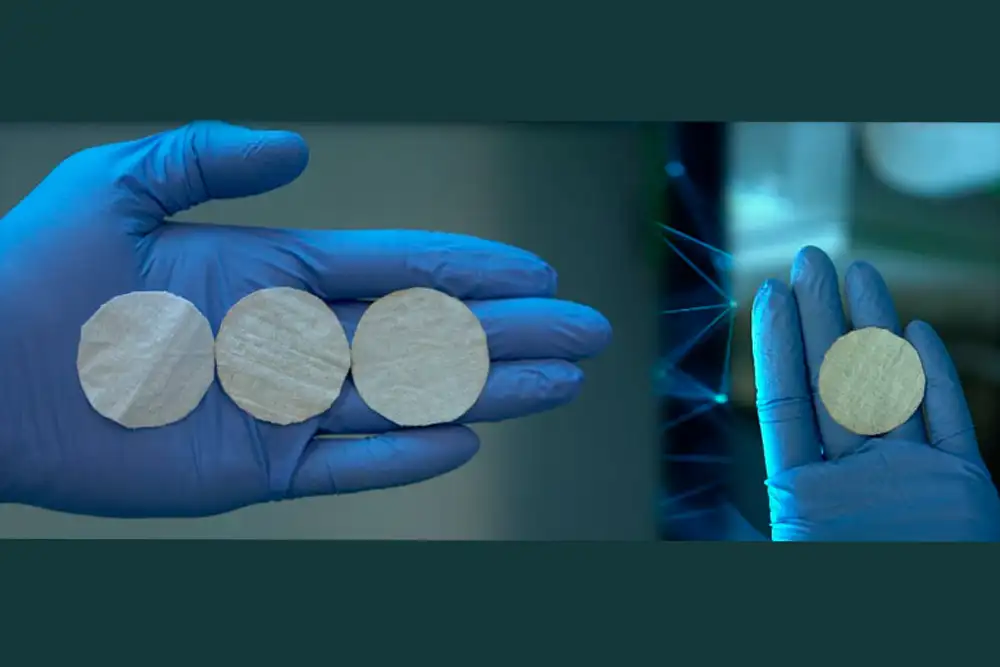
The promise is a metal-free antimicrobial finish for medical and workwear textiles; the proof now required is industrial durability, independently validated efficacy and compliant product claims.
LignoQuat, a Tallinn University of Technology (TalTech) initiative, is developing an antibacterial textile coating derived from lignin, a wood-waste feedstock. The coating uses bio-based quaternary lignins and is positioned as metal-free and biodegradable for medical and protective textiles.
The proposition responds to a finishing problem. Silver and conventional chemical systems can provide antimicrobial performance, yet suppliers face scrutiny over chemical safety and evidence supporting functional claims. A credible bio-based alternative could be relevant to healthcare, institutional workwear and hygiene applications, where buyers assess performance and chemical profile.
Lab promise, industrial test
TalTech says its prototypes have been tested for efficacy, durability and safety, and that the coating provides antibacterial protection within one hour, including against biofilms. The technology, however, remains at technology-readiness level 4: laboratory validation rather than industrial deployment. Process optimisation, scale-up and field trials are the stated next steps.
The commercial question is not simply whether the finish inhibits target bacteria. It is whether it survives industrial washing, sterilisation or dry-cleaning without impairing fabric handle, strength, whiteness, dye yield or breathability.
Claims require evidence
For antimicrobial textiles, mills and brands must match active chemistry, fabric construction, intended use, test protocol and marketing language. ISO 20743:2021 sets quantitative methods for determining antibacterial activity in textile products. But a test result does not, by itself, validate a public-health claim.
In the United States, a treated article may claim protection of the article itself, while claims that it protects users or controls disease-causing organisms generally require EPA registration and supporting data. That distinction matters particularly for hospital, medical and protective applications.
Where to start
LignoQuat’s logical first route is controlled pilots with medical-textile, healthcare-laundry or professional-workwear partners. The trials should establish bacterial reduction, wash durability, leaching behaviour, skin-safety data, process compatibility and cost-in-use.
Its lignin-based chemistry may differentiate the finish. Reproducible performance under real laundering, regulatory and procurement conditions will decide commercial value.
