

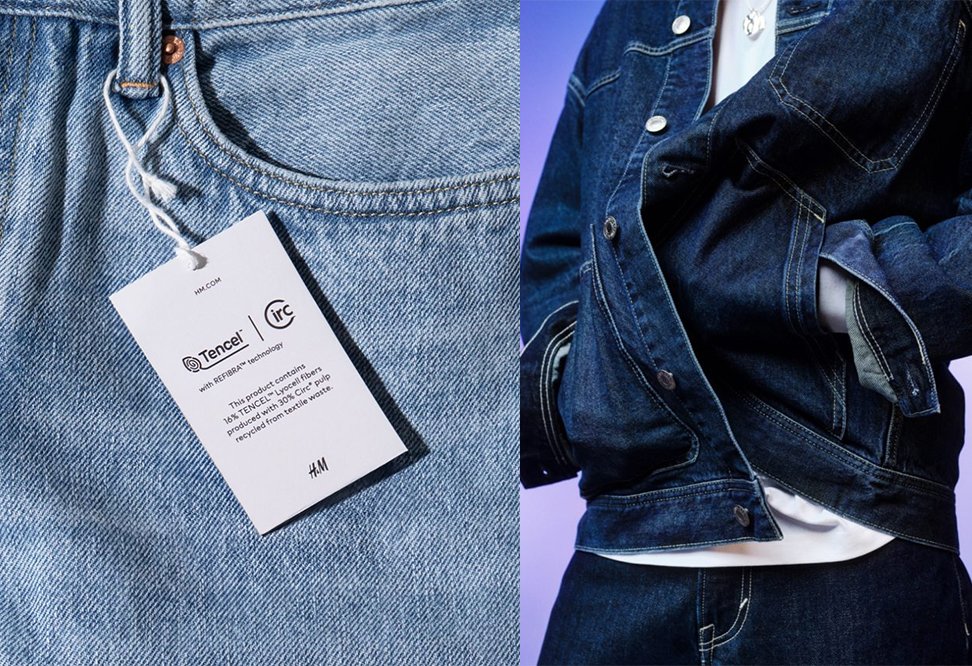
The two-style men’s collection connects polycotton recycling, regenerated cellulosic fibre production and Pakistani denim manufacturing in a mass-market retail programme.
H&M has launched its first denim collection made with TENCEL™ | Circ® fibres using REFIBRA™ technology, taking a textile-to-textile recycled material from mixed clothing waste into commercial jeans sold through a global retailer.
The men’s range comprises two jeans styles in light and dark washes. Each garment contains TENCEL Limited Edition Lyocell fibres manufactured with 30% Circ pulp recovered from textile waste. The products are available online and in selected H&M stores across launch markets.
Polycotton enters the recycling loop
The development addresses one of textile recycling’s most difficult feedstocks: cotton-polyester blends. Circ’s patented process separates the cellulosic and synthetic components of blended textile waste, recovering cotton-derived material as pulp suitable for new regenerated fibres.
Lenzing then combines this recycled pulp with its lyocell and REFIBRA production capabilities. The result carries both TENCEL Lyocell and REFIBRA branding, creating a route for post-consumer textile cellulose to re-enter apparel production at fibre level.
This matters because blended fabrics dominate apparel markets but are difficult to process through conventional mechanical recycling without sacrificing fibre quality.
Pakistan supplies the denim link
Pakistan-based AGI Denim manufactured the jeans, connecting Circ’s recycling technology and Lenzing’s fibre platform with H&M’s retail scale. The four-party chain runs from textile waste to pulp, fibre, denim manufacturing and finished product.
For Pakistani denim producers, the project demonstrates a higher-value role than garment assembly alone. Mills able to process next-generation fibres, maintain traceability and meet brand quality requirements can become integral partners in circular-material commercialisation.
Scale now faces its real test
The announcement does not disclose production volume, retail price, total garment composition, recycled-polyester recovery or quantified lifecycle savings. A 30% recycled-pulp input applies to the branded lyocell fibre, not necessarily to 30% of the entire garment.
The next test will be repeat orders and wider product adoption. Commercial circularity will depend on reliable waste supply, competitive pulp and fibre costs, verified chain-of-custody data and denim performance after washing and wear. The launch is significant because it moves blended-textile recycling beyond a concept capsule—but sustained scale will require economics as credible as the technology.
