

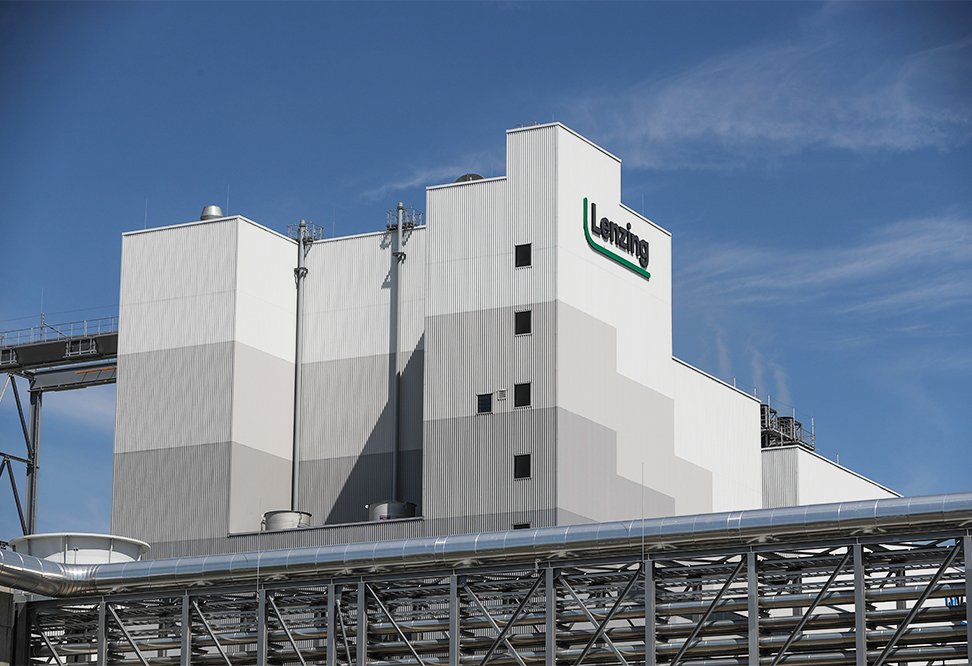
The cellulosic-fibre producer is sacrificing low-margin volume, expanding nonwovens and consolidating plants to restore stronger and more resilient profitability.
Lenzing Group more than doubled first-half net profit to €35.6 million, despite revenue falling 5.5% to €1.27 billion. The Austrian producer attributed the sales decline to deliberate reductions in low-margin fibre volumes, lower production and weaker external pulp revenue amid subdued consumer demand, volatile input costs and intensified Asian competition.
Operating earnings remain under pressure
EBITDA declined 10.9% to €239.2 million, reducing the margin to approximately 18.9% from 20% a year earlier. EBIT fell from €109 million to €83.7 million. However, earnings before tax rose to €42.6 million, while net profit increased from €15.2 million, mainly because foreign-currency valuation effects improved the financial result.
Second-quarter revenue increased sequentially from €615.7 million to €651.7 million, while EBITDA rose from €116.3 million to €123 million. Operating cash flow improved to €160.4 million, supported by inventory reductions and working-capital management, and free cash flow edged up to €45.8 million.
Nonwovens move to the centre
Under its “Grow Nonwovens, Reset Textiles” strategy, Lenzing plans to convert selected textile-fibre capacity towards nonwoven applications, expand its hygiene portfolio and develop new cellulosic-fibre technologies. Its textile business will concentrate increasingly on premium and specialty products under the TENCEL, LENZING ECOVERO and VEOCEL brands while withdrawing gradually from standard, low-margin fibres.
The group targets an additional €120 million in savings against its 2025 cost base, with the full earnings impact expected by the end of 2027. Its medium-term objectives include a €150 million EBITDA improvement, a 20–25% EBITDA margin and leverage below 2.5 times.
Production footprint contracts
Lenzing plans to end fibre production at Heiligenkreuz, Austria, by the close of 2026 and at Grimsby, UK, by the end of 2027, while continuing the sale process for its Indonesian viscose site. Premium production will shift to core facilities. The restructuring could generate up to €150 million in non-cash impairments and €40 million in workforce-related provisions during 2026.
The next test is whether premiumisation and nonwoven growth can offset lost textile volumes without disrupting customer supply or weakening Lenzing’s position in specialty cellulosic fibres.
