

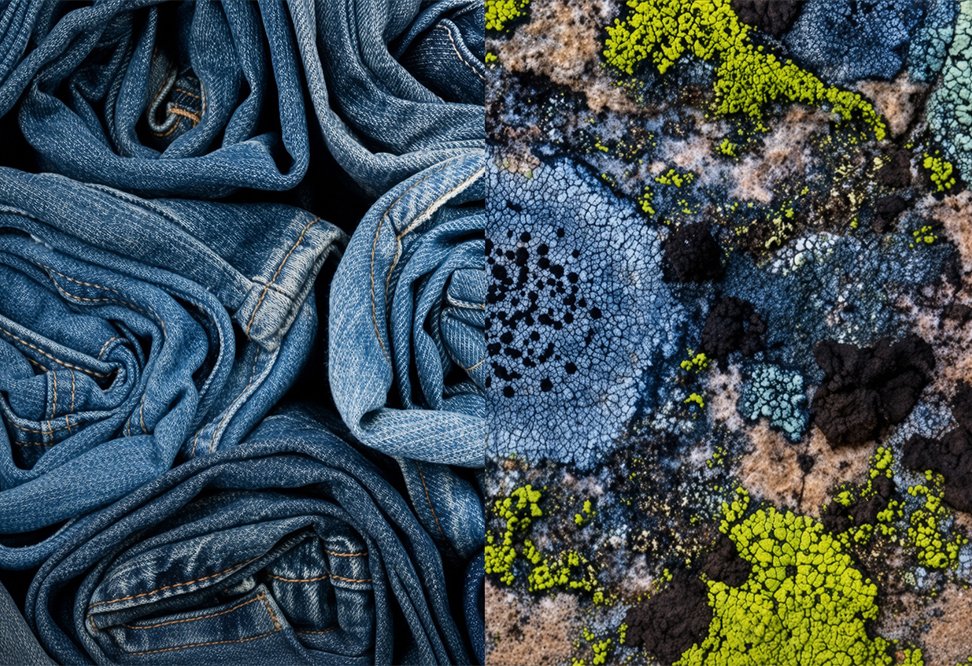
The enzyme-based system targets chlorine and permanganate replacement while giving denim laundries documented data on carbon, water and chemical performance.
Novonesis has launched DeniBrite, a consolidated denim biobleaching platform that brings together two enzyme-based technologies for contemporary and vintage finishes. The company is positioning the platform as an alternative to more aggressive conventional bleaching chemistries as brands demand stronger environmental documentation alongside fashion effects.
Two enzymes, different aesthetics
DeniBrite Cold T is a peroxidase-based system designed for low-temperature bleaching at approximately 20–40°C. It selectively modifies indigo to produce bright finishes, stronger contrast and cleaner backstaining while helping preserve fibre strength and elasticity, including in stretch denim containing elastane.
DeniBrite Vintage uses laccase-based chemistry to create controlled indigo oxidation, grey-cast effects and more naturally aged appearances. Both technologies are intended for formulators developing differentiated bleaching systems rather than being positioned simply as one-for-one commodity chemical replacements.
LCA gives mills a benchmark
A screening-level lifecycle assessment commissioned by Novonesis found that DeniBrite Cold T delivered approximately 40% lower global-warming potential and 28% lower water consumption than conventional sodium-hypochlorite bleaching under the modelled conditions. Novonesis explicitly cautions that these results depend on the assessed process and should not be generalised to every laundry or formulation.
The platform also carries bluepass certification and is available through formulations meeting ZDHC Level 3 requirements. Novonesis became a bluesign System Partner in 2026.
Chemical impact remains denim’s weak spot
The commercial opportunity is significant because chemical management remains one of denim finishing’s harder sustainability challenges. Jeanologia’s EIM framework reports that 27% of denim finishing processes still fall into the high chemical-impact category.
For laundries, the key test will be mill-scale economics: bleaching cost per garment, processing time, shade reproducibility, energy use, water demand, tensile-strength retention and compatibility with spray, nebulisation and conventional washing equipment.
DeniBrite’s strongest proposition is therefore not simply “enzyme bleaching”, but combining fashion flexibility with measurable process data. Adoption will depend on whether those environmental gains can be reproduced consistently across commercial denim styles and production conditions.
