

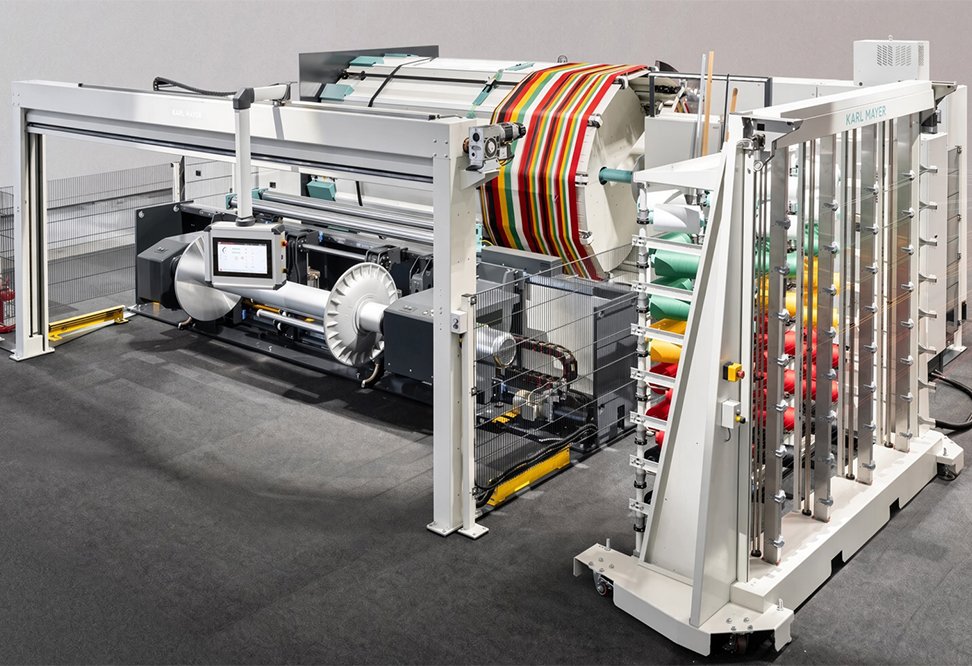
The German premium weaver is using automated sample warping to turn highly complex, short-run designs from a production constraint into a source of differentiation.
German upholstery and decorative fabric manufacturer Rohleder says KARL MAYER’s MULTI-MATIC 128 warp sampling machine has reduced its monthly warping time by 50–60% compared with its previous system, while enabling more complex colour and pattern sequences. The machine was installed at Rohleder’s Konradsreuth mill in 2023 and replaced three older warping machines.
Automation tackles small-batch complexity
Rohleder operates a highly diversified weaving mill producing premium fabrics in relatively small and medium-sized runs. Frequent style changes, short warp lengths, large thread counts and complex patterns previously required substantial creeling, knotting and handling, while partially used yarn packages generated additional waste.
The MULTI-MATIC 128 automates much of this work. KARL MAYER specifies up to 128 individually controlled yarn guides, working widths of 2,250 or 3,600 mm and a warp-length range of 21–1,500 metres. Maximum warping speed is 800 metres per minute, while automatic colour changes and leasing and sizing separation reduce manual intervention.
Complex designs become commercially feasible
Rohleder selected the system to produce both sample and production warps, including runs of up to 400 metres. The efficiency gains become larger as warp patterns grow more complex, according to the mill’s analysis.
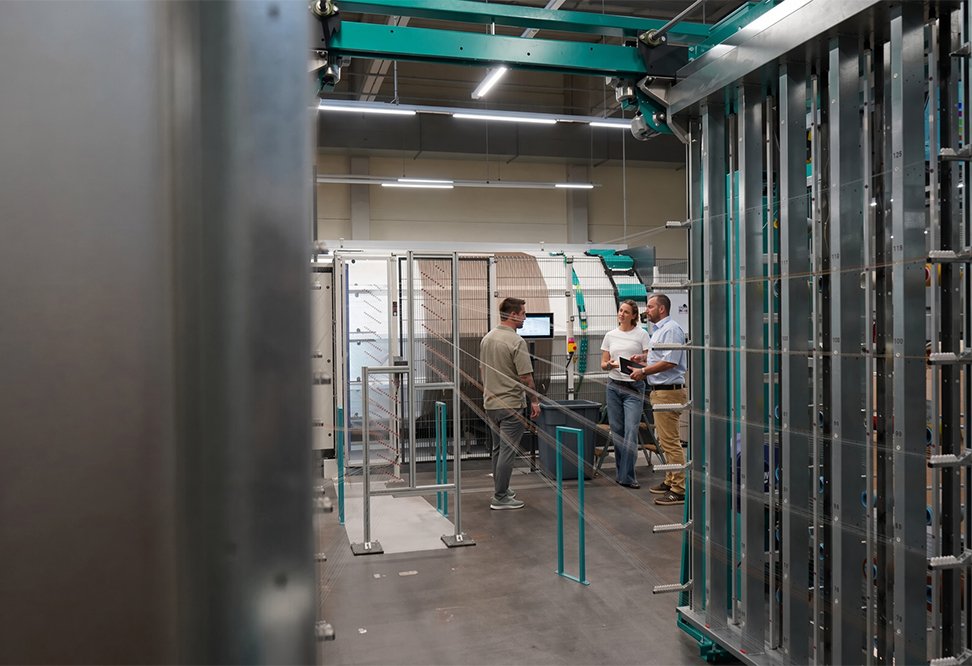
One exhibition fabric contained 2,900 warp ends and 12 colours in a highly complex distribution. Rohleder says the design would not have been economically feasible with its previous preparation system. Automation also reduces potential errors associated with repeated manual creeling and knotting.
Sampling becomes a competitive capability
Rohleder employs about 165 people and exports nearly half its upholstery and decorative fabric output, while maintaining production from warp preparation through weaving and finishing in Germany.
For weaving mills, the investment illustrates an important shift in machinery economics: flexibility can matter as much as maximum output. Faster preparation, lower yarn waste and economical short runs allow mills to offer more variants without proportionately increasing development cost.
The next benchmark should be fabric-level economics—setup minutes, yarn waste, labour hours and cost per warp across different complexity levels. Those figures will determine how strongly automated sample warping can improve profitability in increasingly fragmented, design-led textile markets.
