

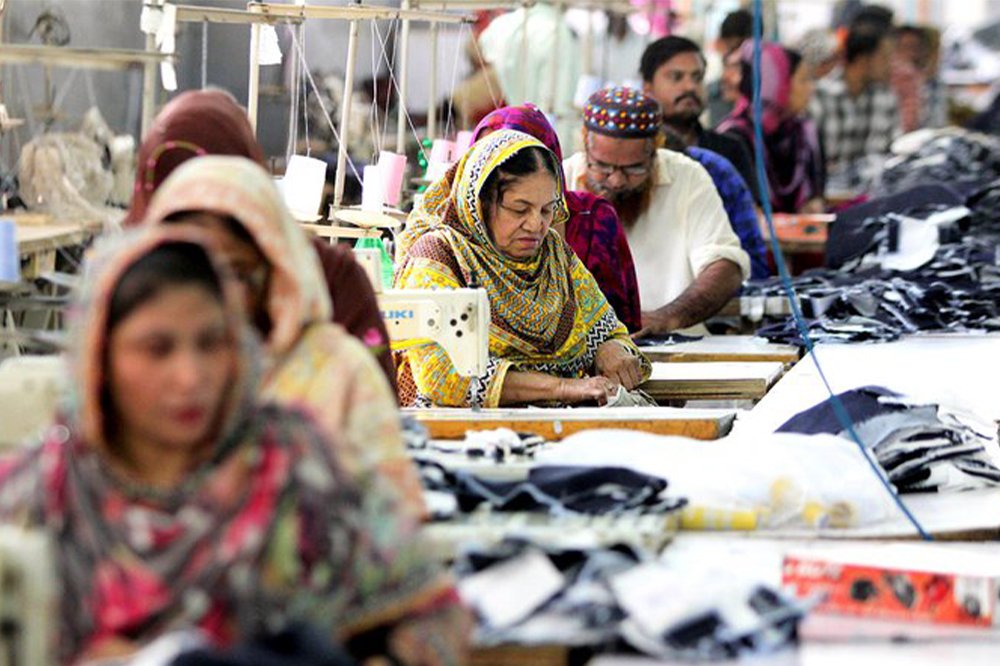
The monthly decline reverses July’s strong opening, but cumulative textile exports remain ahead of last year despite logistics disruption and persistent cost pressures.
Pakistan’s textile exports fell 12.71% month on month to about $1.60 billion in August 2026, down from roughly $1.83 billion in July, according to official figures reported by The Nation. Despite the monthly setback, shipments remained 4.46% above the $1.53 billion recorded in August 2025.
The figures show that July’s strong start to FY2026/27 was not sustained at the same pace in August, although the underlying year-on-year trend remains positive.
Two-month exports still ahead
Textile exports reached approximately $3.41 billion during July–August 2026, up 6.76% from $3.21 billion during the corresponding period of FY2025/26. Pakistan’s textile exports had grown only 0.34% during the whole of FY2025/26, reaching $17.97 billion against $17.91 billion a year earlier.
The broader export sector also weakened in August. Pakistan Bureau of Statistics data show total merchandise exports falling 15.01% month on month to $2.51 billion, although they remained 3.81% higher year on year. Cumulative national exports for July–August rose 7.04% to $5.46 billion.
Logistics add to August pressure
The decline coincided with serious freight disruption. On August 16, APTMA warned that a nationwide transport strike was preventing export containers, imported cotton, chemicals, accessories and other production inputs from moving normally between factories, ports and terminals. Exporters faced shipment delays and additional logistics costs.
This does not establish that the strike caused the entire monthly decline, but it added another operational constraint during an already weaker export month.
Competitiveness remains the central test
The 6.76% two-month growth is encouraging, particularly after FY2025/26’s near-flat performance. But one strong July followed by a double-digit August contraction shows that Pakistan has not yet established a consistently rising export trajectory.
For textile manufacturers, the critical indicators are now September order execution, freight normalisation, energy costs, cotton availability and demand from the US and EU. Sustained growth will require Pakistan to protect delivery reliability and conversion-cost competitiveness while expanding higher-value garments, knitwear, home textiles and other value-added exports.
