

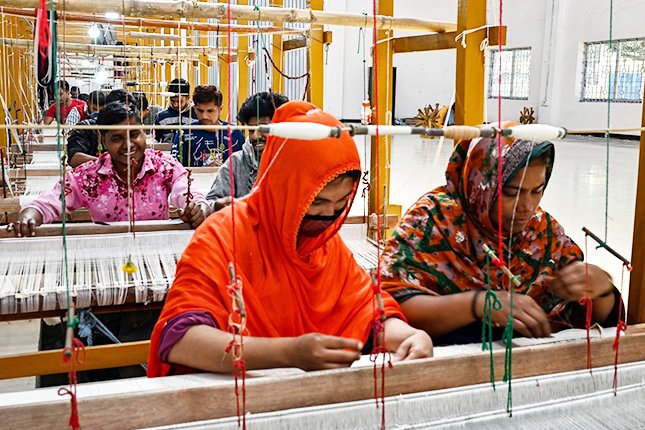
The quest to bring back Bangladeshi muslin began with a painstaking five-year search for the specific flower used to weave the fabric, which only grows near Dhaka’s capital. With wooden spinning wheels and hand-drawn looms, Bangladesh is painstakingly resurrecting a fabric once worn by Mughal emperors Marie Antoinette and Jane Austen, but long thought forever lost to history. Dhaka muslin was stitched from fine threads that popular folklore in European parlors held that a change in the light of a sudden rain shower would render its wearer apparently naked.
Muslin is a cotton fabric of plain weave, and it is made in a wide range of weights, from delicate sheers to coarse sheeting. It gets its name from the city of Mosul in Iraq, where it was first manufactured. In the 17th and 18th centuries, Dacca in Bengal produced the most delicate muslins. In the two centuries since the muslin trade collapsed, Bangladesh has again become a world textile hub, albeit with an industry no longer catering to royalty or other international elites. Instead, Dhaka is now home to countless bustling factories of the global fast fashion trade, supplying huge brands such as H&M and Walmart, with its $35bn in yearly apparel exports second only to China. The country has no shortage of garment workers, but the muslin project needed to source artisans from the small cottage industry of spinners and weavers working with fragile threads.
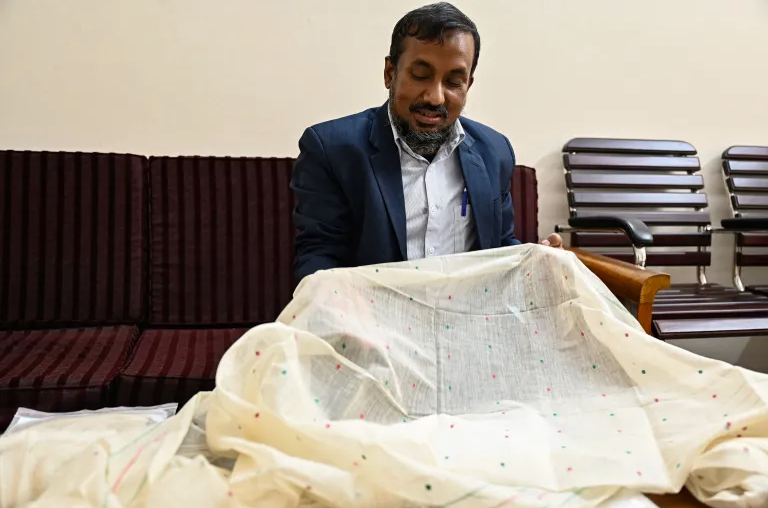
A senior government official helping shepherd the revival project, Ayub Ali, said, “Nobody knew how it was made. We lost the famous cotton plant, which provided the special fine yarn for Dhaka muslin.”

