

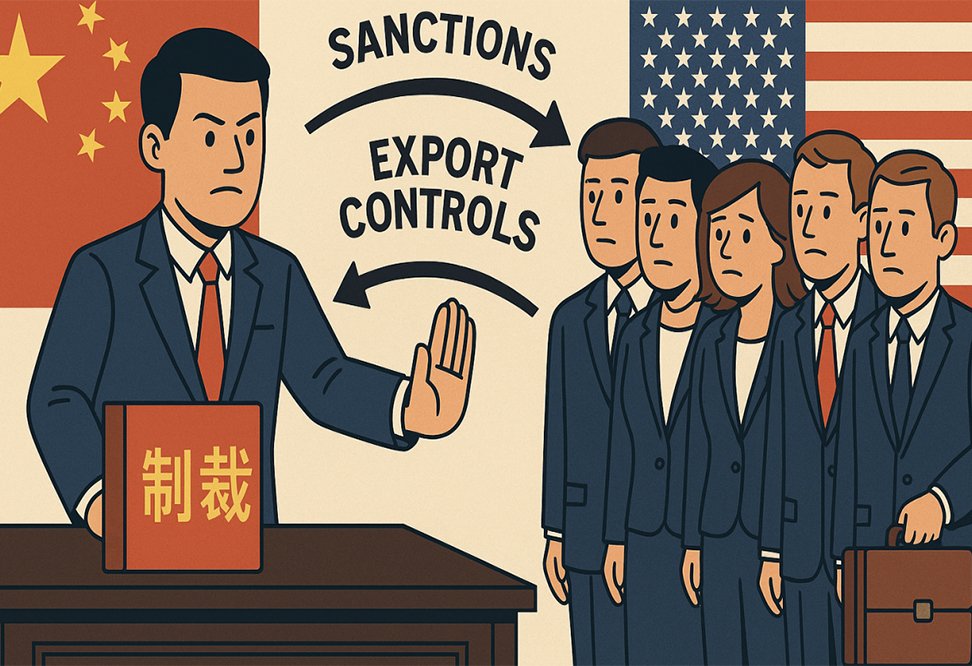
The measures create a new operational dilemma for fashion companies: US rules demand stronger proof of cotton origin while China is restricting cooperation with some organisations that provide that evidence.
China has prohibited domestic organisations and individuals from conducting transactions, cooperation or other activities with six US entities linked to supply-chain verification, labour due diligence and human-rights work. The Ministry of Commerce order took effect on August 5, 2026, under China’s Anti-Foreign Sanctions Law.
The sanctioned organisations are Applied DNA Sciences, Stratum Reservoir, Altana Technologies, Responsible Business Alliance, Verité Group and Human Rights in China. Beijing said they had assisted or supported US sanctions connected to alleged forced labour in Xinjiang.
Cotton verification caught in the middle
Several listed companies are directly relevant to textile traceability. Applied DNA Sciences provides DNA-based technologies for authenticating cotton and tracking material through supply chains, while its previous collaboration with Stratum Reservoir’s Isotech business combined DNA with isotope analysis to help determine cotton origin.
Altana provides supply-chain mapping and risk-intelligence technology, while Verité conducts labour-risk research and human-rights due diligence, including work covering cotton.
The Chinese order does not prohibit every cotton-testing or traceability provider, but it could constrain Chinese mills, laboratories and suppliers that rely on the six named entities.
UFLPA pressure moves the other way
The action followed Washington’s July 31 addition of 43 Chinese companies to the Uyghur Forced Labor Prevention Act Entity List—the largest single expansion to date. The additions became effective August 3, taking the list to 187 entities and covering sectors including cotton and apparel.
Under the UFLPA, US importers already face a rebuttable presumption against goods produced wholly or partly in Xinjiang or by listed entities, making supply-chain documentation and origin evidence commercially critical.
Traceability becomes geopolitical infrastructure
For brands and exporters serving both China and the US, traceability is no longer simply a sustainability tool. Supplier mapping, forensic fibre testing and forced-labour due diligence are becoming entangled with competing national sanctions regimes.
The immediate priority is to identify whether Chinese suppliers use any newly restricted service providers and establish alternative verification pathways without weakening UFLPA evidence. The next risk is further retaliation that narrows the pool of traceability organisations able to operate across both markets.
