

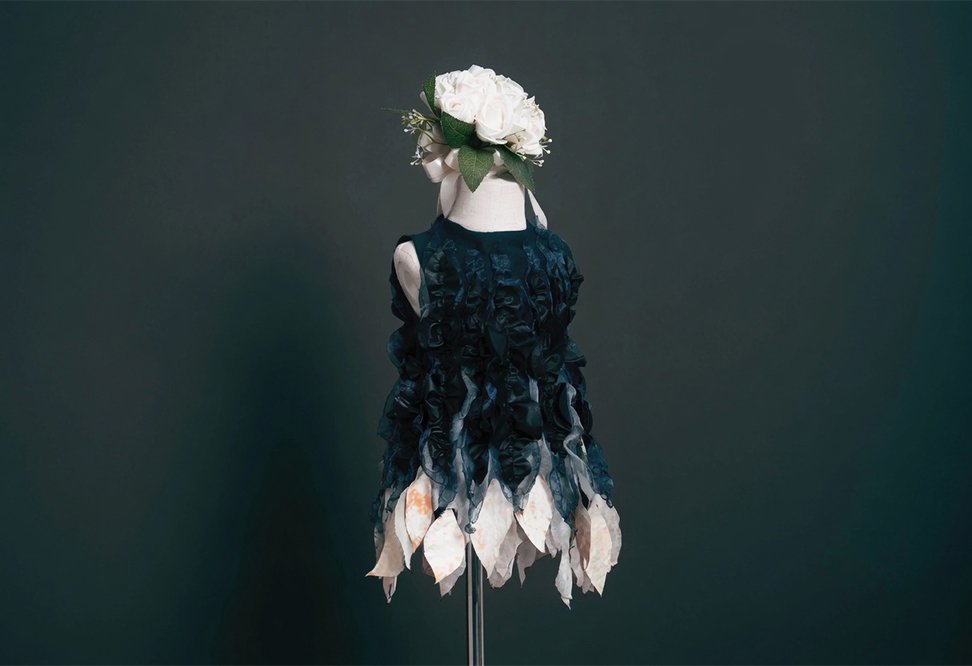
The Cordyceps-based material can regenerate after damage, clean its surface and biodegrade within 41 days, although durability, safety and scalable manufacturing remain unproven.
Researchers led by the Shenzhen Institutes of Advanced Technology have developed a living textile platform using Cordyceps militaris mycelium, creating a material capable of self-repair, self-cleaning and rapid biodegradation.
The study, published in Science Advances, addresses a central challenge in engineered living materials: converting microscopic organisms into large, stable structures that remain biologically active after fabrication. The researchers produced continuous fungal sheets and demonstrated the concept through a wearable dress prototype.
Living fibres restore damage
The textile is formed from the thread-like mycelial network of Cordyceps militaris. Because the fungal cells remain alive, damaged areas can resume growth under suitable conditions and reconnect across cuts or breaks.
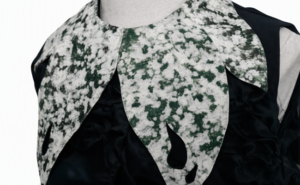
This differs fundamentally from synthetic self-healing polymers, which typically depend on embedded capsules, reversible chemical bonds or heat activation. The fungal material instead uses biological regeneration.
Its self-cleaning behaviour also comes from the living system rather than an applied fluorochemical or antimicrobial finish. However, the study information available publicly does not quantify healing time, tensile-strength recovery, repeated repair cycles or performance after domestic laundering.
Microorganisms add functionality
The researchers showed that the fungal platform could be combined with other microorganisms to introduce additional properties, including colour and ultraviolet protection. This could eventually reduce dependence on conventional dyes, pigments and surface coatings.
Such programmable functionality is commercially significant because textile properties could theoretically be grown into the material rather than added through separate wet-processing stages. The platform may also have applications in biodegradable packaging and responsive technical materials.
Biodegradation strengthens the proposition
Environmental testing found near-complete morphological degradation within 41 days, supporting the material’s potential for short-life or circular products.
Yet biodegradability alone does not establish environmental superiority. Industrial assessment will require data on cultivation energy, nutrients, water consumption, sterilisation, yield, shelf life and end-of-life conditions.
The next hurdle is converting a laboratory-grown dress into a repeatable textile process. Commercial viability will depend on production speed, dimensional stability, handle, abrasion resistance, wearer safety and the ability to keep the organism functional without creating storage or hygiene problems.
