

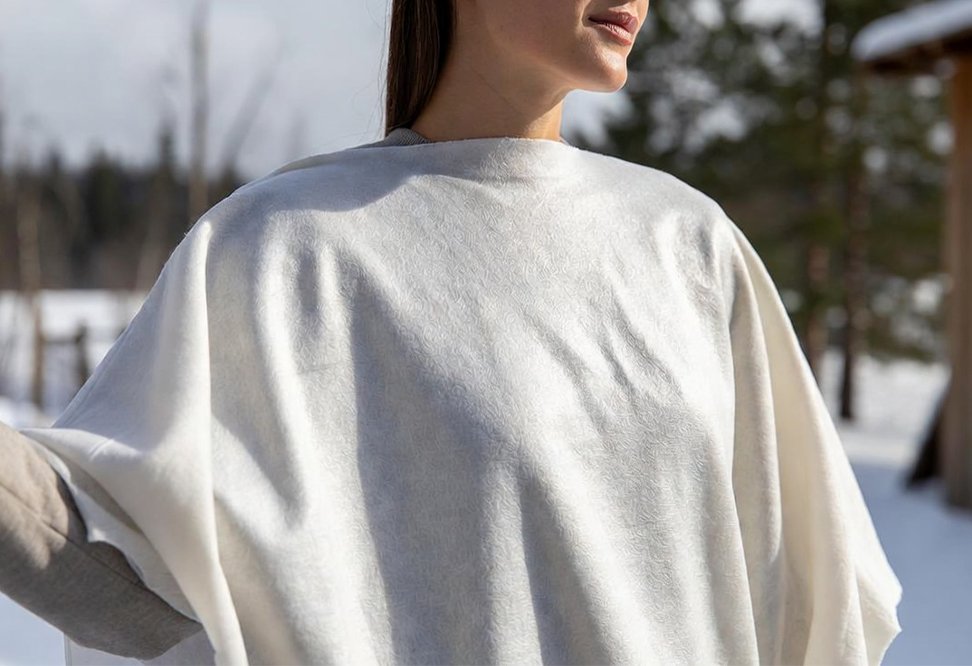
Researchers have developed an ultralight synthetic textile that mimics cotton’s softness while repelling water and actively regulating heat.
A new cotton-inspired thermal fabric could open another route for performance apparel, cold-weather clothing and technical insulation. Researchers reporting in ACS Energy Letters have developed an ultralight synthetic fiber material that feels fluffy like cotton, resists moisture, and switches between heat retention and heat release depending on ambient temperature.
Cotton comfort, synthetic control
The material is built as a network of polymer fibers embedded with microscopic capsules of a phase-change hydrocarbon. Unlike conventional phase-change finishes, which are often applied as coatings and can stiffen fabrics or risk leakage, the active thermal component is integrated into the synthetic fiber structure itself.
The research team shaped the material into both cotton-like balls and flat swatches, suggesting potential use as insulation fill or fabric-sheet material. Experimental swatches measured about 15 by 50 cm.
Moisture resistance is the key difference
Cotton’s weakness in extreme cold is well known: once wet, it absorbs moisture and accelerates heat loss from the body. In initial tests, the new fabric did not absorb water vapor in humid conditions or water droplets, while cotton absorbed both. The prototype also remained flexible and strong after repeated bending and movement.
That combination matters commercially. Outdoor brands, workwear makers and military-textile developers are looking for materials that combine comfort, insulation, low weight and moisture resistance without excessive bulk.
Thermal performance after washing
In cold testing at minus 25°C, the prototype kept a wrapped hand significantly warmer than cotton fabric of the same thickness. At room temperature, it allowed heat to pass through slightly better than cotton, reducing the risk of overheating. After 20 washes, the material retained 97% of its heat-trapping ability, recovered its original fluffiness and did not shed fibers.
The next test is industrial, not only scientific. Brands and mills will need evidence on scalable production, garment construction, breathability, abrasion resistance, recyclability, cost and longer wash durability. If those hurdles are cleared, cotton-inspired phase-change fiber aerogels could become a useful platform for next-generation cold-weather apparel and lightweight thermal protection.
