

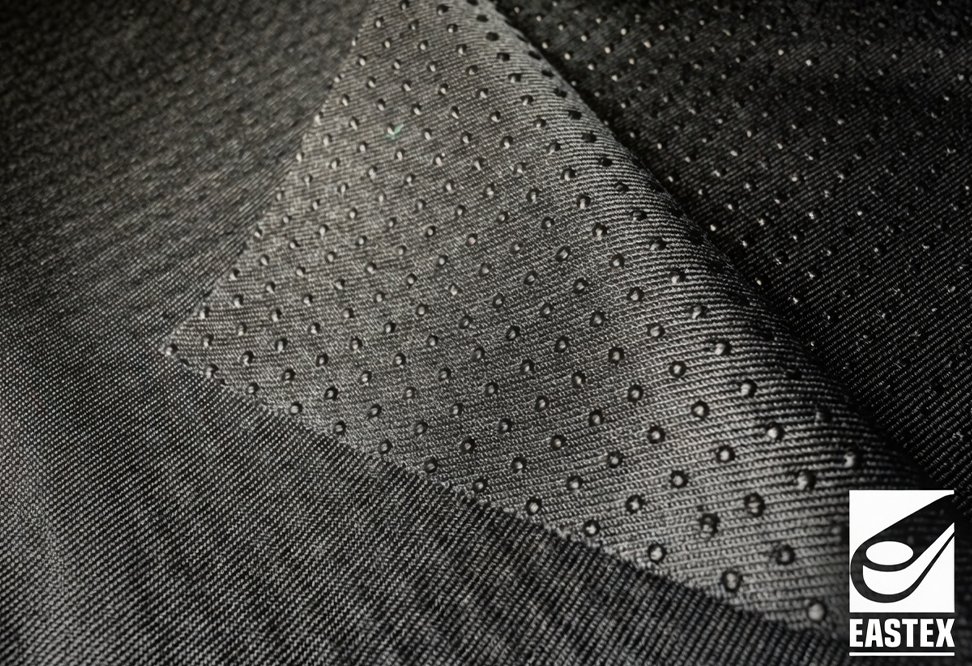
The commercial value lies in controlled traction: enough grip to improve stability, without sacrificing flexibility, cleanability or the fabric’s ability to be converted into finished products.
Eastex Products has introduced Polyester 300D Slip-Not, a woven technical fabric with a specialised anti-slip dot coating for applications where movement, surface contact and user stability are critical. The company says the material can deliver up to 3.2 times greater grip and traction than low-friction fabrics, positioning it for travel, healthcare, marine and tactical products.
The launch reflects a wider opportunity in technical textiles: performance is increasingly engineered at the contact surface, rather than through fabric strength or appearance alone. For product developers, a non-slip surface can reduce the need for additional straps, grips, rubber components or secondary treatments.
Grip becomes a design variable
In healthcare, anti-slip fabrics can support positioning systems, orthopaedic soft goods, seating accessories and mobility products where unwanted movement can compromise comfort or usability. In marine applications, controlled traction is relevant to seating, gear bags, protective covers and interior components exposed to vibration, moisture and repeated handling.
Tactical and travel products present a different requirement. The material must improve stability while remaining durable, flexible and practical to maintain. A fabric that grips too aggressively may complicate handling, sewing, folding or cleaning. The commercial challenge is therefore to achieve reliable surface friction without creating a stiff, heavy or difficult-to-convert construction.
Coating performance needs validation
Eastex describes the material as abrasion-resistant and durable, with a textured surface intended to improve stability without compromising flexibility or ease of maintenance. These are useful product attributes, but converters and end users will need application-specific testing before adoption.
Key questions include abrasion retention after repeated use, coating adhesion, cleaning resistance, performance when wet, compatibility with sewing and welding processes, and behaviour against different counter-surfaces. Healthcare and marine users may also require evidence on fluid exposure, chemical-cleaning resistance and long-term appearance retention.
A broader technical-textile opportunity
The product fits Eastex’s wider technical-textile portfolio, which includes coated woven and nonwoven fabrics, custom laminates, breathable laminates, spacer materials and RF-weldable TPU textiles.
For fabricators, the opportunity is not merely to specify a non-slip fabric. It is to integrate traction into products where safety, comfort, equipment control and user experience justify a higher-value material solution. The next commercial test will be repeatable performance after real-world abrasion, cleaning and environmental exposure.
