

Electrical and electronics applications are forecast to grow 7.5% annually as batteries, data centres and electrification expand demand for certified fire-resistant textile materials.
Global demand for flame-retardant technical textiles is projected to grow at a 5.9% CAGR between 2026 and 2035, driven by tighter safety requirements and rising use of fire-resistant materials in electronics, energy storage, transport and industrial protective clothing, according to IndexBox.
Importantly, IndexBox’s headline forecast of “170 by 2035” refers to a market index—not a $170 billion market value. With 2025 set at 100, the forecast implies approximately 70% cumulative market growth by 2035.
Electronics becomes the growth engine
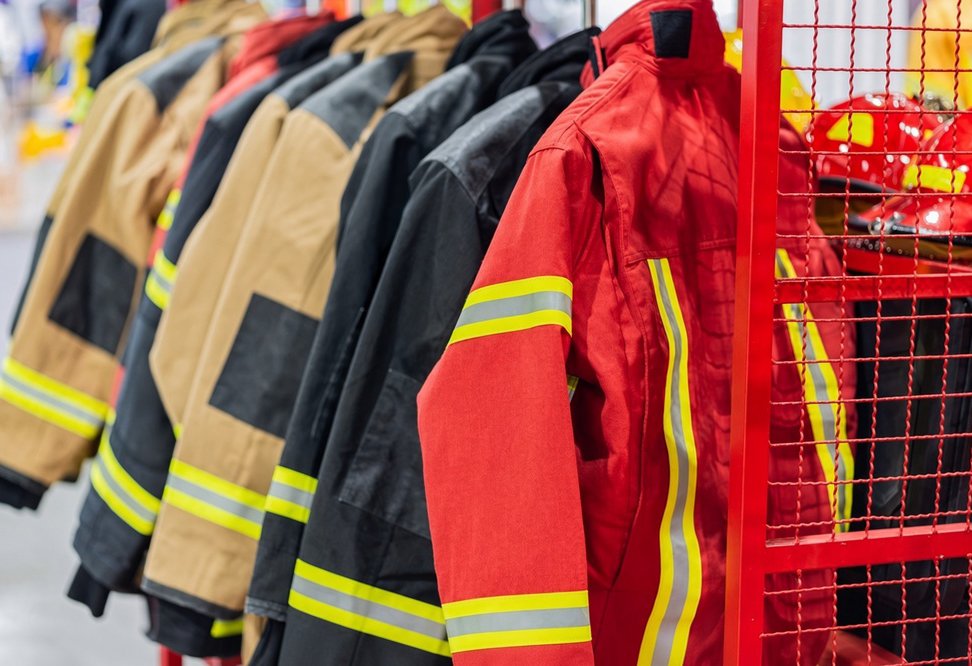
Protective apparel remains the largest application, representing an estimated 37% of global consumption and growing about 4.8% annually. Demand comes from oil and gas, utilities, welding, chemical processing and firefighting applications.
But electrical and electronics, currently estimated at 25% of demand, is expected to expand fastest at 7.5% CAGR. Battery systems, cable insulation, semiconductor equipment, data centres and electric-vehicle infrastructure increasingly require materials capable of limiting ignition and flame propagation. Transportation interiors are forecast to grow 5.2% annually, while industrial filtration rises around 4.5%.
China dominates production
China accounts for an estimated 45% of global output, while more than 30% of flame-retardant technical textiles cross international borders. IndexBox estimates North America imports 60–70% of its requirements and Europe 50–60%.
Supply risks remain significant. Prices for specialist fibres including aramid and modacrylic can fluctuate 20–30% within a contract cycle, while supplier qualification can take 8–30 weeks. The top eight meta-aramid producers control an estimated 45–55% of capacity.
Multifunctionality raises the value opportunity
For technical-textile manufacturers, growth is increasingly shifting toward certified multifunctional materials combining flame resistance with electrostatic-discharge protection, chemical resistance, comfort or thermal management.
The commercial opportunity is therefore not simply more FR fabric volume. Suppliers able to combine inherent flame resistance, lighter constructions, certification capability and reliable specialty-fibre sourcing should be best positioned as electrification pushes fire protection into a wider range of textile applications.
