


The US and Europe are the biggest consumers constituting 60% of the home textiles.
Home Textiles are gaining importance across the globe. According to a report, the global home textile market is one of the most profitable business segments in the global textile industry. It is expected to grow at a CAGR of 5% during the forecast period. The industry is witnessing a steady growth driven by factors like rising consumer spending on home renovation and fashion sensitivity toward household furnishing. The United States and Europe are the biggest consumers constituting 60% of the home textiles imports, with countries like India, China, and Pakistan being the key suppliers. Rising focuses on the market by governments and favorable regulatory policies are expected to be one of the primary reasons for the market disruption. Such support has met with growth in market investments, further strengthening growth. The global home textile market is expected to face considerable challenges from the high cost of logistics. The growing real estate market and consumer spending on home renovation are also expected to drive market growth.
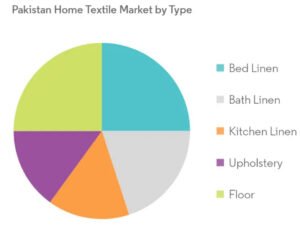
The market for home textile in the Asia Pacific is likely to show remarkable growth during the forecast period owing to the increasing export of textile products across the globe. In addition, rapid urbanization, improved standard of living, and increasing spending power are some of the key factors anticipated to support the revenue growth of the target market in the region. Furthermore, increasing inclination towards modernizing the interior of the households is resulting in huge demand for home textile products such as bedsheets, pillows & covers, curtains, and others. Pakistan’s home textile industry is export-oriented, and the growth in the industry is achieved due to its downstream industries. It is one of the key suppliers to Europe, the United States, and China.
The home textile industry in the market is likely to see growth in Pakistan’s residential and hospitality industry. The raw materials requirement is facing a downward trend due to the growth in consumption in the domestic market. Pakistan’s political instability may affect the home textiles market. However, the government has taken one of the measures, Balancing, Modernization, and Replacement (BMR), and provides loans to the business under subsidized rates. Pakistan’s home textile industry also faces competition from China and India. The rising price of raw materials such as yarns and increasing interest rates and inflation rates might challenge the industry. The floor covering market is rapidly growing in Pakistan due to the rise in infrastructure developments, customers’ changing lifestyles, and changes in increasing demand for insulations by the consumers. The demand for the floor will also be risen by developing construction industries and China Pakistan Economic Corridor Development. Laminate flooring is one of the healthiest and eco-friendly options in the country with low formaldehyde emission levels. On the other hand, the carpet industry is one of the largest cottage industries in the country.
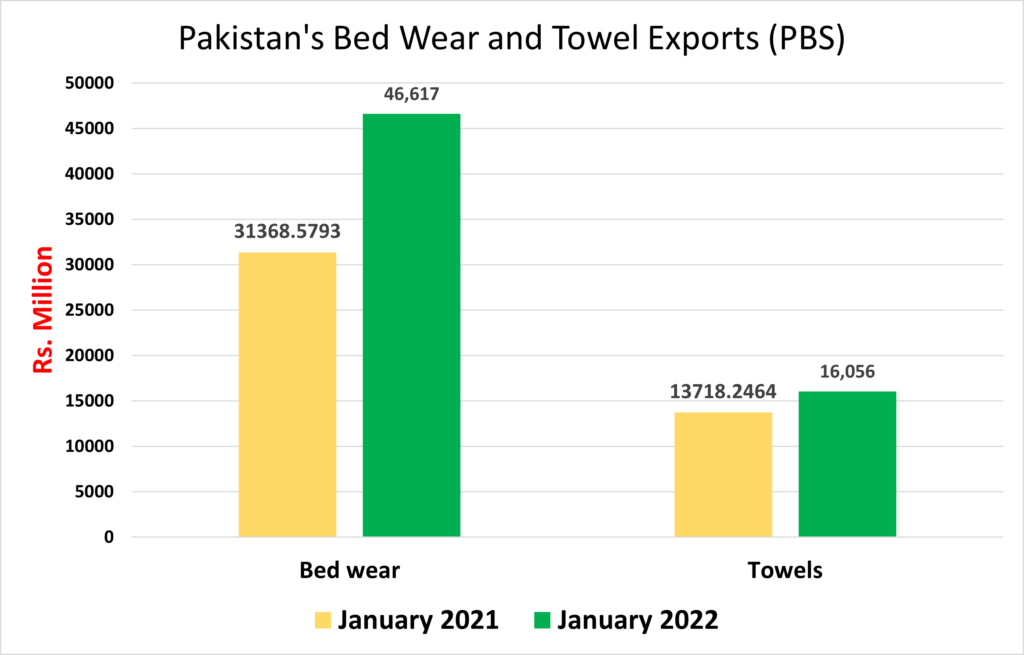
 According to the latest report by the Pakistan Bureau of Statistics (PBS), Pakistan’s total exports were around $2,618 Million in January 2022. Compared to last January 2021, exports increased by 22.05%. Overall, Pakistan’s textile exports have touched a historic high of $11bn during 7MFY22, up by 25% YoY (PBS). In the value-added segment, knitwear, bed-wear, readymade garments, and towels registered an upsurge of 33%, 19%, 22%, and 15.4% to $2.9bn, $1.9bn, $2.2bn, and $615.3mn, respectively during July-January FY22 compared to the corresponding period last year. The data highlights that Pakistan’s home textile exports are rising, where home textiles (bed-wear and towels) are showing significant contributions. India is one of the big producers of home textiles. Welspun India, the home textiles division of Indian conglomerate Welspun Group, hit several milestones during its fiscal third quarter, and Welspun’s home textiles business is on its way to $1 billion.

Heimtextil 2022’s edition “The Summer Special” in June 2022 will also be the central date for suppliers focusing on large-volume orders. It will bring them together with wholesalers, exporters, owners of chain stores, and other volume-oriented buyers from Europe and overseas. This summer, the Trend presentation in Hall 4.0 will also provide valuable guidance for the future of the home textiles industry and highlight its shift towards long-term thinking for a more sustainable industry. In addition, many textile designers from all over the world will be presenting their collections at the Summer Special. The one-time Heimtextil Summer Special reaches its first milestone: after the early booking deadline at the beginning of February, around 1,000 exhibitors from 46 countries have announced their participation. Heimtextil Conference “Sleep & More” will provide consultancy, and product offerings for the bedding trade will also be comprehensively highlighted at the Heimtextil Summer Special. The Heimtextil Conference “Sleep & More” will serve as a contact point for representatives of the bedding trade, where they can look forward to a top-class program of lectures, discussion rounds, and product presentations.
The home textile is changing from conventional to sustainable and multifunctional in the future. The novel concept of 3D fabric is creating new growth dimensions for the home textile products market. The 3D fabric is developed by joining two fabrics facing each other with a spacer filament that imparts superior insulation characteristics. This is leading to the popularity of 3D fabrics for use in home textile products to translate into the growth of the home textile products market. Regarding technology, Karl Mayer is leading the market with its innovative technology and solutions for the home textile sector. Last year, Karl Mayer introduced a new zero-twist towel, pushing the premium segment range. On the other hand, antimicrobial bed sheets are highly demanded home textiles. With nanotechnological advancements, various stakeholders are producing antimicrobial bed sheets and other home textile products to increase customer compliance with well-being. In upcoming years, it is expected that the home textile sector will flourish further and Pakistan has to incorporate sustainable changes with the introduction of functionality in home textiles to capture more business.

