

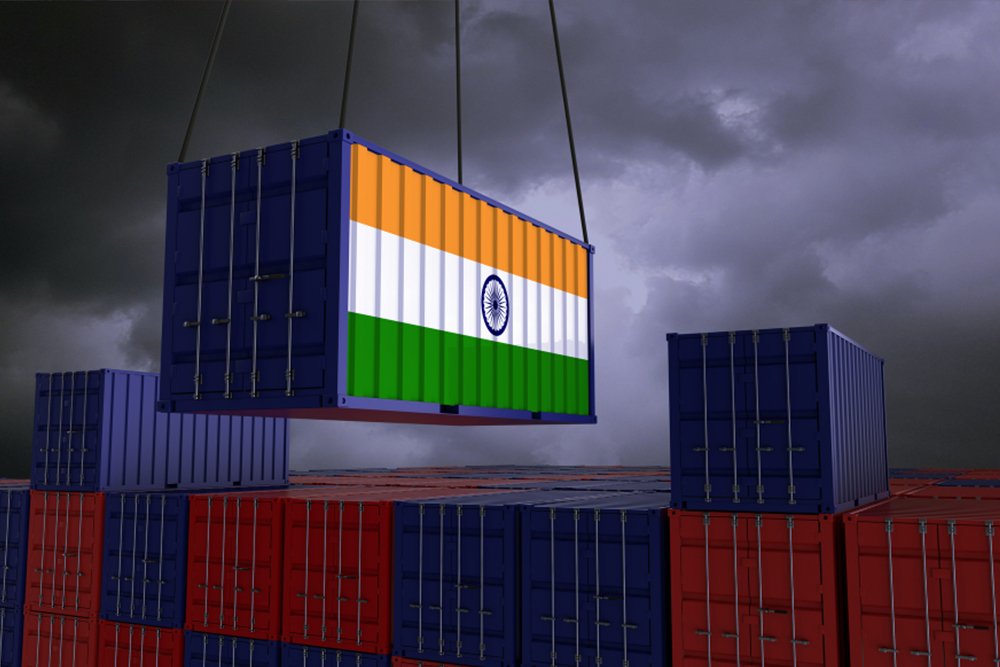
India says lower US duties could shift sourcing decisions in a $118bn import market, lifting its odds of hitting $100bn textile exports by 2030.
India’s textiles lobby has long complained that America was a rich market with a poor welcome. A new India–US trade framework, New Delhi argues, changes the maths by cutting punitive tariffs and reshaping price competitiveness for apparel and made-ups.
India and the United States have announced a framework for the first phase of a bilateral trade agreement, under which the US will reduce tariffs on Indian goods to 18% from 50%, while India will eliminate or reduce duties on US industrial goods and a wide range of farm and food products.
India’s textiles ministry says this opens access to America’s $118bn textiles, apparel and made-ups import market, which is already India’s top destination (about $10.5bn in exports, roughly 70% apparel and 15% made-ups).
The ministry’s competitive claim is blunt: at 18%, Indian textile exports would face lower reciprocal tariffs than key rivals—Bangladesh (20%), Vietnam (20%), Pakistan (19%), and China (30%)—nudging big buyers to rethink sourcing.
That is less about diplomacy than unit economics: a few percentage points can decide the winning supplier when products are substitutable and lead times are tight.
New Delhi frames the pact as a catalyst for its $100bn textile exports target by 2030, with the US expected to contribute more than one-fifth of that ambition.
The next test will be execution: how fast buyers reallocate orders, and whether Indian capacity, compliance and input sourcing can scale without eroding the very cost advantage the agreement is meant to create.

