

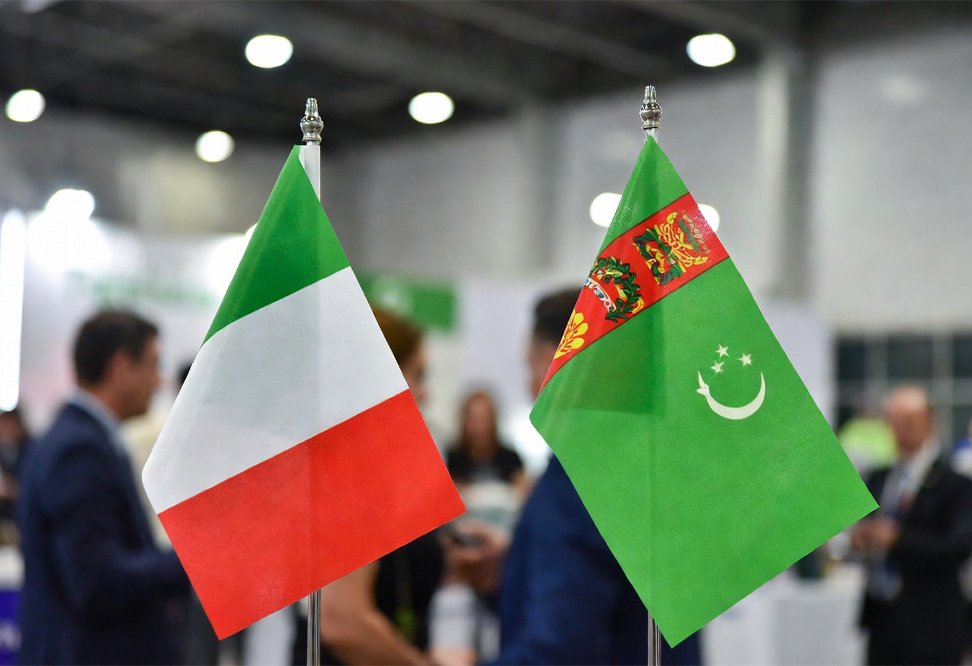
ACIMIT and ICE are positioning Italian suppliers as technology partners as Turkmenistan seeks to move more cotton into higher-value domestic textile production.
Italian textile machinery manufacturers strengthened their push into Turkmenistan at Turkmen Textile Expo 2026, held in Ashgabat from June 4 to 6. The delegation, coordinated by the Italian Trade Agency and ACIMIT, reflects growing interest in a market where textile investment is tied closely to national cotton-processing strategy.
Cotton creates the machinery case
Turkmenistan remains a significant cotton producer, and cotton is reported as the country’s third-largest export commodity. Government policy is focused on building a more integrated domestic textile chain, converting raw cotton into higher-value yarns, fabrics and finished products inside the country rather than relying mainly on raw-material exports.
That creates a clear opportunity for machinery suppliers. Expanding local value addition requires investment across spinning, weaving, knitting, finishing, accessories and quality-control systems. Italy is seeking to occupy that space as a premium technology partner, supported by textile machinery exports to Turkmenistan worth €13 million in 2023.
Demand shifts toward specialised systems
The market is currently in transition as new investment programmes are finalised, but demand remains concentrated in more specialised and technologically advanced solutions. Accessories accounted for 56% of Italian textile machinery exports to Turkmenistan, followed by spinning machinery at 31% and knitting machinery at 13%.
ACIMIT President Marco Salvadè said Turkmenistan is entering a more mature phase, with opportunities expected in plant modernisation and new investment promoted by local authorities. For Italian suppliers, the commercial argument is flexibility: the ability to deliver tailored machinery, automation and process solutions suited to evolving mill requirements.
Italian pavilion broadens the offer
Companies exhibiting in the Italian Pavilion included Bianco, Color Service, Corino Macchine, Dover Industries Italy, Itema, M.C.S. Officina Meccanica, Marzoli Machines Textile, Mesdan, Salvadè, Savio Macchine Tessili and Stalam, while Ferraro participated with its own stand.
ACIMIT represents about 200 Italian textile machinery manufacturers, covering roughly 85% of Italy’s sector turnover. The industry generates around €1.9 billion in annual revenue and exports about 86% of production to 130 countries.
The next signal to watch is whether Turkmenistan’s planned textile investments translate into concrete orders for modern spinning, finishing
