


In a year where the world shook, the TENCEL™ brand persevered through unprecedented challenges to continue developing a strong foundation for an environmentally friendly future.
In 2020, the TENCEL™ brand heavily expanded its co-branding partnership network with collaborations across segments including innerwear, apparel, and footwear.
 This year also marked a milestone shift toward direct-to-consumer engagement for the brand, with the company’s global #FeelsSoRight campaign, created to drive awareness around sustainability and the brands helming this transition.
This year, the TENCEL™ brand also embarked on a journey to solve the problem of supply chain complexity with a new blockchain-enabled supply chain traceability platform powered by TextileGenesis™. Lenzing embeds different elements of the circular economy in its business model, practices, and innovation. They are covered under these areas:
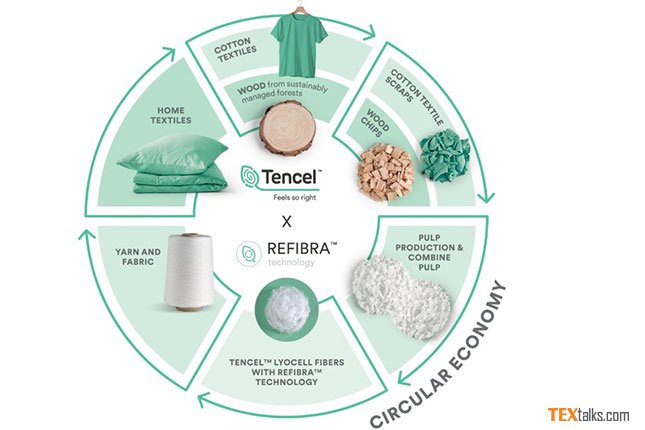
– Natural circularity Lenzing’s products are made from the renewable raw material wood, which is sourced from sustainably managed forests and plantations.
– Resource-efficient technologies and products Lenzing continuously develops innovative technologies for the production of sustainable products with efficient recovery of chemicals, water, and energy.
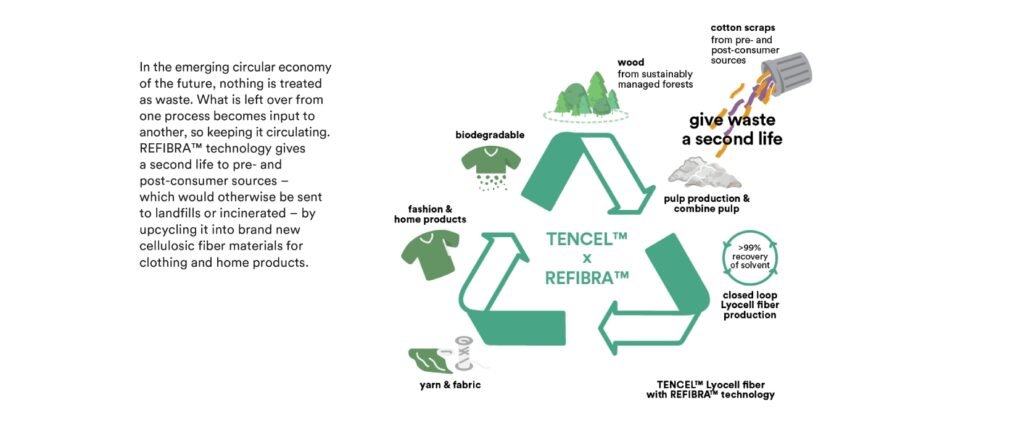
– Recycling textile waste to address the enormous textile waste challenges of industry and society, Lenzing has developed a unique upcycling technology branded REFIBRA™.
– Collaboration for systemic change with a large number of stakeholders and business partners along the value chain to jointly advance the systemic change concerning sustainability in the textile and nonwovens industry.
– Traceability and transparency solutions Lenzing follows a three-pillar approach to a more sustainable and more transparent supply chain: fiber identification system, blockchain, and supply chain collaboration, and planning.
– Waste management For Lenzing, waste management is at the heart of an effective circular economy. The waste arising from the production process can be used as a raw material for other processes, thus reducing the need for new resources, avoiding waste, and increasing resource efficiency. In this way, environmental impacts are minimized.
 The TENCEL™ brand is determined to keep up the positive momentum for 2021 by continuing to champion greater circularity, reduce carbon emissions, and educate consumers and partners on eco-responsible alternatives.

