

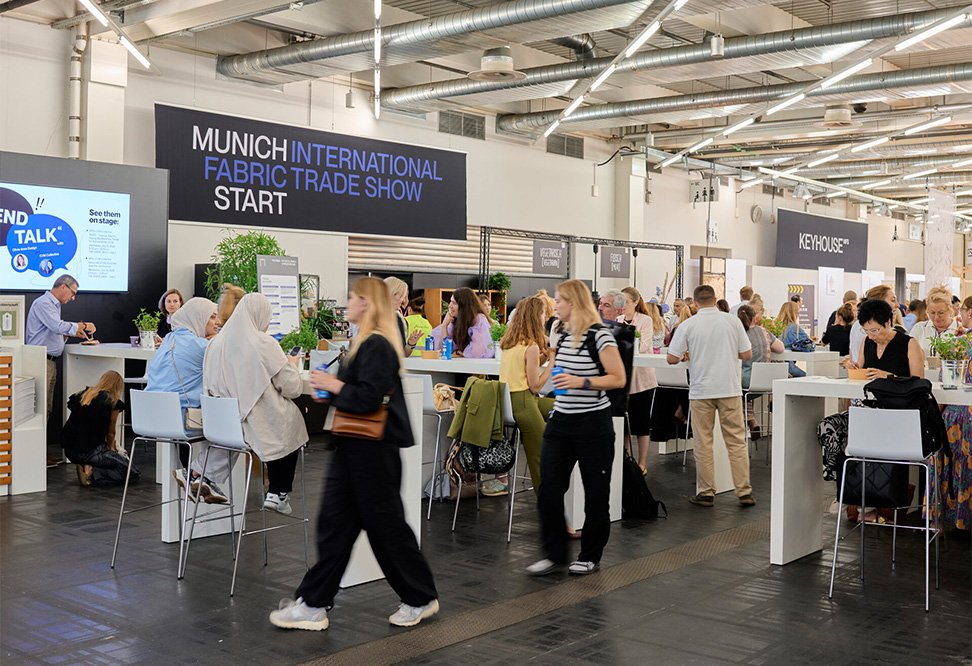
The anniversary edition brought 650 international collections to Munich, with circular materials, denim innovation and supply-chain flexibility competing for buyer attention.
Munich Fabric Start concluded its 30th-anniversary edition after presenting around 650 international collections for the Autumn/Winter 2027–28 season.
Held from July 14–16, 2026 at Munich’s MOC, the event combined its core fabric and accessories exhibition with the Bluezone denim show, Keyhouse innovation platform and The Source manufacturing section. Together, the formats covered fabrics, trims, finished-product sourcing and emerging textile technologies for European fashion brands.
More than a fabric fair
The integrated structure reflects how sourcing decisions have expanded beyond colour, handle and price. Buyers increasingly need to evaluate material traceability, environmental performance, production capacity and regulatory readiness alongside design.
Bluezone provided a dedicated platform for denim mills, laundries and technology providers, while Keyhouse focused on innovation, circularity and future-facing materials. The Source connected brands with garment manufacturers and sourcing partners, creating a more complete route from textile development to finished production. The official programme also included discussions on innovation and circularity.
Early timing changes the calendar
The July edition was scheduled earlier than Munich Fabric Start’s traditional late-summer position. Organisers have described the summer show as an early-season impulse generator, with the smaller reVIEW event in September intended for follow-up work and short-term market developments.
For mills, the earlier timetable means collections, samples and sustainability documentation must be ready sooner. Brands gain more time to develop products and negotiate capacity, but suppliers face additional pressure to anticipate trends before demand is fully visible.
Trade shows face a harder value test
The anniversary arrives against weak European consumption, tighter retailer inventories and growing compliance costs. Exhibitors must therefore demonstrate more than novelty. Buyers increasingly favour lower minimums, shorter lead times, transparent data and materials compatible with circular-design requirements.
Munich Fabric Start’s longevity confirms the continued value of physical sourcing events, particularly where touch, drape and colour cannot be assessed adequately online. Its next challenge is to convert broad innovation themes into measurable orders. The September reVIEW event will provide the first indication of which Autumn/Winter 2027–28 concepts progress from presentation tables into commercial collections.
