

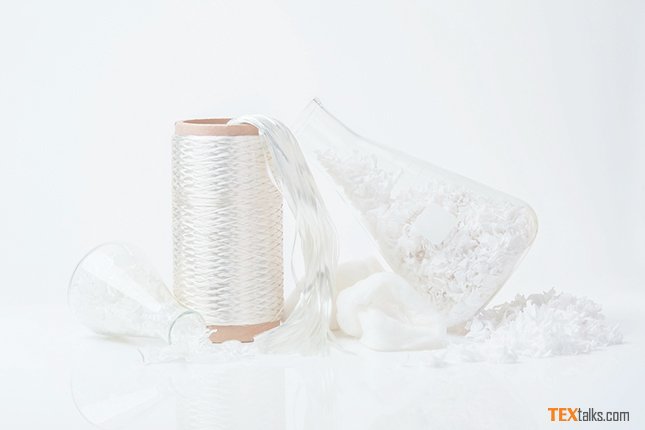
Evrnu is the inventor and intellectual property owner of a wide range of NuCycl™ regenerative fiber technologies, which enable entirely new products to be made from discarded clothing, not just once but multiple times. Even the most challenging textile waste type, 100% post-consumer, can be turned into new materials with NuCycl.
Evrnu ® is a textile innovations company creating a circular ecosystem. Evrnu multiple lifecycle fiber technologies are used to develop engineered fibers with extraordinary performance and environmental advantages, made from discarded clothing.
Discarded textiles are an untapped natural resource. Evrnu’s suite of innovative NuCycl™ technologies is designed to help the global textile industry grow by unlocking its existing natural resources’ full potential.
A future where textile producers, apparel brands, retailers, and consumers realize a lasting change in environmental impact is becoming a reality by eliminating waste, lowering carbon footprints, and achieving substantial water savings.
NuCycl Technologies by Evrnu Include:
– Regenerative Cellulosics
– Next-generation regenerative Cellulosic solvent systems
– Regenerative Polyester
– Recoverable Stretch
– Bio-Engineered Fibers
Evrnu has developed an end-to-end process that includes sorting fabrics to identify fibers’ types in the textile, shredding the materials, and removing the dyes and additives. The cotton then enters a reactor, where it is depolymerized, using a range of solvent blends and ionic liquids, to create a pulp that is finally extruded into new fiber.
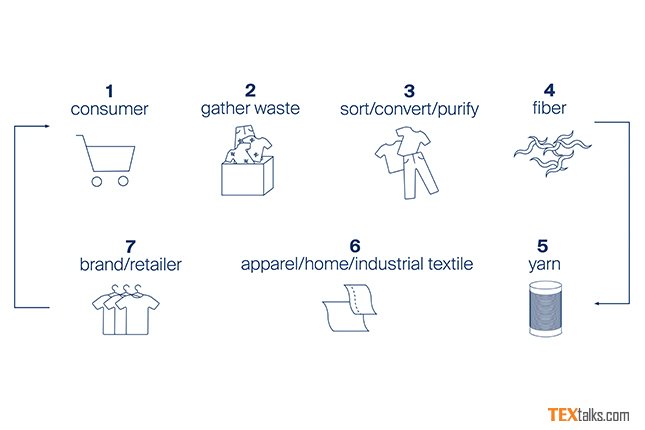 Products made with NuCycl by Evrnu can be disassembled to the molecular level and regenerated multiple times into new clothing, home, and industrial textiles with extraordinary performance and environmental advantages.
The technology uses re-polymerization to convert the original fiber molecules into new high performing renewable fibers.
With NuCycl, the textile industry can transform waste into a valuable resource, creating a new and better alternative to burying or burning.

